Menu
Menu

Get Even More Information On Mold Than What’s Below On Our Sister Website & Division of
Nordic Companies Inc. – NordicEnvironmentalTesting.com!
What is Mold and Why Should I Be Concerned?
Tiny mold spores are in the air all around us, completely invisible to the human eye. These spores are incredibly tenacious, and can survive and even thrive in almost any conditions for long periods of time. When just one of these airborne spores lands on a damp or wet surface, it can begin to bloom.
These spores are what can cause illnesses, asthma flare-ups and other problems in people as they inhale these imperceptible particles into their nose and lungs. With their small size, mold spores can also be easily carried throughout your home, leading to further contamination in areas where mold isn’t presently growing, opening new areas to growth and spreading the problems to other areas of your living space. As a result, a mold colony in one location can easily spread to other areas, increasing the problem as these spores travel with drafts from your heating system, changes in pressure between rooms and levels of your home.
Experienced Experts in Mold Testing, Mold Assessment & Help In Mold Remediation
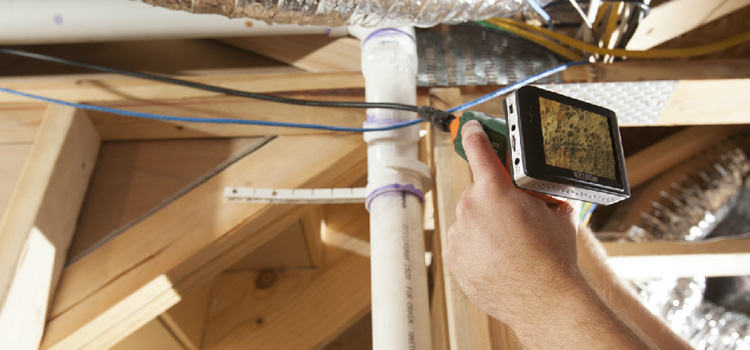
At Nordic Home Inspection, their expert team serves Fargo, Moorhead and the surrounding areas of North Dakota and Minnesota with comprehensive mold testing, mold assessment and mold abatement services, as well as home inspections to check for signs of mold problems. Their team is fully certified and licensed, backed with more than a decade of experience that they can use to solve your mold problems or address your concerns. Their team will visit your home and perform a thorough on-site inspection, reviewing all areas of your home for existing mold growth of signs of excessive humidity or moisture issues or other potential environmental hazards that could allow mold to take hold or cause other problems.
After the review, a Nordic mold inspector may recommend further testing, including surface samples, bulk samples or indoor air quality testing to help determine the extent of issues. Samples that are taken will be overnight shipped to the leading mold-testing lab in the U.S., providing comprehensive results within 48 business hours of taking these tests, allowing their team to make rapid recommendations on how to address your home’s issues.
Nordic Home Inspection has a breadth of experience and an extensive network of connections in the mold business. Their experts will give you concrete, actionable recommendations, built on clear evidence and accurate testing, providing you with a plan to ensure that your problem is solved completely, comprehensively and correctly.
It Is Important To Make Sure The Mold Will Not Return With A Post Remediation Mold Test
To successfully complete a mold remediation project, a meticulous process must be followed to ensure that any colonies being removed don’t contaminate other areas of the home. Their team also follows up all removal projects with a third-party air quality testing company, providing outside assurance that the project has been performed completely and that your issues have been resolved. Third-party testing will also confirm that mold spore counts in your home have returned to acceptable levels, giving you final peace of mind that your mold problems are behind you.
Nordic Home Inspection is your go-to mold inspection and abatement source, proudly serving the two-stage region. For more information or to schedule a test or inspection at your home, contact Nordic Home Inspection today!