

Foundation concerns can get a homeowner’s attention quickly, but not every crack or uneven surface means there is a serious structural problem. Homes naturally move over time, and some signs of movement are simply part of normal aging.
In Fargo, Moorhead, and surrounding communities, our soil and climate add another factor. Our clay rich soils expand when they absorb moisture and shrink when they dry. Combine that with freezing temperatures, spring thaw, drainage conditions, changing groundwater levels, and foundations will likely experience movement over the life of a home.
Learn more: How Clay Soils Affect Foundations in the Red River Valley
The important part is recognizing the signs, looking at the home as a whole, and understanding when additional evaluation may be appropriate.
Here are 10 signs that may indicate foundation movement or other foundation related concerns.
1. Cracks in Foundation Walls
Foundation cracks are common, especially in poured concrete foundations. A small crack does not automatically mean the foundation is failing.
What matters is the location, direction, width, and overall pattern of the cracking.
Vertical cracks can occur as concrete shrinks and the home settles. Horizontal cracks may deserve closer attention because they can sometimes be associated with pressure against the foundation wall. Stair step cracking in concrete block foundations can also indicate movement.
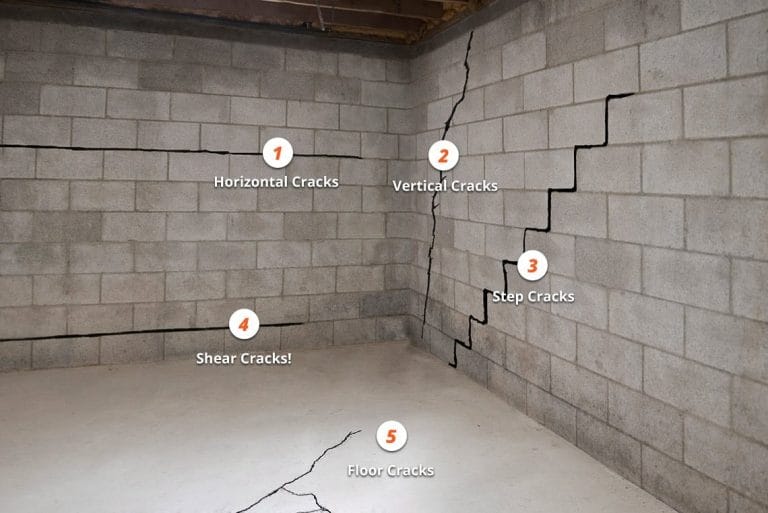
Rather than judging a foundation by 1 crack alone, it is important to consider the entire foundation and whether other signs of movement are present.
Learn more: Common Foundation Issues Homeowners Face (and What to Watch For)
2. Bowing or Leaning Foundation Walls
A foundation wall that bows or leans inward can indicate pressure from the soil outside the home.
This is particularly relevant in our region because clay soils can retain significant amounts of moisture. As soil becomes saturated, pressure against basement walls can increase. Seasonal freezing can add additional forces.
Minor irregularities do not always indicate an active structural problem, but visible displacement or significant bowing should be evaluated carefully.
3. Doors That Stick or No Longer Close Properly
A door that suddenly rubs against the frame, swings open on its own, or will not latch can sometimes be related to movement in the structure.
It can also have much simpler causes. Changes in humidity can affect wood doors and frames, and hinges can loosen over time.
When several doors throughout the home have similar problems, especially when combined with cracking or uneven floors, foundation or structural movement becomes more worth considering.
4. Windows That Are Difficult to Open or Close
Windows can provide clues about movement for many of the same reasons as doors.
If an opening changes shape slightly, a window may begin sticking or become difficult to operate. Cracks may also develop around the corners of the window.
Window problems have many possible causes, so this sign should not be considered proof of a foundation issue by itself.
5. Cracks in Interior Walls or Ceilings
Drywall and plaster cracks are extremely common in homes.
Small cracks can develop from normal settling, seasonal changes, framing movement, and ordinary aging. More noticeable cracking, particularly around doors and windows or where walls meet ceilings, can sometimes be associated with structural movement.
The pattern matters more than simply finding a crack.
6. Uneven or Sloping Floors
Most older homes are not perfectly level. A small amount of variation can be completely normal.
More noticeable slopes, dips, or changes in floor elevation can indicate movement somewhere in the structure. The cause may involve the foundation, but it could also involve floor framing, support columns, beams, or previous alterations.
A sloping floor is a reason to investigate further rather than automatically assume the foundation needs major repairs.
7. Gaps Around Doors, Windows, Walls, or Cabinets
Movement within a home can sometimes create visible gaps where materials previously fit together. Small gaps can result from normal material movement. Larger or increasing gaps may warrant a closer look, particularly when other signs are present.
You might notice separation between a wall and ceiling, gaps around window or door trim, or cabinets and countertops pulling away from adjoining surfaces.
8. Exterior Brick or Masonry Cracks
Cracking in brick, concrete block, or other masonry can sometimes reflect movement below.
Stair step cracks following mortar joints are one pattern inspectors pay attention to. Cracks extending through individual bricks or blocks can also provide useful information about how movement may have occurred.
Masonry cracking has several possible causes, so the location and overall pattern should be considered before drawing conclusions.
9. Water Around the Foundation or Basement Moisture
Water does not necessarily mean a home has a foundation problem, but drainage and foundation performance are closely connected.
Poor grading, short downspout extensions, clogged gutters, or low areas near the home can allow water to collect alongside the foundation. In Fargo area clay soils, changing moisture levels can contribute to soil expansion and contraction.
Basement moisture can also enter through cracks, joints, windows, and other openings.
Managing water around the exterior is one of the most practical things homeowners can do to help protect a foundation.
Learn more: Why Do I Keep Getting Water In My Basement?
10. Several Signs Appearing Together
This may be the most important sign on the list.
A single drywall crack may mean very little. A sticky door may simply need adjustment. A slightly uneven floor may have been that way for decades, but when several conditions appear together, such as foundation cracking, sloping floors, sticking doors, and noticeable wall cracks, the overall pattern becomes more significant.
That is why evaluating foundation concerns involves more than identifying individual cracks. The home needs to be considered as a complete structure.
What Should You Do if You Notice These Signs?
Finding 1 or more of these conditions does not automatically mean your home needs foundation repair.
Start by paying attention to what you are seeing. If practical, monitor cracks or other changes over time. Make sure gutters and downspouts are functioning properly and that surface water drains away from the foundation.
If movement appears significant, is changing, or involves multiple areas of the home, further evaluation may be appropriate. Depending on the circumstances, that could include a qualified foundation contractor or structural engineer.
For home buyers, a professional home inspection can help identify visible signs of foundation movement and put those observations into the context of the rest of the property.
Foundation Issues in Fargo and Moorhead Homes
Foundation movement is particularly important to understand in Fargo, Moorhead, West Fargo, and surrounding ND and MN communities.
Our cold winters, frost, spring snowmelt, and moisture sensitive soils can all influence how a foundation performs. Good exterior drainage, properly functioning gutters and downspouts, and appropriate grading around the home can make a meaningful difference.
The goal is not to make every crack seem alarming. It is to understand what the home is telling you and determine whether additional evaluation is needed.
A Home Inspection Can Help Put Foundation Concerns Into Context
Foundation concerns are rarely about 1 isolated observation. The foundation, framing, drainage, grading, interior finishes, and other parts of the home can provide clues about what may be happening.
Nordic Inspections provides professional home inspections throughout Fargo, Moorhead, West Fargo, and surrounding communities. If you are buying a home and have questions about its foundation or overall condition, a home inspection can provide useful information to help you make an informed decision.
Give us a call or text at 701-566-1446 ext. 0 to schedule an appointment. Otherwise, use this link to book an appointment online.