

Log homes and cabins are part of life across Minnesota lake country and the wider region, and a well-kept log home can last for generations. Log walls are also more exposed to the weather than walls covered with siding. Most problems start the same way: water gets into the wood and stays there. Good log home maintenance is mostly about keeping water out by sealing the right cracks, keeping chinking and stain in good shape, and catching soft spots early.
This guide covers why logs crack and move, which cracks matter, how to care for chinking and stain, how to spot rot, what these findings mean in an inspection report, and a simple maintenance checklist.
Why log homes need extra care in our climate
Logs keep drying and shrinking for years after a home is built. University of Tennessee Extension notes that a 10-foot log wall may settle 2 inches or more, and that checks, the cracks that open as logs dry, are a normal part of the log home look.
Our weather adds stress. Long winters, spring snowmelt and summer storms put a lot of water on log walls, and freeze-thaw cycles can widen checks that hold water. Wood that stays below about 25 percent moisture content resists decay fungi, according to UT Extension. The goal is to let logs shed water and dry out quickly.
Log cracks: which ones matter
Most checks are not a structural problem. The National Park Service, in its guide to repairing historic log buildings, notes that checks are not signs of rot but a normal result of logs seasoning. What matters is whether a crack can hold water.
- Upward-facing checks on the top curve of a log collect rain, snowmelt and debris. Sashco, a log home sealant maker, recommends sealing checks 1/4 inch wide or wider, especially upward-facing ones.
- Larger downward-facing checks shed water but can let in air and insects.
- Splits at butt joints and log ends deserve a closer look. UT Extension notes that butt joints are especially vulnerable, because end grain soaks up water quickly.
Checks are usually treated by staining first, then filling wider ones with a round backer rod and a sealant made for log homes, not ordinary caulk. Western Log Home Supply advises against sealing in cold winter weather, when sealant may not bond properly. The Park Service warns that epoxy should not be used to hide checking.
Chinking: the seal between logs
Chinking fills the joints between logs, and in many homes it is what keeps wind, water and insects out. The National Park Service calls chinking, especially the outer daubing layer, the least durable part of a log building. It cracks with freeze-thaw, settling and the logs’ own movement.
Signs that chinking needs attention include:
- Cracks or gaps in the chinking.
- Chinking pulling away from the logs.
- Missing sections, drafts or daylight at the joints.
- Insects or water stains along a joint.
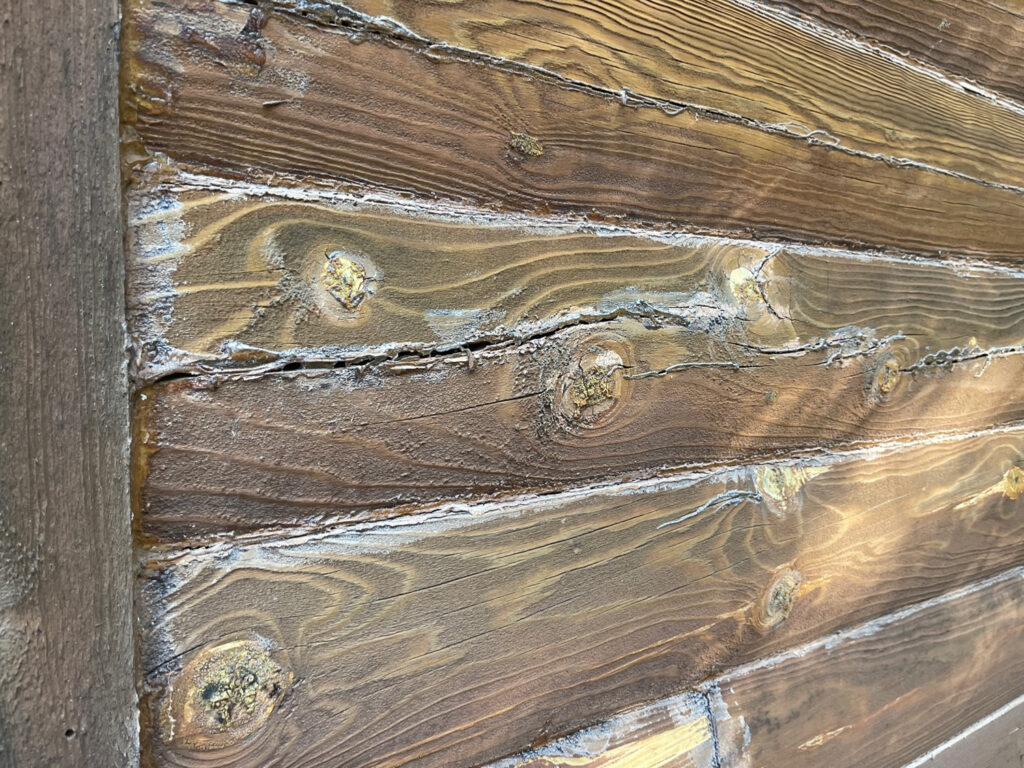
Many modern log homes use flexible synthetic chinking products, while historic buildings often used mortar-style daubing. A Minnesota Historical Society architect notes that traditional daubing may need redoing every 5 to 10 years. Use a product that matches what is already on the home, and handle any log repairs or settling issues before re-chinking.
Stain and finish: the first line of defense
A good exterior finish protects logs from water and sunlight. It does not last forever. UT Extension notes that six months to a few years is a normal lifetime for a log home finish, and recommends inspecting it every year and reapplying when needed.
A simple test helps: splash water on the logs. If it does not bead on the surface, it is time to refinish. Finishes do not protect against insects or decay, so they work alongside good drainage, not instead of it.
Spotting rot early
Rot usually starts where water collects. The National Park Service lists sill logs, window and door sills, corner notches and log ends as the most vulnerable spots. Bottom logs near the ground, log ends that stick out past the corners, and walls hit by roof runoff or splashback are common problem areas.
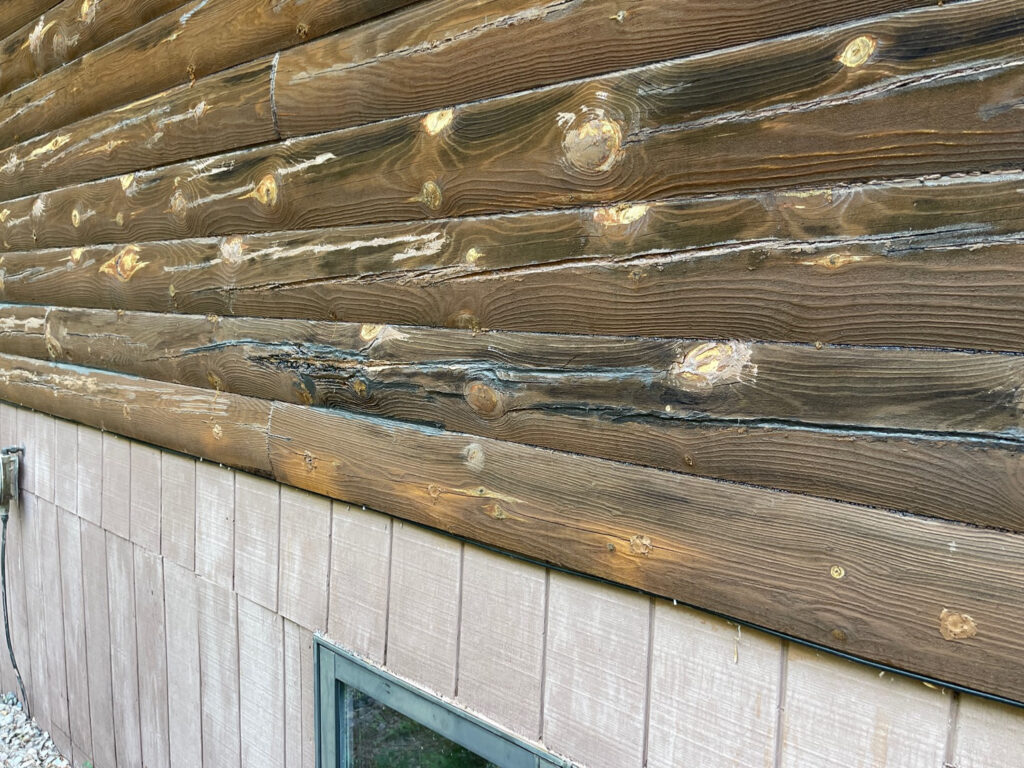
To check a suspect area, the Park Service suggests probing soft spots with a small knife blade or icepick to see how deep the decay goes, and gently tapping logs to find hollow areas. Watch for insects too. UT Extension notes termites are the most serious insect pest of log homes, and carpenter bees bore holes about 1/2 inch across.
Small areas of rot can sometimes be repaired with epoxy. Larger damage may need a section of new wood spliced in, a new log face, or a full log replacement. These repairs are best handled by a contractor experienced with log homes.
What it means in an inspection report
When we find cracked or split logs, missing or deteriorated chinking, worn stain or wood rot during an inspection, we note the location and recommend evaluation and repair by a contractor who works on log homes. Normal checks are expected. We point out the ones that can hold water and the areas that already show damage.
A visual inspection cannot see inside a log, so probing and a closer look by a log home specialist may find more. We also look at what drives these problems: roof drainage, gutters, grading and how close the bottom logs sit to the soil.
Log home maintenance checklist
- Walk around the home every spring and fall and look at each wall.
- Keep gutters clean and downspouts carrying water away. Our post Clogged and Leaking Gutters in Fargo-Moorhead has tips.
- Keep the bottom log at least 8 inches above the ground, as the Park Service and Minnesota Historical Society recommend, with soil sloping away. See Lars Knows: Good Grade.
- Trim trees and shrubs back, and keep firewood and leaves away from the walls.
- Do the water bead test each year and restain as needed.
- Seal upward-facing checks 1/4 inch or wider in warm weather, after staining.
- Patch cracked or loose chinking.
- Probe any soft or discolored spots and watch for insect holes.
Buying a cabin or lake home? A home inspection in Detroit Lakes and lake country can help you understand its condition before you buy.
Log home maintenance: common questions
Are cracks in log walls normal?
Yes. Checks open as logs dry and are a normal part of a log home. The concern is checks that face up and can hold water, and splits at log ends or joints.
Should I seal every check?
No. Sashco recommends sealing checks 1/4 inch or wider, especially upward-facing ones, and flooding checks of every size with stain first.
How often should a log home be stained?
It depends on the product and exposure. UT Extension says finishes typically last from six months to a few years, so inspect yearly and refinish when water no longer beads.
What is the difference between chinking and caulk?
Both are sealants made for log homes. Chinking is usually a thicker, textured product for the wider joints between logs, while log home caulk is used for checks and narrower gaps.
How do I know if a log is rotten?
Look for soft, dark or crumbling wood, and probe it with a small knife or icepick. Hollow-sounding logs and insect holes are other warning signs.
Sources
- National Park Service. Preservation Brief 26: The Preservation and Repair of Historic Log Buildings.
- University of Tennessee Extension. Wood Protection for Log Home Owners (PB1767).
- Minnesota Historical Society. Log Building Preservation Calls for Careful Assessment.
- Sashco. To Seal or Not to Seal.
- Western Log Home Supply. How Can I Fill the Checks and Cracks in the Logs?