

What a furnace disconnect switch does
A furnace disconnect switch is a simple switch that shuts off electrical power to your furnace. Most gas furnaces in Fargo, Moorhead and West Fargo homes run on a 120-volt circuit that powers the blower, the igniter, the inducer fan and the control board. The disconnect lets you or a technician cut that power right at the furnace, without hunting for the right breaker in the panel.
It is easy to overlook because it usually looks like an ordinary light switch. You will often find it on the side of the furnace, on a nearby wall or joist, or at the top of the basement stairs. When we find a furnace with no disconnect within sight of it during an inspection, we recommend having one installed.
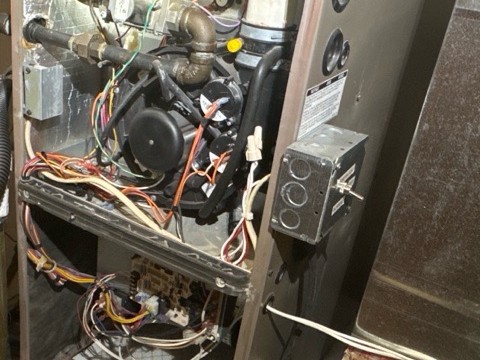
Why it matters, especially in a Red River Valley winter
A disconnect switch has two jobs:
- Emergency shutoff. If the furnace makes an unusual noise, gives off a burning smell, or a part starts to fail, you can turn it off in seconds.
- Safe service. HVAC technicians shut off power before they open the cabinet to change a part, clean the blower or check wiring. Carrier’s installation instructions for its 58MXA gas furnace tell installers to disconnect all power to the furnace before working on it, and note that multiple disconnects may be required. A switch at the furnace means the technician can see that the power is off while they work.
In our climate, the furnace runs hard for months at a time. Problems tend to show up on the coldest nights, which is exactly when you want a quick, obvious way to shut the system down and keep everyone safe until help arrives.
What the code and manufacturers require
The National Electrical Code (NEC) is the electrical standard used across the United States, including North Dakota and Minnesota. For furnaces, the key points are:
- A dedicated circuit. NEC 422.12 calls for central heating equipment such as a furnace to be supplied by an individual branch circuit. Equipment directly tied to the furnace, like a humidifier or an electronic air cleaner, may share that circuit.
- A disconnect within sight. The City of Saint Paul’s residential checklist for the 2023 NEC states it plainly: the furnace disconnecting means shall be within sight of the equipment (NEC 422.31). Under the NEC, “within sight” means the disconnect is visible from the furnace and not more than 50 feet away. If the electrical panel itself is within sight of the furnace, the furnace’s breaker can serve as the disconnect, and no separate switch is needed.
- Manufacturer instructions. Furnace makers say the same thing. Carrier’s 58MXA installation instructions state that a disconnecting means must be within sight from and readily accessible to the furnace.
When the panel is around a corner, behind a wall, in another room or more than 50 feet away, the breaker does not meet the “within sight” rule, and a separate switch near the furnace is needed. NEC 422.31(C) applies the within-sight rule to appliances with motors over 1/8 horsepower, which includes a furnace blower, so a breaker that can be locked off is generally not a substitute. The code edition and local amendments vary by city, so your electrician or the local electrical inspector has the final word.
Signs of a problem
During a home inspection we look at how the furnace gets its power. These are the conditions we note most often:
- No disconnect switch, and the electrical panel is out of sight of the furnace
- A switch that is out of sight of the furnace, such as around a corner or in another room
- A switch with no label, which is easy to mistake for a light switch
- A loose switch, a missing cover plate or exposed wiring at the switch box
- A furnace plugged into a regular outlet with an extension cord
Any of these is worth fixing, and most are inexpensive repairs.
What this finding means in an inspection report
When an inspection report notes a missing furnace disconnect switch, it means we could not find a way to shut off power to the furnace from within sight of it. It is not usually an emergency, and the furnace may work perfectly well. It is a safety and serviceability item: the person working on the furnace needs a reliable way to keep it off, and you need a quick way to turn it off in an emergency.
We recommend having a disconnect switch installed by a licensed electrician or a qualified HVAC contractor. If you are buying the home, it is a reasonable item to bring up in repair negotiations, especially if other furnace or electrical items were noted.
How a disconnect switch is added
Adding a disconnect is a small electrical job. In most homes, an electrician installs a rated switch in a box near the furnace on the furnace’s existing circuit, then labels it. Things to ask for:
- A clear label. “Furnace” on the switch or cover plate keeps family members and guests from switching it off by mistake.
- A dedicated circuit. If the furnace shares a circuit with other basement lights or outlets, ask the electrician whether it should be moved to its own circuit.
- A permit if one is required. Electrical work often needs a permit. A licensed electrician will know what your city requires.
This is not a do-it-yourself project. Wiring mistakes at a furnace can damage the control board or create a shock hazard. For more on why, see Why Homeowners Shouldn’t Do Electrical Work.
Know where your switch is
Once you have a disconnect, make sure everyone in the house knows where it is and what it does. A furnace switch that gets flipped off by accident looks just like a broken furnace. Before you call for service on a cold morning, check that the switch is on and the breaker has not tripped.
It also helps to pair this with a few other habits:
- Change the furnace filter on schedule. Our DIY Health Check For Your Furnace walks through the basics.
- Keep working smoke and carbon monoxide detectors near sleeping areas and on every level.
- Have the furnace serviced before winter. Our Nordic Fall Home Checkup is a good time to catch small items like this one.
Furnace disconnect switch: common questions
What does a furnace disconnect switch look like?
Usually like a standard light switch, mounted on or near the furnace or at the top of the basement stairs. Some are labeled; many are not. If you have a switch near the furnace that seems to do nothing, it may be the furnace switch.
Is a furnace disconnect switch required by code?
A disconnect within sight of the furnace is required (NEC 422.31), and furnace manufacturers call for it in their installation instructions. It does not have to be a separate switch: the furnace’s breaker counts if the panel is visible from the furnace and no more than 50 feet away. We still find furnaces without either, often in older homes or where a furnace was replaced without updating the wiring.
Can I use the breaker in my electrical panel instead?
Yes, if the panel is within sight of the furnace: visible from it and no more than 50 feet away. If the panel is in another room or out of view, a separate switch near the furnace is needed; a breaker in another room does not give a technician a disconnect they can see while they work. Even when the panel qualifies, a switch at the furnace is handy for service and emergencies.
My furnace stopped working. Could it be the switch?
It is one of the first things to check. If the switch was bumped off, the furnace will not run. Turn it back on, check the breaker, and if the furnace still does not start, call an HVAC contractor.
Does a missing switch mean the furnace is unsafe?
Not by itself. It means the furnace is missing a safety and service feature. Have one installed, and have the furnace checked if it has not been serviced recently.
Sources
- City of Saint Paul, Department of Safety and Inspections. Electrical Checklist: Dwelling Furnace, Air Conditioner, Boiler, Fixed Electric Space-Heating Equipment (2023 NEC).
- Carrier. 58MXA Direct Vent Condensing Gas Furnace, Installation, Start-Up, Operating and Service and Maintenance Instructions.
- LeBlanc, Russ. Practically Speaking: How Far Is Too Far? EC&M, April 15, 2024 (NEC definition of “within sight”).
- NFPA 70, National Electrical Code, sections 422.12, 422.31 and 422.34.