

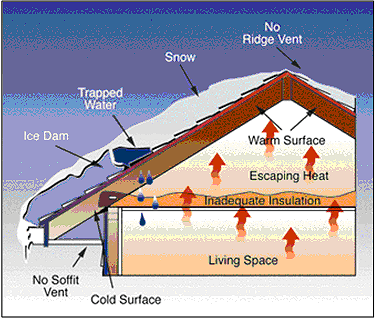
Ice dams are a common winter issue for homes in Fargo ND and across eastern North Dakota and western Minnesota. They can be frustrating for homeowners, especially when they appear year after year despite heavy snowfall being normal for the region.
Ice dams are not caused by bad roofing materials or a single snowstorm. They are usually the result of how heat, insulation, and ventilation work together inside the home.
Understanding why ice dams form is the first step toward preventing them.
What Is an Ice Dam
An ice dam forms when snow on the roof melts, flows downward, and refreezes near the roof edge. Over time, this ice builds up and creates a barrier that prevents melting snow from draining properly.
As water backs up behind the ice, it can work its way under shingles and into the home. This can lead to ceiling stains, wall damage, insulation saturation, and in some cases mold growth.
Why Ice Dams Are Common in Fargo ND
Fargo winters create ideal conditions for ice dam formation.
Several factors come together:
- Long periods of snow cover
- Consistent cold temperatures
- Homes that are heated for extended periods
- Attic spaces exposed to large temperature differences
The issue is not the snow itself. It is the uneven roof temperature caused by heat escaping from the home.
The Role of Heat Loss
Ice dams almost always start with heat loss from the interior of the home into the attic.
When warm air leaks into the attic, it warms the roof surface from below. Snow resting on that warmer section melts, even when outdoor temperatures are well below freezing.
As the meltwater flows toward the colder roof edges and overhangs, it refreezes and begins forming ice.
Insulation Problems That Contribute
Insulation helps slow heat movement from the living space into the attic. When insulation is insufficient or uneven, warm air finds easy paths upward.
Common insulation related issues include:
- Low attic insulation levels
- Insulation gaps near attic hatches
- Compressed insulation around wiring or ductwork
- Missing insulation near exterior walls
Many older ND and MN homes were built with insulation standards that no longer meet current expectations.
Air Leaks Matter More Than Most People Realize
Air leakage often plays a bigger role than insulation alone.
Warm air escaping through small openings can significantly raise attic temperatures.
Typical air leakage points include:
- Attic access openings
- Recessed lighting
- Bathroom fans venting into the attic
- Plumbing and electrical penetrations
- Open wall cavities
Sealing these openings helps keep attic temperatures closer to outdoor conditions.
Attic Ventilation and Ice Dams
Proper attic ventilation helps remove excess heat and moisture from the attic.
When ventilation is inadequate or blocked, warm air can become trapped. This increases roof surface temperatures and promotes snow melt.
Common ventilation issues include:
- Blocked soffit vents
- Inadequate ridge or roof vents
- Improper vent placement
- Insulation covering ventilation openings
Ventilation alone does not solve ice dam problems, but it works together with insulation and air sealing.
Why Quick Fixes Rarely Work
Temporary solutions such as roof raking or heating cables may reduce symptoms, but they do not address the underlying cause.
Heating cables can melt channels through ice, but they also add heat to the roof, which can increase melt cycles. Roof raking helps remove snow but must be done repeatedly and carefully to avoid damage.
Long term prevention focuses on controlling heat loss rather than managing ice after it forms.
Preventing Ice Dams Long Term
Effective ice dam prevention usually includes a combination of improvements.
These often involve:
- Air sealing the attic floor
- Increasing attic insulation to appropriate levels
- Ensuring soffit and roof ventilation paths are clear
- Properly venting bathroom fans to the exterior
- Sealing attic access openings
Addressing these areas helps keep roof temperatures consistent and reduces melting.
What a Home Inspection Can Identify
A home inspection can help identify conditions that contribute to ice dams, including insulation deficiencies, air leakage points, and ventilation concerns.
While an inspection does not predict ice dams with certainty, it can highlight risk factors that homeowners may want to address.
Final Thoughts
Ice dams are common in Fargo ND homes, but they are not inevitable. They are usually a sign that heat is escaping into the attic and warming the roof unevenly.
By focusing on insulation, air sealing, and ventilation, homeowners can reduce the likelihood of ice dams and protect their home from winter moisture damage.
If you have concerns about ice dams or attic conditions in your ND area home, Nordic Inspections is always available to help explain what is happening and discuss practical next steps based on local experience. Call us today at 701.566.1446 ext. 0