

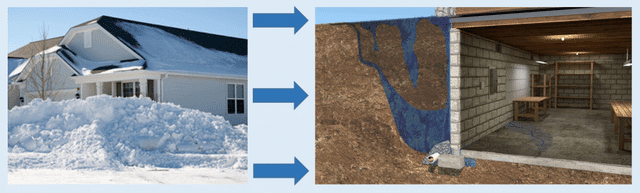
In Fargo/Moorhead, winter does not end all at once. As snow begins to melt and spring arrives, moisture management becomes one of the most important seasonal concerns for homeowners.
Snow melt and spring rain place significant stress on foundations, basements, and drainage systems. Understanding how water moves around your home helps prevent moisture problems and long term damage.
Why Snow Melt Is Different Than Rain
Snow melt behaves differently than rainfall. Instead of a short, intense event, snow melt can release water slowly over days or weeks.
This creates several challenges:
- Frozen or partially frozen soil limits absorption
- Water remains in contact with foundation walls longer
- Drainage systems may still be blocked by ice
- Sump pumps can run continuously
Because the ground is often frozen near the surface, water is more likely to move toward foundations rather than soaking into the soil.
Common Spring Moisture Problems We See
During spring inspections in Fargo ND, certain issues show up consistently.
These include:
- Basement wall moisture or dampness
- Water intrusion at window wells
- Floor drains backing up
- Sump pump failures or overwhelmed systems
- Foundation cracks becoming more noticeable
Many of these issues are seasonal and tied directly to snow melt patterns rather than sudden failures.
Start With Exterior Drainage
The most effective moisture control measures are outside the home.
Key exterior steps include:
- Making sure soil slopes away from the foundation
- Extending downspouts well away from the house
- Clearing ice and debris from gutters
- Checking window wells for drainage and covers
- Keeping snow piles away from foundation walls
Even small grading improvements can significantly reduce water pressure against the foundation.
Pay Attention to Roof and Gutter Conditions
As snow melts from the roof, large volumes of water can be directed toward the foundation if gutters are not functioning properly.
Homeowners should:
- Ensure gutters are securely attached
- Check for ice damage or sagging
- Verify downspouts are open and draining properly
- Remove debris before spring rains begin
Poor roof drainage is a common contributor to basement moisture in early spring.
Sump Pumps and Interior Drainage
For homes with sump pumps, spring is the true test of the system.
Important checks include:
- Confirming the pump operates correctly
- Testing float switches
- Making sure discharge lines are clear
- Verifying discharge water flows away from the foundation
A backup pump or battery system can provide added protection during heavy melt periods or power outages.
Foundation and Basement Monitoring
Spring is a good time to observe how your basement responds to moisture.
Watch for:
- Damp spots on walls or floors
- Musty odors
- Efflorescence or white residue on concrete
- New or widening cracks
Documenting these observations helps determine whether moisture issues are seasonal or ongoing.
Ventilation and Indoor Moisture Control
As temperatures rise, indoor humidity can increase.
Helpful steps include:
- Using bathroom and kitchen exhaust fans
- Running a dehumidifier if needed
- Avoiding blocking air flow in basement areas
- Allowing concrete surfaces to dry fully
Managing indoor humidity reduces the chance of mold growth and surface condensation.
When to Seek Professional Input
Not all moisture issues require major repairs, but recurring problems deserve attention.
If you notice repeated water intrusion, foundation movement, or persistent dampness, a professional evaluation can help identify causes and practical solutions.
Final Thoughts
Managing snow melt and spring moisture is about understanding how water moves around your home and making small adjustments before problems develop. In our climate, seasonal moisture management is part of responsible homeownership.
If you have concerns about drainage, foundation moisture, or spring conditions around your Fargo/Moorhead area home, Nordic Inspections is always available to provide clear, practical guidance. Call us to schedule at 701-566-1446 ext. 0