

Radon is one of the most common environmental concerns found in homes across North Dakota and Minnesota. Many homeowners are surprised by this, especially when their home looks dry, well built, and well maintained.
Radon is not a construction defect and it is not caused by poor housekeeping. It is a naturally occurring gas, and our region has several factors that make elevated radon levels more likely, especially during the winter months.
Understanding why radon is common and how it enters homes helps take some of the mystery out of testing and mitigation.
What Radon Is and Where It Comes From
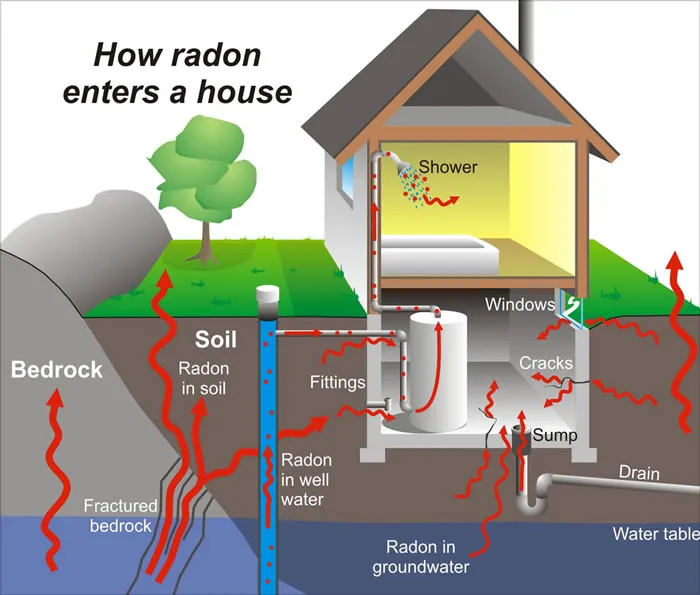
Radon is a colorless, odorless gas that forms naturally as uranium in soil and rock breaks down. It moves upward through the ground and can enter buildings through openings in contact with the soil.
North Dakota and Minnesota have higher uranium content in their soils compared to many other parts of the country. That means more radon is produced below the surface before a home is ever built.
Once a house is placed on top of that soil, the question becomes not if radon is present, but how easily it can enter the structure.
Why Radon Is So Common in ND and MN Homes
Several regional factors contribute to elevated radon levels in this area.
These include:
- Naturally occurring uranium in local soils
- Clay soils that can trap gases and redirect them toward foundations
- Basements and slab on grade foundations that are in close contact with soil
- Long winter seasons that keep homes closed up for extended periods
Because radon comes from the ground, even brand new homes with modern construction can have elevated levels. Older homes can as well. Age and appearance alone do not predict radon results.
How Radon Enters Homes
Radon moves from areas of higher pressure in the soil to lower pressure inside the home. Any opening that connects the house to the ground can become an entry point.
Common radon entry paths include:
- Cracks in foundation walls or floor slabs
- Gaps around sump pits
- Utility and plumbing penetrations
- Floor drains
- Construction joints
- Crawlspaces
These openings are often very small and not visible during a typical walkthrough. Radon does not need a large crack to enter a home.
Why Winter Makes Radon Levels Higher
Radon levels are often highest during the winter, and this is especially true in Fargo ND and surrounding areas.
There are several reasons for this.
First, homes are sealed tighter in winter. Windows stay closed and fresh air exchange is reduced. This allows radon to build up indoors.
Second, warm air rising inside the home creates a slight vacuum at the lower levels. This is sometimes called the stack effect. As warm air escapes through the upper portions of the house, it pulls air from the soil below, bringing radon with it.
Third, frozen ground and snow cover can trap radon near the foundation. When the soil surface is sealed by frost, radon is more likely to move laterally and find openings into the home rather than escaping into the open air.
The result is higher and more consistent radon readings during cold weather months.
Why Radon Is Not a One Time Issue
Radon levels can vary based on weather, seasons, and how a home is used. A low reading one year does not guarantee low levels forever, especially after renovations, foundation changes, or energy efficiency upgrades.
This is why periodic testing is recommended, particularly after major changes to the home.
What Homeowners Can Do
The only way to know a home’s radon level is to test. Visual inspections cannot detect radon.
If elevated levels are found, mitigation systems are well established and effective. These systems reduce radon by controlling how soil gases move beneath and around the home.
Radon mitigation is about managing pressure and airflow, not sealing a home completely.
Final Thoughts
Radon is common in North Dakota and Minnesota homes because of our geology, climate, and construction practices. Winter conditions often make radon levels higher by increasing pressure differences and reducing ventilation.
Testing allows homeowners and buyers to make informed decisions based on actual data rather than assumptions.
If you are buying a home or want to better understand radon levels in your home, or if you’re ready for a mitigation system, Nordic Inspections is always available to explain testing options and results clearly and responsibly. Call us today at 701-566-1446 ext. 0!