

A frozen radon pipe is something most radon mitigation systems in our region go through at some point during extreme cold. When moisture in the pipe freezes at the top of the exhaust, the fan can’t move air the way it should until the ice melts. The short answer: it’s normal in our climate, it isn’t a defect, and it will clear on its own once temperatures rise. It isn’t known to damage the fan. If your system has an ice trap, you can remove its cleanout cap so the system vents at ground level until the ice melts. Don’t hit the pipe and don’t unplug the fan.
Have a Nordic radon system? Our Radon System Troubleshooting Guide walks you through ice, snow, alarms and manometer readings in a few quick questions and tells you what to do. Choose “Water, ice or snow” to start.
This guide explains why radon mitigation systems freeze in winter, what to do (and not do) while it’s frozen, and how to use an ice trap to bypass a frozen exhaust.
Why radon mitigation systems freeze in winter
Most radon systems in homes are active soil depressurization systems. A fan pulls air from under the basement slab or from the sump and drain tile, and sends it up a plastic pipe to vent above the roof edge. The Minnesota Department of Health notes that the fan sits in an unconditioned space, such as an attic, a garage or outside the house.
The air coming from under the slab is moist. When it moves through a pipe in below-zero weather, that moisture condenses on the cold pipe walls and freezes. The ice usually builds at the top of the pipe, where the air is coldest, until it narrows or closes the opening. This happens on pipes that run up the outside of the house and on pipes that run through the attic and out the roof.
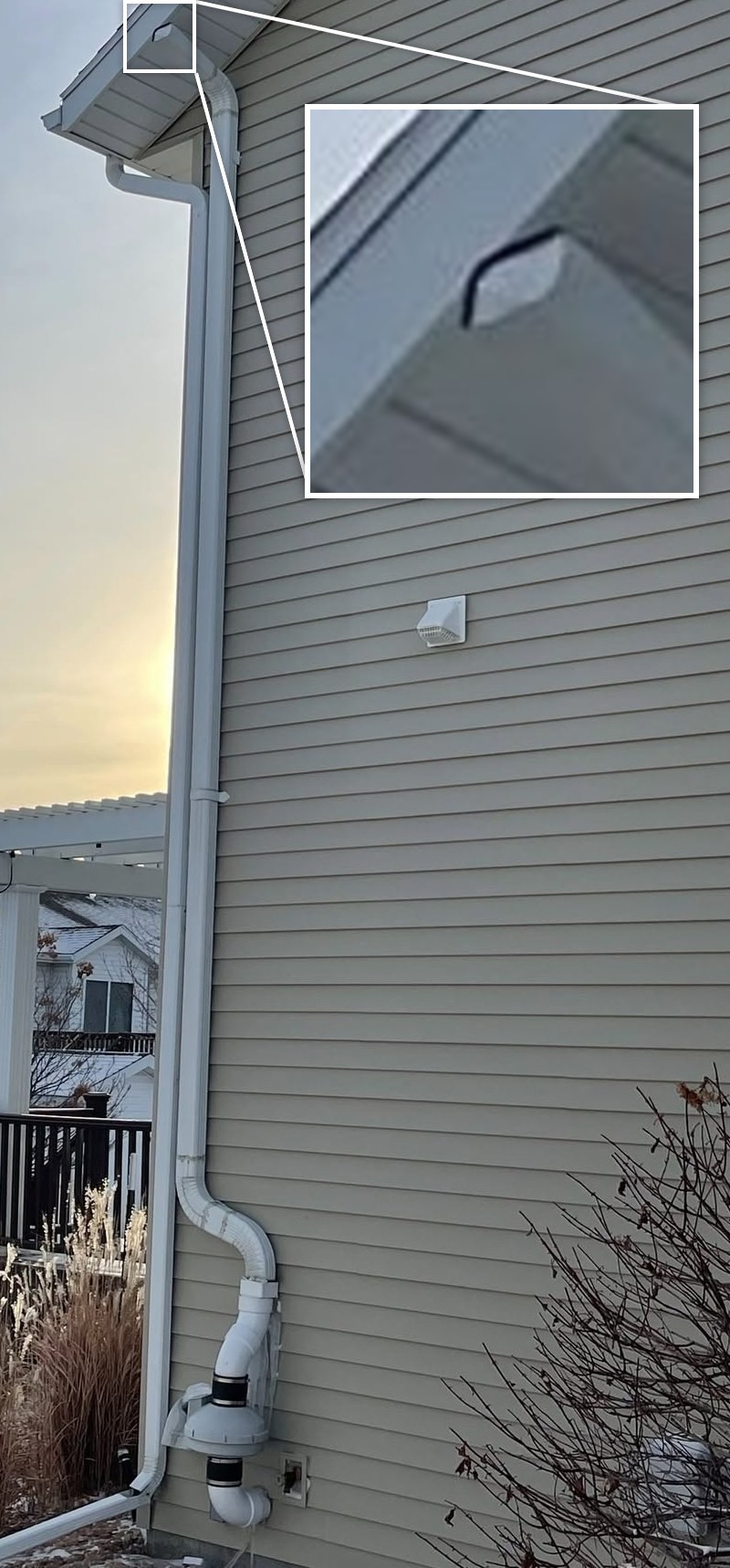
Snow adds to the problem when a drift buries a fan mounted near the ground. The ANSI/AARST mitigation standard for existing homes (SGM-SF) asks installers to configure the exhaust to avoid blockage from snow and ice. Still, in a winter like ours, even a well-built system can ice up during a long cold stretch.
How long a frozen radon pipe lasts
A radon system only works while air flows. Ice narrows or closes the pipe, so the fan pulls less suction under the slab, and radon can again get in through cracks, the sump and other openings until it thaws. That happens in the season when radon entry is already strongest; our post on why radon is common in North Dakota and Minnesota homes in winter explains that effect.
How long it lasts depends on the weather. A frozen pipe can stay blocked for a few days, or sometimes for weeks during a long cold stretch. It clears on its own once temperatures rise. A frozen exhaust isn’t known to damage the fan: radon fans are made for outdoor use, and their motors have built-in thermal protection that shuts them off if they overheat.
Signs your radon system is frozen: check the manometer
- The manometer reads even. The manometer is the U-shaped tube with colored liquid on the radon pipe. When the fan is pulling, the liquid sits higher on one side. Even liquid means no suction.
- The radon alarm is going off, if your system has one.
- Ice or frost at the top of the pipe, icicles on the fan or ice trap, or a snow drift covering the fan.
What to do when your radon pipe is frozen
- Check the manometer first. If the liquid is uneven, the system is still pulling and some ice is normal. The Minnesota Department of Health’s maintenance checklist says the reading should match the level marked when the system was installed.
- Clear snow from the fan by hand or with a broom. Never use a shovel or snowblower near the fan or pipe.
- Use the ice trap if your system has one. Remove the cleanout cap so the system vents at ground level until the ice melts (see the next section).
- Check the breaker and any GFCI outlet the fan is plugged into if the fan seems to be off. Reset it once.
- Let it work itself out. There’s nothing to repair, and a service visit can’t fix a frozen exhaust. Check the manometer again after the weather warms.
How to use an ice trap to bypass a frozen exhaust
Nordic installs an ice trap on most of the radon systems we put in. It’s a tee fitting in the exhaust pipe just above the fan, with a round cleanout cap on the side and an “Air Flow” label. It has two jobs: it keeps ice that forms inside the exhaust pipe from falling into the fan, and it gives you a way to bypass a frozen exhaust.
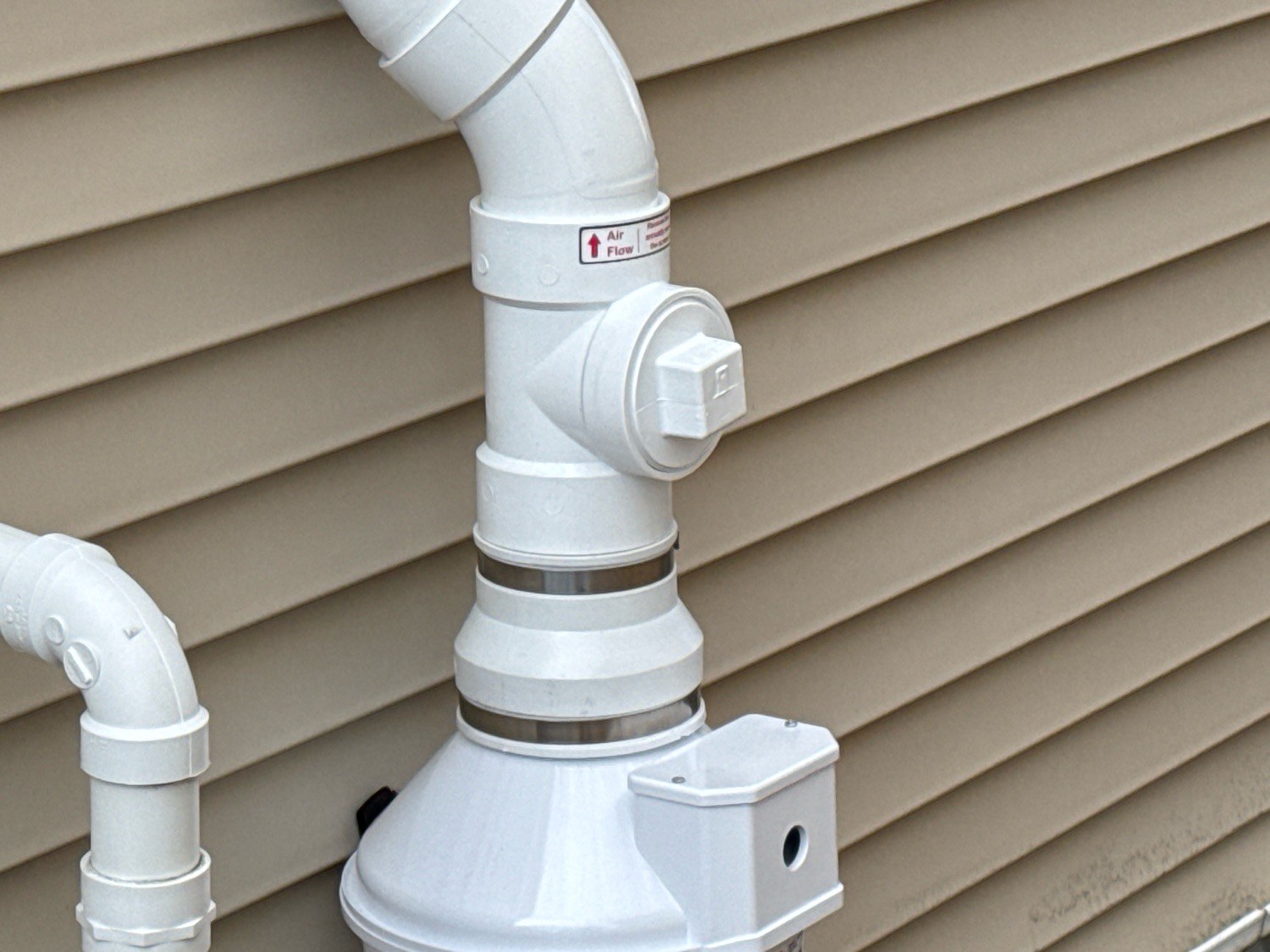
- Find the ice trap. Look on the pipe right above the fan for the tee with the round cap. The cap has a square nub so you can turn it by hand or with a wrench.
- Remove the cleanout cap. Turn it counterclockwise, by hand or with a wrench. With the cap off, the system vents radon at ground level instead of through the frozen top of the pipe.
- Check the manometer. The liquid should sit higher on one side again. That means the system is pulling from under the slab.
- Leave the cap off until the ice melts. Check the top of the pipe and the manometer after the weather warms.
- Put the cap back on. Once the top of the pipe is clear, screw the cleanout cap back on so the system vents above the roof edge again. Don’t forget this step: venting at ground level is only meant to be temporary.
If the manometer still reads even with the cap off, the problem isn’t ice at the top of the pipe. Go through the troubleshooting guide to find the cause.
What not to do
- Don’t hit, chip or heat the pipe. Plastic pipe breaks easily in the cold.
- Don’t unplug or switch off the fan. The EPA says the fan should never be turned off; it must run continuously for the system to work. Fan maker RadonAway warns that leaving a fan installed without power for more than 48 hours can cause fan failure.
- Don’t climb onto an icy roof or set a ladder on ice to reach the top of the pipe.
- Don’t cover, cap or tape the top of the pipe to keep snow out.
Can you prevent a frozen radon pipe?
Not completely. In our climate, almost every radon system will freeze at some point during extreme cold, and that’s expected. A few things help:
- Keep snow away from the fan. Don’t pile shoveled or blown snow against the side of the house where the fan sits.
- Make sure condensation can drain. RadonAway’s instructions say the system must let water drain back to the hole in the slab, with the fan mounted plumb and level, outlet up, and the pipe sloped to drain.
- Consider a vent defroster on a roof pipe. For a radon pipe that exits through the roof, a copper vent defroster such as the Sewer Skewer can help. It sits in the top of the pipe and conducts heat from the sun and the exhaust up to the opening to melt ice and snow. Its product description lists radon vent pipes along with plumbing vents. Have it put in during mild weather, never from an icy roof.
- Know where your ice trap is before the first cold snap, so you can open it when you need to.
- Look at the manometer once a month. The EPA says to look at your warning device regularly to make sure the system is working.
- Retest radon at least every two years, as the EPA recommends. If your system was installed in warm weather, a winter retest shows how it holds up in the cold.
When it isn’t the cold
A frozen pipe isn’t a reason to call anyone; it will work itself out. Have the system looked at only when the problem isn’t ice:
- The manometer still reads even after the weather has warmed up and the top of the pipe is clear.
- The fan isn’t running even though the breaker and outlet have power.
- A pipe joint is cracked, loose or leaking.
- A radon test comes back at 4 pCi/L or higher, the EPA’s action level.
If Nordic installed your system, start with our radon system troubleshooting guide. You can also learn more about our radon mitigation services and radon testing.
Frozen radon pipe: common questions
Is it normal for a radon pipe to freeze in winter?
Yes. In our region, most radon systems freeze at some point during extreme cold, especially in long cold stretches. It isn’t a defect, and it clears on its own when temperatures rise.
Will a frozen radon pipe damage the fan?
It isn’t known to. Radon fans are made for outdoor use, and their motors have thermal protection that shuts them off if they overheat. What fan makers do warn about is leaving a fan installed without power for more than 48 hours, so keep it running.
Should I turn off my radon fan when it’s very cold?
No. The EPA says the fan must run continuously. Fan makers rate their fans for cold weather (RadonAway lists an operating range down to -20°F) and warn that a fan left without power can fail.
What should the radon manometer read in winter?
The liquid should sit higher on one side, close to the level marked when the system was installed. Even liquid on both sides means no suction, from ice, a power problem or a failed fan.
Will a frozen radon pipe raise radon levels?
It can. While the pipe is blocked, the system pulls little or no suction, so radon can enter the house again until the ice clears. Opening the ice trap’s cleanout cap keeps the system pulling in the meantime. A long-term winter test or a continuous monitor tells you how your home is doing.
How do I thaw a frozen radon vent pipe?
You don’t need to. The ice clears when temperatures rise. Don’t chip or heat the pipe. If your system has an ice trap, remove the cleanout cap until the ice melts, then put it back on.
Should I call my radon contractor when the pipe freezes?
No. There’s nothing to repair, and a service visit can’t fix a frozen exhaust. Use the ice trap if you have one, and check the manometer again after it warms up.
More winter reading: preventing frozen pipes in North Dakota and radon in Fargo homes.
Sources
- U.S. Environmental Protection Agency. How do I know if my radon mitigation system is working properly?
- U.S. Environmental Protection Agency. A Consumer’s Guide to Radon Reduction
- Minnesota Department of Health. Radon Mitigation Systems
- Minnesota Department of Health. Radon Mitigation System Operation, Maintenance and Monitoring
- ANSI/AARST. SGM-SF Soil Gas Mitigation Standards for Existing Homes, section 6.4.14
- RadonAway. RPc Series Radon Fan Installation Instructions
- Sewer Skewer. Roof Vent & Pipe De-Froster product description (Menards)