

If you own or are buying a home in Fargo, Moorhead or West Fargo, you have probably heard about a bowed basement wall or a crack that “has always been there.” Foundation problems in Fargo are common, and the reason is under your feet: the Red River Valley sits on some of the most movement-prone clay soil in the region.
This guide explains why foundations move here, which signs to watch for, what the measurements in a Nordic inspection report mean, and what you can do to protect your home.
Why Red River Valley clay is hard on foundations
The Fargo-Moorhead area was once the bottom of glacial Lake Agassiz. When the lake drained, it left deep layers of fine lake sediment, in places up to 150 feet thick, according to the North Dakota Geological Survey. Near the surface is the Sherack Formation, about 20 feet of silty clay. Below it is the Brenna Formation, roughly 80 feet of dense “fat” clay.
These clays contain swelling clay minerals. When they get wet, they absorb water and expand. When they dry out, they shrink and crack. NDSU geologist Donald Schwert notes that the clays also lose strength when wet. That is why large buildings in Fargo sit on caissons drilled 105 to 130 feet deep; the FargoDome alone rests on more than 240 of them.
A house basement, by contrast, sits right in the zone where the soil swells, shrinks and freezes. For more on how these soils behave, see How Clay Soils Affect Foundations in the Red River Valley.
Water and frost pressure
Three forces do most of the damage to basement walls here:
- Hydrostatic pressure. After heavy rain or snowmelt, saturated soil pushes against the wall. Clay drains slowly, so that pressure can last for weeks.
- Swelling and shrinking. Wet years swell the soil against the wall. Drought pulls it away and lets the foundation settle. The 1988-89 drought caused severe foundation damage across the area, and NDSU Extension warned of the same risk during the dry summer of 2017.
- Frost. Wet soil expands when it freezes. NDSU Extension notes that frost pressure can push basement walls inward far enough to crack them, and that clay or silt soil with a high water table raises the risk.
Concrete block walls are more vulnerable to this sideways pressure than poured concrete walls. That is why bowing block walls are a frequent finding in older Fargo-Moorhead homes.
Signs of foundation movement
Inside the home:
- Horizontal cracks in a basement wall, especially near mid-height
- Walls that bow inward or lean at the top
- Stair-step cracks in block walls, or blocks that have shifted
- Doors and windows that stick or no longer latch
- New cracks in drywall or plaster, especially at the corners of doors and windows
- Floors that slope or feel uneven
Outside the home:
- Gaps between the soil and the foundation during dry spells
- Soil that slopes toward the house, or downspouts that empty next to the wall
- Cracks in the exterior foundation or brick
Not every crack means trouble. Thin vertical cracks in poured concrete are often shrinkage cracks from when the concrete cured. Horizontal cracks, cracks that are wider at one end, and walls that are out of plumb deserve a closer look.
What the measurements in your inspection report mean
During a Nordic home inspection, we check basement walls for bowing, cracking and shifting, and we measure how far a wall leans out of plumb. Each finding is color-coded in your report:
| Measurement | Report color | What it means |
|---|---|---|
| Leaning less than 1 inch | Blue | Minor movement. Note it and monitor for change. |
| Leaning 1 to 2 inches | Orange | Monitor or repair. Make sure drainage and water control around the house are working properly. |
| Leaning more than 2 inches | Red | Significant movement that needs prompt attention from a structural engineer or foundation contractor. |
Bowing, bulging and horizontal cracks are marked Orange, and we recommend an evaluation by a structural engineer or a qualified foundation contractor.
If you want to know whether the house has settled, our Foundation Elevation Survey uses a digital high-precision altimeter to measure floor heights across the home and show where settlement has occurred.
How bowing and leaning walls are repaired
The right repair depends on how far the wall has moved, what it is made of, and whether it is still moving. Start with a structural engineer rather than a sales estimate. An engineer’s evaluation gives you an independent repair plan that contractors can bid against.
Common repairs in this area:
- Wall anchors (tie-backs). Steel rods run through the wall to anchor plates buried in stable soil outside. They are tightened to hold the wall, and sometimes to pull it back over time.
- Steel I-beam braces. Vertical beams are fastened to the basement floor and the floor framing above to stop further inward movement.
- Carbon fiber straps. Bonded to the wall to stabilize walls with limited movement.
- Excavation and rebuild. For walls that have moved too far, the soil is dug away and the wall is straightened or rebuilt, often with new drainage.
- Piers. For settlement (sinking) rather than bowing, piers carry the load down to deeper, more stable soil.
Ask for written documentation of the work and a warranty that transfers to the next owner. If you are buying a home with repaired walls, ask the seller for both.
How to protect your foundation
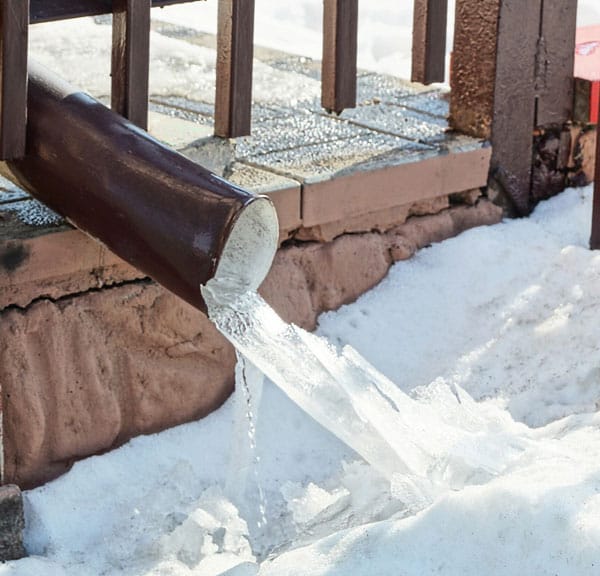
In clay soil, proper drainage and water control are the most important things you can do for your foundation:
- Grade the soil away from the house, about 1 inch of drop per foot for the first 5 feet. See Lars Knows: Good Grade.
- Extend downspouts so they discharge about 6 feet from the foundation, and keep gutters clean so they don’t overflow next to the wall.
- Keep your sump pump working and discharging away from the house, including in winter. See how to discharge your sump pump in winter.
- Keep soil moisture steady in a drought. NDSU Extension recommends watering slowly with a soaker hose placed 1 to 2 feet from the foundation, in several sessions, rather than flooding the area.
- Don’t fill drought gaps with soil. NDSU advises against it: the added soil swells against the wall when moisture returns.
- Track cracks. Mark the ends of a crack with a pencil and the date, and take a photo. If it grows, call a professional.
Foundation problems in Fargo: common questions
Are cracks in my basement wall normal?
Thin vertical cracks in poured concrete are common and usually come from shrinkage. Horizontal cracks, stair-step cracks in block walls, and cracks that are wider at one end are more likely signs of soil pressure and should be evaluated.
Should I buy a house with a bowed basement wall?
Many buyers do, with the right information. Get a structural engineer’s evaluation and a repair estimate before your inspection contingency ends, and ask the seller for records and warranties for any past repairs.
Does watering near my foundation help?
During a drought, yes. Slow, steady watering keeps clay from shrinking away from the wall. In wet seasons the goal is the opposite: move water away from the house.
Does homeowners insurance cover foundation repair?
Often not. Many policies exclude damage from settling or soil movement. Check your policy and ask your agent.
Sources
- Anderson, Fred J. A Highlight of Engineering Geologic Issues in Fargo. North Dakota Geological Survey.
- Schwert, Donald P. Geology of the Fargo-Moorhead area. North Dakota State University.
- Hellevang, Ken. Dry Soil May Cause Building Problems. NDSU Extension, June 30, 2017.
- NDSU Extension, publication AE1594 (Hellevang), on frost and soil pressure on basement walls.
- The Forum of Fargo-Moorhead, reporting on drought-related foundation damage in the area.