
Roof moss and algae: what you are looking at
Dark streaks running down a shingle roof, or green clumps on the shady side of a garage, catch a lot of eyes. Roof moss and algae are often lumped together, but they are different problems. Algae is mostly a cosmetic stain. Moss, if it is left to grow, can shorten the life of a roof.
This guide explains why roof moss and algae show up on some Fargo-Moorhead homes, what it means when we find them during a home inspection, and how to remove them without damaging the shingles.
Moss and algae are not the same thing
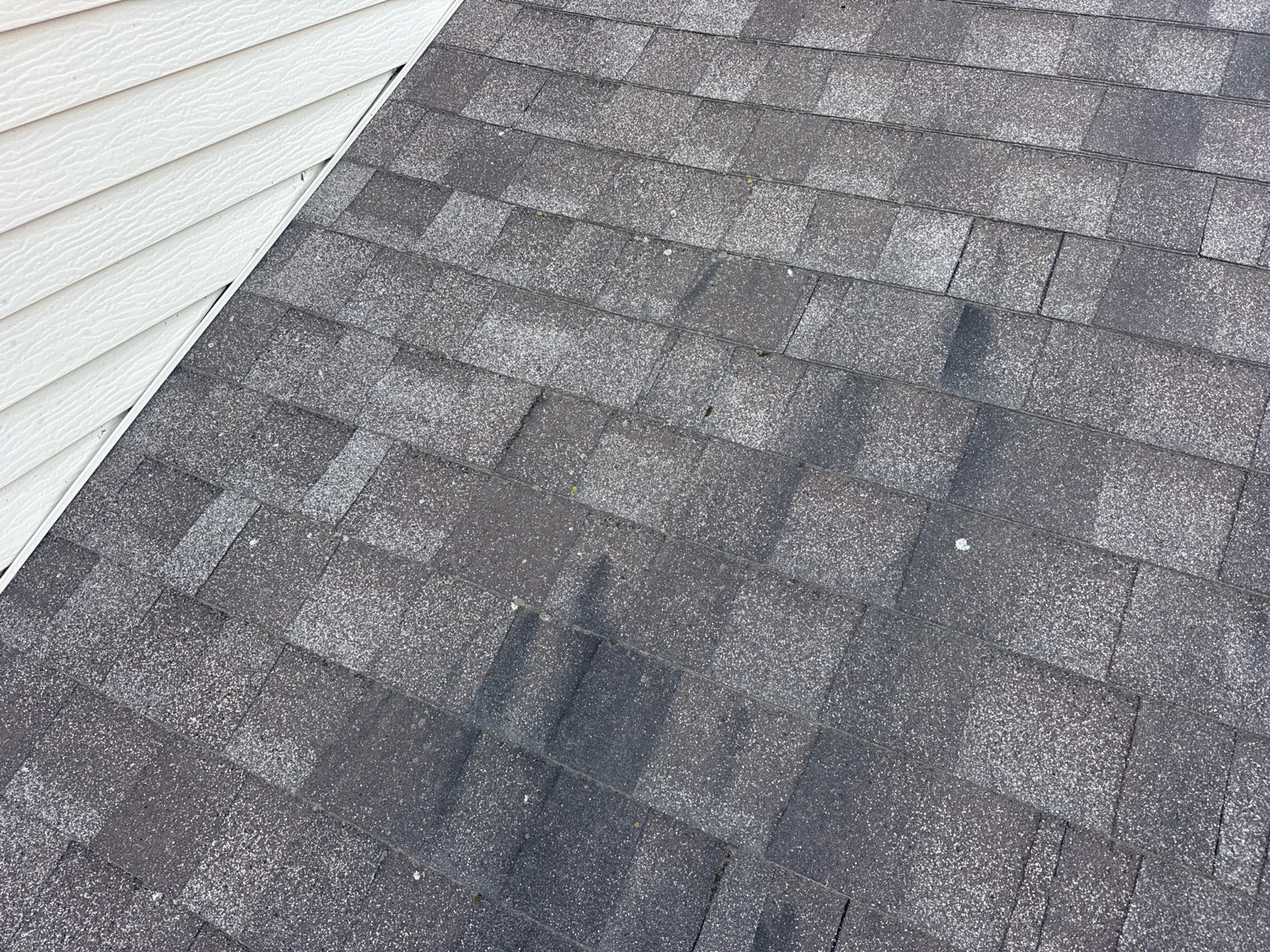
Algae causes the black or dark brown streaks you see on many asphalt roofs. The Asphalt Roofing Manufacturers Association (ARMA) names Gloeocapsa magma as the most common species. Algae spores travel through the air, and the streaks show up most on light-colored shingles. ARMA treats algae as a discoloration problem, not structural damage.
Moss is a plant. It forms raised green clumps, usually starting in the joints between shingles, along the lower edges of shingle tabs and on the ridge cap. Oregon State University Extension explains that moss does not attack roofing directly. The trouble is what it holds: moss traps soil and debris and keeps moisture against the roof. On wood shake roofs that extra moisture speeds up decay. On asphalt roofs, moss can lift shingle edges and let water reach the layers underneath.
Why roof moss and algae show up in Fargo-Moorhead
Our climate is colder and drier than places like the Pacific Northwest, where roof moss is famous, so most Fargo-Moorhead roofs stay fairly clean. When we do find growth, it nearly always comes down to shade and moisture:
- Shade from mature trees. Moss needs shade to thrive. Roofs under large trees in established neighborhoods stay damp longer after rain, dew and snowmelt.
- North-facing slopes. They get the least sun and dry out the slowest, so organic growth tends to start there.
- Leaves and debris. Leaves, seeds and needles that sit in valleys, behind chimneys and in gutters hold moisture against the shingles.
- Garages and outbuildings. Detached garages and sheds are often tucked under trees and get less attention than the house.
- Older and wood roofs. Worn shingles and cedar shakes have more texture and gaps where moss can take hold.
What it means in an inspection report
During a home inspection, we look at the roof covering from the roof surface or a ladder when it is safe to do so, and from the ground when it is not. When we find moss or algae, the comment usually says:
- Moss build-up (asphalt or wood roofs): moss is holding moisture on the roof. We recommend removal by a qualified roofer or roof-cleaning contractor, and a check for lifted, cracked or damaged shingles underneath once it is gone.
- Algae (asphalt roofs): dark streaking from algae. It is mostly cosmetic. Cleaning is optional, and algae-resistant shingles are worth considering at the next reroof.
The same comments apply to garages and outbuildings. Heavy growth can also hide the condition of the shingles below it, which limits what anyone can see until the roof is cleaned. If the roof also shows granule loss or impact marks, see our guide to Roof Hail Damage in Fargo-Moorhead.
How to remove roof moss and algae safely
A wet roof is slippery, and both ARMA and OSU Extension point out the fall risk. ARMA recommends hiring trained professionals for roof cleaning. If you do any of the work yourself, stay on a ladder or walkboards where you can, wear shoes with good traction, extend the ladder at least 3 feet above the roof edge, and use a safety line on steep roofs.
For algae streaks, ARMA recommends:
- Check the shingle manufacturer’s cleaning directions first. Their requirements come before any general advice.
- Apply a solution of household bleach and water, mixed according to the manufacturer’s directions.
- Leave it on for at least 15 minutes, but no more than 20.
- Rinse gently with low-pressure water. Do not scrub, and do not use a pressure washer, brush or broom.
Rinse nearby plants with water before and after, and keep the solution off them as much as you can.
For moss, OSU Extension recommends cleaning the loose moss off before treating the roof. Gentle work with a long-handled brush, from the top of the roof down, is safer for asphalt shingles than scraping. Pressure washing done wrong can damage shingles, and ARMA warns that high-pressure washing is likely to damage asphalt roofing. After cleaning, a moss treatment can slow regrowth:
- Zinc sulfate (monohydrate), applied with a pump sprayer according to the label.
- Potassium salts of fatty acids, a soap-based product that is biodegradable and noncorrosive.
Do not use zinc products on a roof with copper gutters, downspouts or flashing. Zinc corrodes copper. With any product, follow the label and keep the spray off your landscaping.
Scrubbing hard or scraping can strip the protective granules off asphalt shingles, which ages the roof faster than the moss would. When in doubt, hire a roofer or roof-cleaning contractor.
How to keep moss and algae from coming back
Cleaning alone does not last if the conditions stay the same. To keep a roof clear:
- Let the sun in. OSU Extension calls trimming nearby trees the most effective long-term fix for moss. Hire a tree service for branches over the roof.
- Keep the roof and gutters clear. Remove leaves and debris from valleys and gutters each fall. Our post Before the Next Heavy Rain, A Quick Thing to Check covers gutters and downspouts.
- Add zinc or copper strips. Metal strips installed near the ridge release small amounts of metal into rainwater as it runs down the roof, which helps resist moss. A shaded or north-facing roof may need more than one row. Install them according to the manufacturer’s instructions.
- Choose algae-resistant shingles when you reroof. ARMA recommends them for homeowners who are replacing a roof. Many use copper-containing granules.
For more seasonal checks, see What Homeowners Should Check Before Fall in Fargo/Moorhead.
Roof moss and algae: common questions
Do black streaks mean my roof is failing?
Usually not. Algae streaks are a stain on the surface of the shingles. A roof can still have other wear, though, such as granule loss, curling or cracked shingles, so the streaks alone do not tell you its condition. A home inspection or a roofer can evaluate the whole roof.
Can I pressure wash moss off my roof?
It is not recommended. ARMA warns that high-pressure washing is likely to damage asphalt roofing, and OSU Extension notes that improper technique can harm shingles. Gentle cleaning and a moss treatment are safer.
Will moss come back after the roof is cleaned?
It will if the roof stays shaded and damp. Trimming trees, keeping debris off the roof and adding zinc or copper strips all make regrowth less likely.
Is roof moss common in Fargo-Moorhead?
Less common than in wetter climates. We see it mostly on shaded and north-facing roofs, on roofs under large trees, and on detached garages and sheds.
Should I clean my roof before selling my house?
Removing moss is reasonable maintenance, especially if it is lifting shingles. Use a roofer or roof-cleaning contractor so the shingles are not damaged in the process.
Sources
- Asphalt Roofing Manufacturers Association (ARMA). Algae Discoloration.
- Oregon State University Extension Service (Kym Pokorny, with Jay W. Pscheidt). How to control roof moss and prevent long-term damage. Reviewed 2025.
- Guertin, Mike. Preventing Moss on Shingles. Journal of Light Construction, June 13, 2024.