
If you’ve stepped outside today, you’ve probably noticed the haze, smelled the smoke, or checked the air quality on your phone. Air quality across the Fargo Moorhead area has reached unhealthy levels due to wildfire smoke.
While we can’t control the air outside, there are several simple steps homeowners can take to improve the air inside their homes.
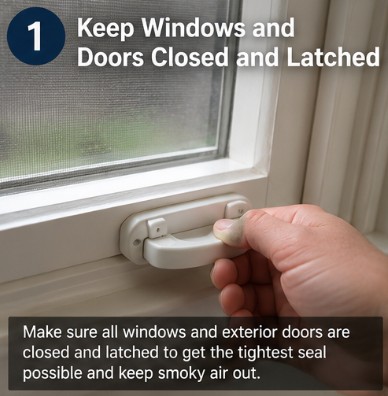
1. Keep Windows and Doors Closed and Latched
As tempting as it is to let fresh air in, today is not the day.
Make sure all windows and exterior doors are not only closed, but fully latched. Latching them helps compress the weatherstripping and creates the tightest seal possible, reducing the amount of smoky outdoor air that can leak into your home.
It’s also a good time to check that basement windows, garage service doors, and other less frequently used openings are securely closed.
2. Check Your Furnace Filter
Your HVAC system is one of the best tools your home has for improving indoor air quality.
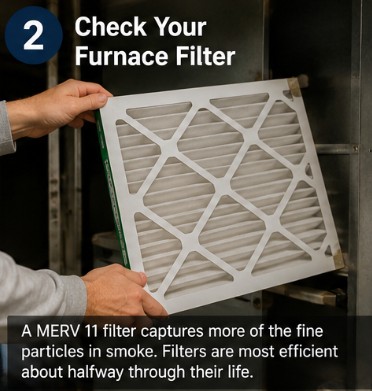
Many homeowners assume a brand new filter works best, but that’s not entirely true. As a filter captures dust and other particles, it actually becomes more efficient at trapping smaller particles. In fact, a filter is often at its highest efficiency about halfway through its normal service life. The key is making sure it isn’t so dirty that it begins restricting airflow.
If your filter is due for replacement, consider installing a MERV 11 filter if your HVAC system is designed to accommodate it. A MERV 11 filter captures a much higher percentage of the fine PM2.5 particles found in wildfire smoke than a basic fiberglass filter, while still allowing adequate airflow in most residential heating and cooling systems.
If you’re unsure what filter your furnace can handle, check the manufacturer’s recommendations or ask your HVAC contractor before moving to a higher efficiency filter.
3. Run Your HVAC Fan
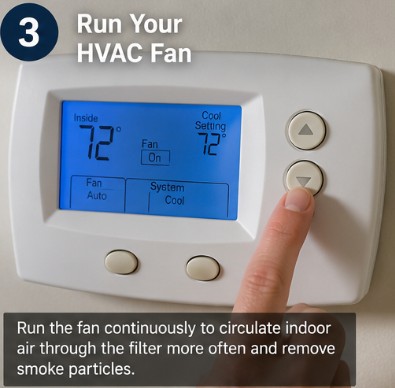
Many thermostats allow you to run the blower fan continuously, even when the air conditioner is not actively cooling.
Running the fan circulates indoor air through the furnace filter more frequently, allowing your HVAC system to continuously remove smoke particles from the air inside your home.
4. Use a HEPA Air Purifier
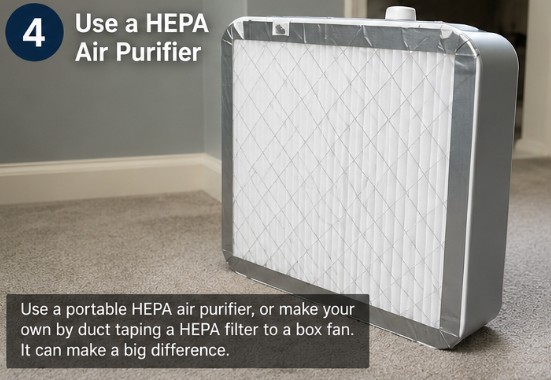
If you own a portable HEPA air purifier, today is the perfect time to use it.
Running a purifier in the room where your family spends the most time, or in bedrooms overnight, can significantly improve indoor air quality.
Don’t own an air purifier? A simple do it yourself option is to securely tape a HEPA filter to the intake side of a standard box fan. While it won’t perform like a commercial air purifier, this inexpensive setup can still remove a surprising amount of fine smoke particles from a single room.
5. Turn Off Your HRV or ERV
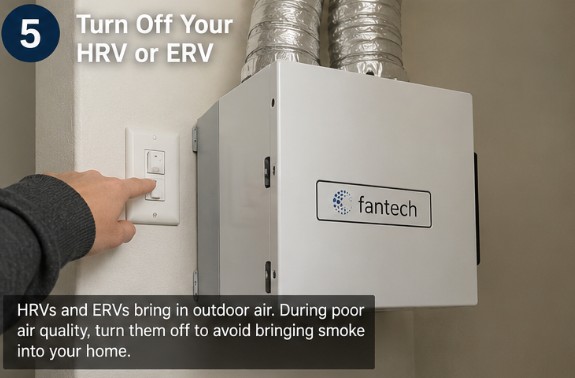
Many newer homes in our area have a Heat Recovery Ventilator, or HRV, or an Energy Recovery Ventilator, or ERV.
These systems are designed to continuously bring fresh outdoor air into your home while exhausting stale indoor air. Normally, that’s exactly what you want.
However, during periods of extremely poor outdoor air quality, these systems can also bring smoke into your home. If smoke levels are high, consider temporarily turning off your HRV or ERV until outdoor air quality improves. Once conditions return to normal, remember to turn the system back on so your home resumes its normal ventilation.
6. Limit the Use of Powerful Exhaust Fans
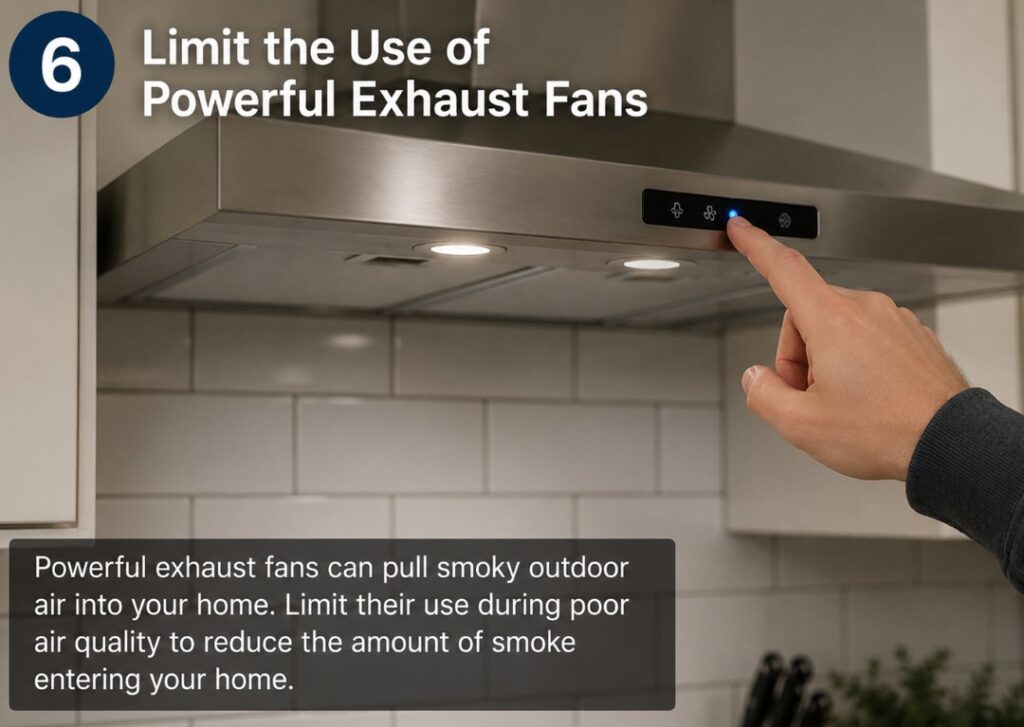
Powerful kitchen range hoods, bathroom exhaust fans, clothes dryers, and central vacuum systems all remove air from your home.
As that air is exhausted outdoors, your home has to replace it. This creates negative pressure inside the home, causing outdoor air to be pulled in through small gaps around windows, doors, attic penetrations, rim joists, and other openings in the building envelope.
When outdoor air is filled with wildfire smoke, that’s the air your home is drawing inside.
Use your kitchen range hood and bathroom exhaust fans when they’re needed, but avoid running them longer than necessary while air quality remains poor. If you have a large, high capacity kitchen exhaust fan, limiting its use during a smoke event can help reduce the amount of smoky outdoor air entering your home.
Your Home Plays a Bigger Role Than You Think
Most homeowners think of their HVAC system as something that keeps the house warm in the winter and cool in the summer. Days like today are a good reminder that it also plays an important role in maintaining healthy indoor air.
Routine maintenance, changing filters on schedule, understanding how your ventilation systems work, and making sure your heating and cooling equipment is operating properly can make a noticeable difference during events like this.
A Final Thought
Wildfire smoke events are becoming more common across our region. While the smoke will eventually clear, taking a few simple steps today can help create a healthier indoor environment for you and your family.
At Nordic Inspections, we spend a lot of time helping homeowners understand how their homes work. From ventilation and insulation to HVAC systems and moisture management, every component contributes to the comfort and health of the people living inside.
Stay safe, stay indoors when possible, and breathe a little easier knowing that a well maintained home can help protect your family when outdoor air quality takes a turn for the worse.