

A ceiling fan that wobbles, clicks or hums is easy to ignore. Most ceiling fan problems are minor and easy to fix, but a fan that is loose at the ceiling or making electrical noises is worth taking seriously. A spinning fan puts real force on its mount, and it hangs over the people below it.
This guide explains the ceiling fan findings we see most often during home inspections, what causes them, what they mean in an inspection report, and what you can safely check yourself.
Why ceiling fans wobble
A little movement is normal, but a fan that visibly sways or shakes the light fixture has a cause. Hunter Fan Company lists the usual suspects:
- Loose screws at the mounting bracket, downrod, blades or light kit.
- Warped, bowed or twisted blades.
- Bent blade irons (the metal arms that hold the blades).
- Uneven weight from one blade to the next.
- Dust buildup on the blades and motor.
- A slightly uneven ceiling or an incorrect installation.
Older fans and fans in humid rooms such as bathrooms, porches and three-season rooms are more likely to have warped blades. Hunter is blunt about that one: “Warped blades cannot be balanced,” so they have to be replaced.
How to fix a wobbling ceiling fan
Turn the fan off and let it stop before you touch it, and work from a stable ladder. Hunter’s manufacturer guidance follows this order:
- Check clearance. The blade tips should have at least 30 inches of clearance from the nearest wall or object.
- Remove the canopy cover at the ceiling and make sure the mounting bracket is tight.
- Clean the blades and motor housing.
- Tighten the screws at the mounting plate, downrod set screw, blades and light kit.
- Sight down each blade toward the motor to look for warping.
- If it still wobbles, use a balancing kit. Run the fan on high, clip the balancing clip to one blade at a time to find the one causing the wobble, slide the clip until the wobble is smallest, then attach a small weight at that spot.
Most wobbles are solved at step 4 or with a balancing kit. If the fan still sways, or if the mounting bracket itself is loose in the ceiling, the problem is in the support, not the blades.
Fans that are not well secured
The box in the ceiling matters more than most people realize. The National Electrical Code requires that a ceiling fan be supported either independently of the electrical box or by a box that is listed and marked as suitable for fan support, for fans up to 70 pounds. Boxes for fans over 35 pounds must also be marked with the weight they can hold.
An ordinary light fixture box is not made for the twisting and vibration of a fan. When a fan has been hung from one, the screws can loosen over time and the fan can pull away from the ceiling. Signs of a poorly secured fan include:
- A fan or canopy that moves when you gently push on it with the fan off.
- A gap that opens between the canopy and the ceiling while the fan runs.
- Excessive vibration that shakes the light kit or the ceiling around the fan.
- Cracked drywall or paint around the canopy.
ENERGY STAR also recommends mounting fans with the blades at least 7 feet above the floor, and 8 to 9 feet where the ceiling allows, for safety and better airflow.
Why ceiling fans get noisy
The type of noise usually points to the cause. Hunter’s troubleshooting guidance breaks it down this way:
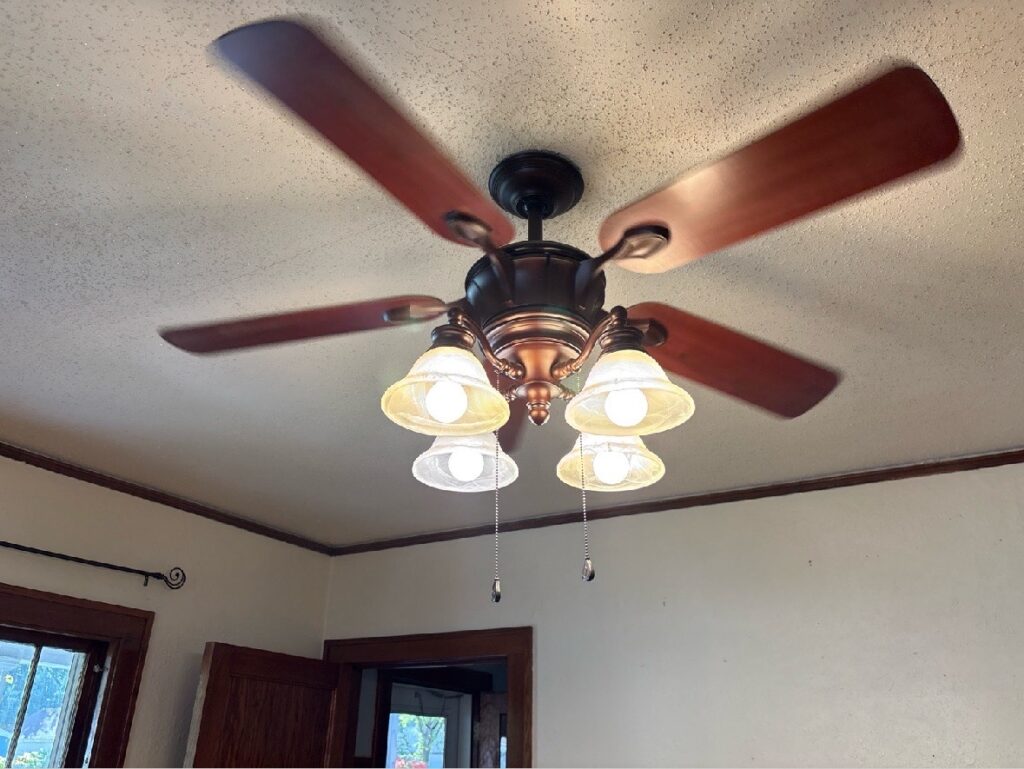
- Clicking: usually loose blade screws or loose blade holder screws. Tighten them.
- Rubbing or scraping: blade holders installed upside down so they touch the motor housing, usually an installation error. Check the owner’s manual.
- Humming or buzzing: often a wall dimmer switch that is not made for fan motors, the wrong bulbs in the light kit, or an incompatible remote receiver. Hunter notes that “light dimmer switches” are a common cause of hum.
- Crackling or sizzling, or a burning smell: a possible electrical fault. Turn off power to the fan right away and have a licensed electrician look at it.
Rattling is often a loose light globe, glass shade or pull chain, or a loose canopy screw. A grinding sound from the motor itself usually means worn bearings or a failing motor, and replacing the fan is often the practical fix.
Which way should a ceiling fan spin in summer and winter?
Most ceiling fans have a small direction switch on the motor housing, and many remotes have a reverse button. The direction matters because it decides whether the fan pushes air down onto you or pulls it up toward the ceiling. Looking up at the fan from below:
- Summer: counterclockwise. The blades push air straight down, and the breeze on your skin makes the room feel cooler. As the Massachusetts Department of Energy Resources puts it, “During the summer, a ceiling fan increases comfort by blowing air downward on room occupants.” Stand under the fan and you should feel a steady breeze.
- Winter: clockwise, on low. The U.S. Department of Energy recommends reversing the motor “so it rotates clockwise at a low speed.” That draws air up toward the ceiling and pushes the warm air that collects up high down along the walls into the room, without a cold breeze on the people below. On low speed you should barely feel any air moving.
A fan doesn’t heat or cool the air itself. In the Department of Energy’s words, “The ceiling fan won’t change the temperature in the room, but it will help keep you warm.” The savings come from what you do with the thermostat: in summer the breeze lets you set the air conditioning a little warmer and stay comfortable. Because a fan helps people rather than the room, turn it off when you leave.
Winter mode is most useful in our long Fargo-Moorhead heating season, especially in rooms with high or vaulted ceilings, where warm air pools far above where you sit. Always turn the fan off and let it stop completely before you flip the direction switch.
What these findings mean in an inspection report
During an inspection we run each accessible ceiling fan on its speeds and look for wobble, noise, vibration and a secure mount. When we find a fan that is unbalanced, noisy, vibrating excessively or not well secured, we note it and recommend having the fan repaired or replaced as necessary.
A wobble or a clicking blade is usually a simple maintenance fix. A fan that is loose at the ceiling, hung from a box we can’t confirm is rated for a fan, or making electrical noises is a safety item, and we recommend a qualified electrician. An inspection is visual, so we don’t take fans apart or remove canopies to see the box.
When to call an electrician
Tightening screws, cleaning blades and balancing a fan are reasonable do-it-yourself jobs. Call a licensed electrician when:
- The fan or its bracket is loose in the ceiling.
- You need to replace the box or add a fan where a light fixture was.
- You hear crackling, see sparks or smell burning.
- The fan hums on a dimmer and you want a fan-rated control installed.
Our post on why homeowners shouldn’t do their own electrical work explains why wiring jobs are best left to a pro.
Ceiling fan care checklist
- Dust the blades every few months; dust adds uneven weight.
- Check and tighten blade and canopy screws once a year.
- Run the fan on high after cleaning to make sure it runs smoothly.
- Use a wall control made for fan motors, not a standard light dimmer.
- When buying a home, ask about the age of the fans and whether they were installed on fan-rated boxes. A home buyer’s inspection checks every accessible fan.
Ceiling fan problems: common questions
Is a wobbling ceiling fan dangerous?
A small wobble usually isn’t, but a fan that is loose at the mount or shakes the ceiling can work its screws loose over time. Fix the cause rather than living with it.
Can a ceiling fan fall?
It is uncommon, but it can happen when a fan is hung from a box that isn’t rated for fan support or when the mounting hardware works loose. A fan-rated box and a tight bracket prevent it.
Why does my ceiling fan hum?
The most common causes are a standard light dimmer controlling the fan, the wrong bulbs, or an incompatible remote receiver. Crackling or a burning smell is different: turn the power off and call an electrician.
Which way should my ceiling fan turn in winter?
Clockwise on low speed, looking up from below. That moves warm air from the ceiling back down into the room without creating a cold breeze. In summer, switch it back to counterclockwise.
Do I need a balancing kit?
Only after you’ve tightened all the screws and checked the blades. Many fans come with one, and kits are sold at hardware stores.
Sources
- Hunter Fan Company. How to Fix a Wobbly Ceiling Fan.
- Hunter Fan Company. How to Fix a Noisy Ceiling Fan.
- EC&M. Code Q&A: Support Requirements for Ceiling-Suspended Fans (National Electrical Code 314.27(C) and 422.18).
- ENERGY STAR. Ceiling Fan Basics.
- U.S. Department of Energy. 5 Tips to Help You Save on Energy Bills This Winter.
- Massachusetts Department of Energy Resources. Ceiling Fans: Consumer Tip Sheet.