

The outdoor unit of a central air conditioner sits in the yard all year, collecting leaves, grass clippings and cottonwood fluff, and baking in the sun. Three findings come up again and again when we look at these units: a dirty condenser coil, damaged insulation on the refrigerant line, and ice on the line. Good AC condenser maintenance prevents all three, and most of it is simple.
This guide explains what each finding means, why it matters for comfort and energy bills, what you can safely do yourself, and when to call an HVAC contractor.
How the outdoor unit works
A central air conditioner moves heat from inside the house to the outside. Indoors, refrigerant in the evaporator coil absorbs heat from the air. The refrigerant then travels through two copper lines to the outdoor unit, called the condenser, where a fan pulls air across a coil of thin aluminum fins and releases that heat outdoors.
Of the two copper lines, the larger one is the suction line. According to the U.S. Department of Energy’s Building America Solution Center, it carries cool refrigerant gas back to the outdoor unit and is the line that needs insulation. The smaller line usually does not.
Dirty condenser coils
The fins on a condenser coil are packed tightly together, so they catch whatever the fan pulls in. The Department of Energy lists dryer vents, falling leaves and lawn mowers as common sources of debris. In Fargo-Moorhead, the cottonwood fluff that drifts through neighborhoods in early summer is a common culprit, and it often mats on the coil right as the cooling season starts.
A dirty coil can’t release heat as well. ENERGY STAR notes that dirty coils make the system run longer, which raises energy costs and shortens equipment life.
How to clean a condenser coil safely:
- Turn off the power. Switch the thermostat off and shut off the outdoor disconnect, the switch box mounted on the wall near the unit.
- Clear the area. Remove leaves and debris from around and on top of the unit. The Department of Energy recommends keeping plants and shrubs trimmed at least 2 feet back from the coil.
- Rinse gently. Use a garden hose with a gentle spray, not a pressure washer. The fins are thin and bend easily. Manufacturer cleaning procedures, such as Trane’s, call for spraying in the reverse direction of the airflow, from the inside out, so debris is pushed back out rather than deeper in.
- Leave the rest to a pro. Chemical coil cleaners, straightening bent fins and removing the top of the unit are best left to an HVAC technician.
Clean or replace the furnace filter too. ENERGY STAR recommends checking it monthly, since a clogged filter restricts airflow across the indoor coil.
Damaged refrigerant line insulation
The foam insulation on the suction line does real work. The Building America Solution Center explains that it keeps the refrigerant in the correct state, minimizes energy losses and prevents condensation. When the insulation is missing, the line picks up heat from the outdoor air before the refrigerant reaches the condenser, and indoors a bare cold line can drip condensation into walls, basements and crawlspaces.
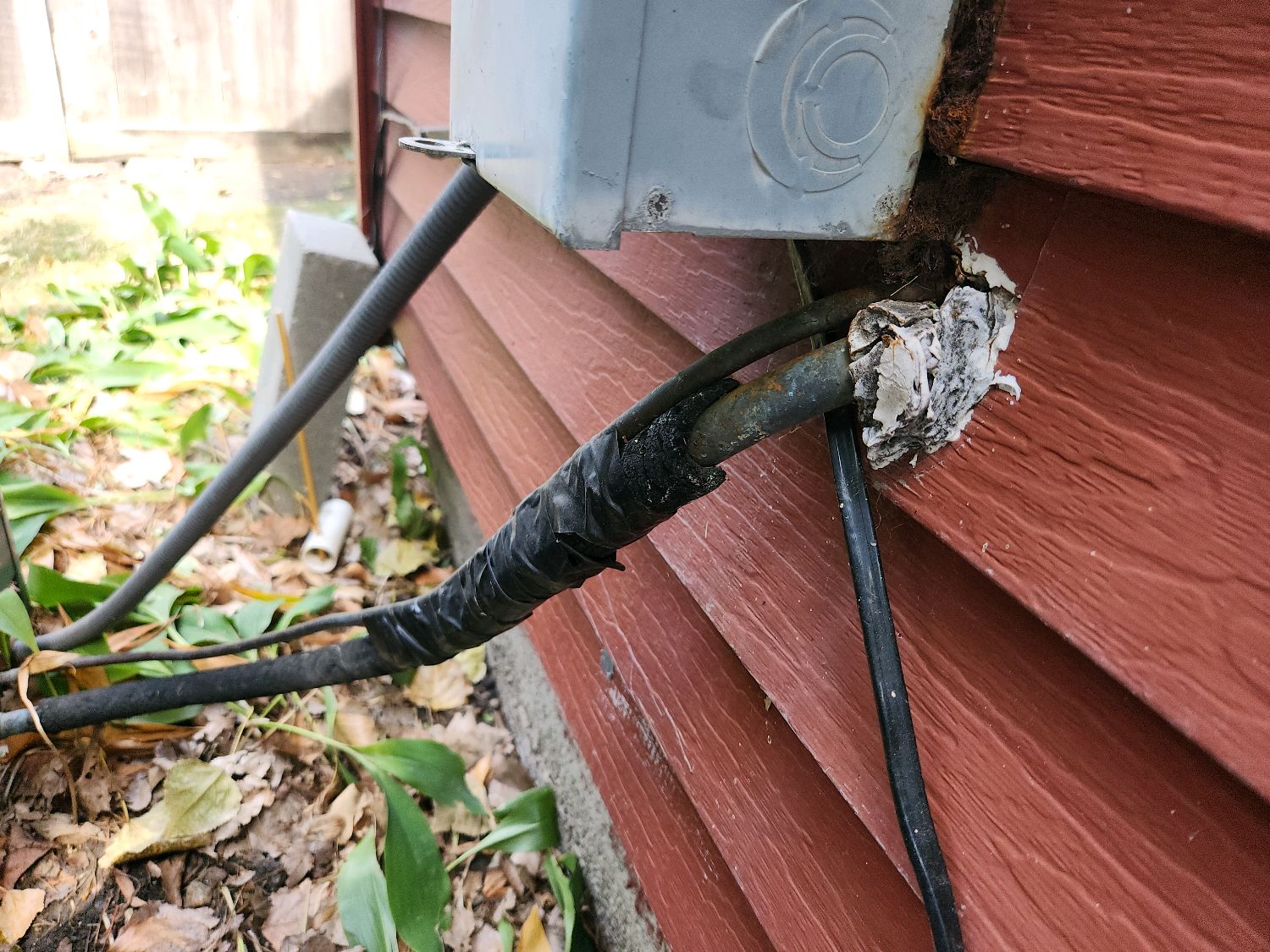
Outdoors, sunlight is the main enemy. The Solution Center notes that most hardware-store pipe insulation is not rated for outdoor or UV exposure, so over a few summers it cracks, crumbles and falls away. Look for cracked or missing sections, bare copper along the larger line, and loose, flapping tape.
How it is fixed. The damaged insulation is replaced with closed-cell foam sized to the line, then protected from the sun with a UV-resistant jacket or UV-resistant tape. The Solution Center recommends wrapping tape from the bottom up, with each layer overlapping the one below so water runs off, and insulating the whole line, not just most of it. Be careful not to bend, kink or cut the copper line or the wiring that runs with it.
Ductless mini-split heat pumps are different: both lines usually need insulation, because the smaller line also runs cold.
Ice on the refrigerant line
Frost or ice on the suction line, or on the outdoor unit, is a sign the indoor coil is getting too cold. Lennox lists the most common causes:
- Restricted airflow from a dirty filter, a dirty indoor coil, or supply and return vents blocked by furniture, rugs or curtains
- Low refrigerant, which usually means a leak that needs professional repair
- Running the AC when it is too cool outside, below about 60°F
What to do if you see ice:
- Turn the cooling off at the thermostat so the ice can melt. Don’t chip or scrape the ice off.
- Run the fan by itself, which Lennox notes helps the ice thaw faster.
- Check and replace the filter if it’s dirty, and make sure vents are open.
- If the ice comes back, call an HVAC contractor. Persistent icing needs a professional diagnosis.
Topping off refrigerant without finding the leak is not a fix. The Department of Energy says a technician should check the refrigerant charge, test for leaks with a leak detector, and recover any refrigerant that has to be removed rather than releasing it.
What these findings mean in an inspection report
During a home inspection, we look at the outdoor unit, the refrigerant lines and the visible parts of the indoor equipment. When we find a dirty coil, damaged line insulation or ice on the line, we describe what we saw and recommend the next step: cleaning, replacing the insulation, or an evaluation by a qualified HVAC contractor.
Many of our inspections happen in seasons when it is too cool to run an air conditioner without risking damage. When that’s the case, an inspection notes what can be seen, and a cooling check by an HVAC contractor before summer is a good idea. Our guide on how to test your air conditioner explains what you can check yourself once warm weather arrives.
AC condenser maintenance through the year
- Spring: Clear debris, trim plants back 2 feet, rinse the coil gently, check the line insulation and replace the filter. Schedule a tune-up before the first hot week. ENERGY STAR’s checklist for a contractor visit includes cleaning both coils, checking the refrigerant level, adjusting airflow, checking the condensate drain and tightening electrical connections.
- Summer: Check the filter monthly and keep the unit free of grass clippings and cottonwood fluff.
- Fall: Clear leaves from the unit after the season. See What to Consider When Starting Up Your Air Conditioning in the Fall and our fall home maintenance checklist.
AC condenser maintenance: common questions
How often should AC coils be cleaned?
Check the outdoor coil every spring and clean it when you see dirt, lint or fluff on the fins. The Department of Energy recommends checking the indoor evaporator coil every year and cleaning it as needed.
Can I hose off my air conditioner?
Yes, with the power shut off and a gentle spray from a garden hose. Avoid pressure washers, which can flatten the fins, and leave chemical cleaners to a technician.
Is ice on my AC line an emergency?
It is not an emergency, but don’t keep running the system while it is iced up. It can’t cool the house, and the cause usually gets worse. Turn the cooling off, let it thaw, check the filter, and call an HVAC contractor if it happens again.
Why is the insulation on my AC line falling apart?
Most often it is sun damage. Standard foam pipe insulation is not made for outdoor exposure. Replacing it with closed-cell insulation and a UV-resistant jacket or tape makes it last much longer.
Sources
- U.S. Department of Energy, Energy Saver. Air Conditioner Maintenance.
- ENERGY STAR. Maintenance Checklist.
- U.S. Department of Energy, Building America Solution Center (PNNL). Look at Refrigerant Line Set Insulation on Air Conditioners or Heat Pumps and Replace if Needed.
- Lennox. Frozen AC Unit.
- Trane. Split Condenser Coil Cleaning.