

A masonry chimney stands higher and more exposed than any other part of a house, and in our climate it takes a beating from rain, snow and freezing. Most chimney repair in Fargo-Moorhead comes down to one thing: water getting into brick, mortar and concrete, then freezing and breaking it apart. The warning signs are easy to spot, and small fixes made early cost far less than rebuilding a chimney later.
This guide covers the chimney findings we see most often during home inspections: cracked crowns, missing rain caps, worn mortar and fireplaces that smoke.
Why chimneys wear out faster here
According to the Chimney Safety Institute of America (CSIA), masonry deteriorates quickly when it goes through freeze/thaw cycles, because trapped water expands as it freezes. Fargo-Moorhead’s long winters bring many days that swing above and below freezing, especially in fall and early spring, so a chimney here goes through that cycle again and again. CSIA also notes that water rusts dampers and other metal parts, and water that gets past the chimney can stain ceilings and rot the framing around it.
Most of that water gets in at the top, which is why the crown and cap matter so much.
Cracked chimney crowns
The crown is the concrete or mortar slab on top of a masonry chimney, around the flue. It is often called a chimney cap, which is how it appears in many inspection reports. Its job is to shed water away from the brick.
Many crowns are just mortar troweled over the top bricks. Masonry magazine, published by the Mason Contractors Association of America, notes that these often crack as they shrink and pull away from the brick, opening a path for water. A hairline crack widens with every freeze until pieces break loose.
A well-built crown slopes away from the flue, overhangs the brick (CSIA recommends at least 2 inches on every side) with a drip edge so water falls clear, and has a small caulked gap at the flue tile so the hot flue and cold crown can move without cracking.
How it is repaired. Small cracks in a sound crown can usually be sealed with a sealant or crown coating made for that purpose. A crown that is crumbling or cracked across its width is usually replaced with a new cast concrete crown. Both are jobs for a chimney professional or mason.
Missing chimney rain caps
A rain cap is the metal cover with a screen over the top of the flue. CSIA calls caps “probably the most inexpensive preventive measure” a homeowner can take. A cap keeps rain and snow out of the flue, keeps birds and animals from nesting in it, and works as a spark arrestor on a wood-burning chimney. Choose a durable, corrosion-resistant cap that can be removed for cleaning. If the flue serves a gas furnace, boiler or water heater, the cap must suit that appliance, so let a chimney professional choose it.
Worn mortar, spalling brick and tuckpointing
CSIA notes that deteriorated mortar joints are entry spots for water. Watch for mortar that is sandy, recessed or missing, loose bricks, and brick faces that are flaking or popping off (spalling).
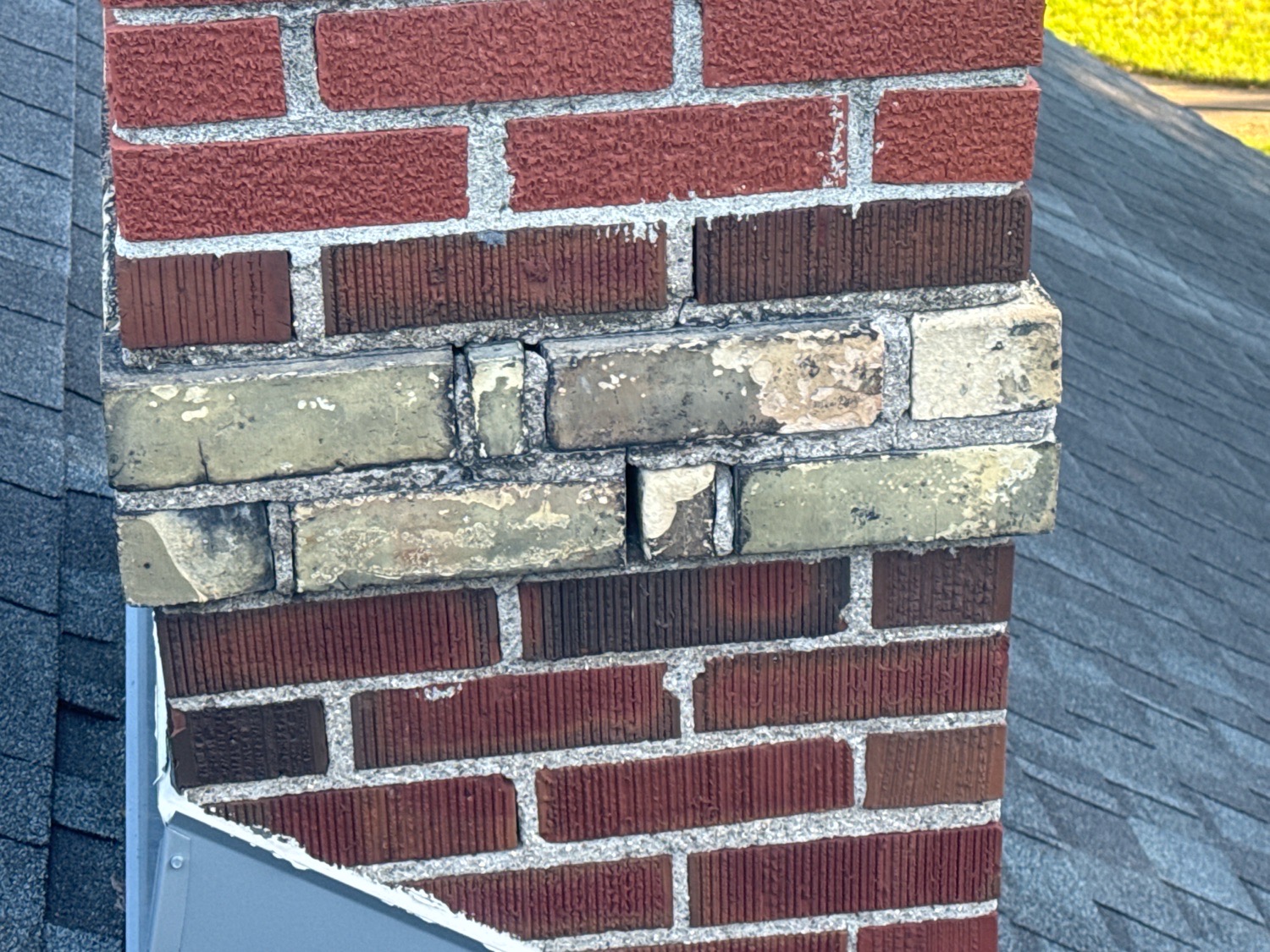
The repair is repointing, which most people here call tuckpointing: the mason cuts out the damaged mortar and packs the joints with new mortar. The National Park Service’s guide to repointing gives two rules that apply to any brick chimney:
- Remove enough old mortar, at least 2 to 2½ times the width of the joint, which is about ½ to 1 inch for most brick.
- Use mortar softer and more breathable than the brick. Mortar that is harder than the brick traps moisture, and the brick faces spall off instead.
Fix the source of the water too, or new mortar won’t last. CSIA warns never to use paint or clear sealers as waterproofing, because they trap moisture; after repairs, a vapor-permeable masonry water repellent can help.
Why a fireplace smokes: chimney draft problems
A chimney draws because hot gases rise. When something interrupts that draft, smoke rolls into the room. Common causes:
- House air pressure. CSIA explains that in a tight home, exhaust fans, dryers and other appliances can pull air down the chimney. Make-up air elsewhere in the house helps.
- Wet wood. The EPA’s Burn Wise program recommends wood that is split, covered and aged at least six months. Wet wood smolders.
- A stuck or broken damper. CSIA warns this can leave you “with a smoky room at best and a fire hazard at worst.”
- A blocked flue from nests, debris or creosote.
- A chimney that is too short. The International Residential Code (R1003.9) requires a chimney to extend at least 3 feet above the roof where it passes through and 2 feet higher than any part of the building within 10 feet.
Smoke spilling into the house means combustion gases can spill in too, so keep your smoke and carbon monoxide alarms working. See The Importance of Smoke and Carbon Monoxide Detectors.
What these findings mean in an inspection report
During a home inspection, we look at the chimney from the roof or the ground and inside the home where it is visible. When we find a cracked crown, a missing rain cap, worn mortar or signs of draft problems, we describe what we saw and recommend the next step, usually evaluation and repair by a qualified chimney professional or mason.
A home inspection does not include looking inside the full length of the flue. CSIA notes that under the NFPA 211 standard, a Level 2 chimney inspection, which includes a video scan of the flue, is required upon the sale or transfer of a property. If you are buying a home with a fireplace or wood stove, schedule one before your inspection contingency ends. For gas fireplaces, see Gas Fireplace Vent Clearances.
How to keep your chimney in good shape
- Have it inspected every year. NFPA 211, which CSIA follows, says chimneys, fireplaces and vents shall be inspected at least once a year. The EPA gives the same advice.
- Cap every flue, and replace caps that are rusted or loose.
- Look at the top each fall with binoculars, and seal small crown cracks before they spread.
- Check the flashing where the chimney meets the roof. A stained ceiling near the chimney means water is getting past it.
- Add it to your fall routine with our fall home maintenance checklist or a Nordic Fall Home Checkup.
Chimney repair in Fargo: common questions
Is a cracked chimney crown a big deal?
Not an emergency, but it is the start of water damage. Each freeze widens the crack, and water under the crown breaks down the brick below. Sealing small cracks early costs far less than rebuilding the top of a chimney.
Is a chimney cap the same as a chimney crown?
The terms are often mixed up. The crown is the concrete or mortar slab on top of the brick; the rain cap is the metal cover over the flue. A chimney needs both.
Do I need a rain cap if I never use my fireplace?
Yes. An unused flue still collects rain and snow, and animals still nest in it.
What is tuckpointing?
Removing worn mortar from the joints between bricks and replacing it with new mortar. Done right, it seals the chimney against water and adds years to its life.
How often should a chimney be inspected?
At least once a year under NFPA 211, and with a Level 2 inspection when a home is sold.
Sources
- Chimney Safety Institute of America. Water and Masonry.
- Chimney Safety Institute of America. Frequently Asked Questions and The Three Levels of Chimney Inspections.
- Masonry magazine (Mason Contractors Association of America). Masonry Chimney Checklist for Weather Resistance.
- National Park Service. Preservation Brief 2: Repointing Mortar Joints in Historic Masonry Buildings.
- U.S. EPA Burn Wise. Burn Wise Tips.
- International Code Council. International Residential Code, Section R1003.9 (chimney termination height).