

Bare soil gives off moisture all year. In a crawl space, that moisture rises into the floor framing, the insulation and the air that moves up into the house. A crawl space vapor barrier, a continuous plastic ground cover over the soil, is the first line of defense. Ventilation, or a sealed and conditioned design, handles the rest. Two of the most common crawl space findings during an inspection are a missing vapor barrier and ventilation that is missing or inadequate.
This guide explains why crawl spaces get damp, the signs to watch for, what a proper vapor barrier and ventilation look like, what these findings mean in an inspection report, and how to keep the space under your home dry.
Why crawl spaces get damp
Moisture reaches a crawl space from three directions:
- From the ground. Exposed soil releases water vapor constantly. Red River Valley clay holds water and drains slowly, so the ground under a house can stay damp long after snowmelt or heavy rain.
- From outside air. The U.S. Department of Energy’s Building America Solution Center explains that crawl space vents can actually encourage condensation by letting warm, humid summer air in, where it condenses on cooler surfaces like floor joists.
- From water outside the house. Poor grading, short downspouts and clogged gutters put water against the foundation, and some of it ends up in the crawl space.
The air in a crawl space does not stay there. It moves up into the living space through gaps in the floor, along pipes and wiring, and through ductwork. A damp, musty crawl space often means a damp, musty house.
Signs of crawl space moisture problems
- A musty or earthy smell in the rooms above
- Damp or wet soil, or standing water after rain or snowmelt
- Condensation on ducts, pipes or wiring
- Mold or dark staining on joists, beams or the underside of the subfloor
- Insulation that is sagging, wet or falling down
- Rust on metal straps, nails and duct hangers
- Soft wood, wood rot or signs of insects and rodents
What a crawl space vapor barrier does and how it should be installed
A vapor barrier (building codes call it a vapor retarder or ground cover) keeps ground moisture from evaporating into the crawl space. For most crawl spaces with a dirt or gravel floor, it is the single most important improvement.
A good installation has these features:
- The right material. Polyethylene at least 6 mil thick is the minimum used in building guidance. Thicker, reinforced liners hold up better where people crawl over them.
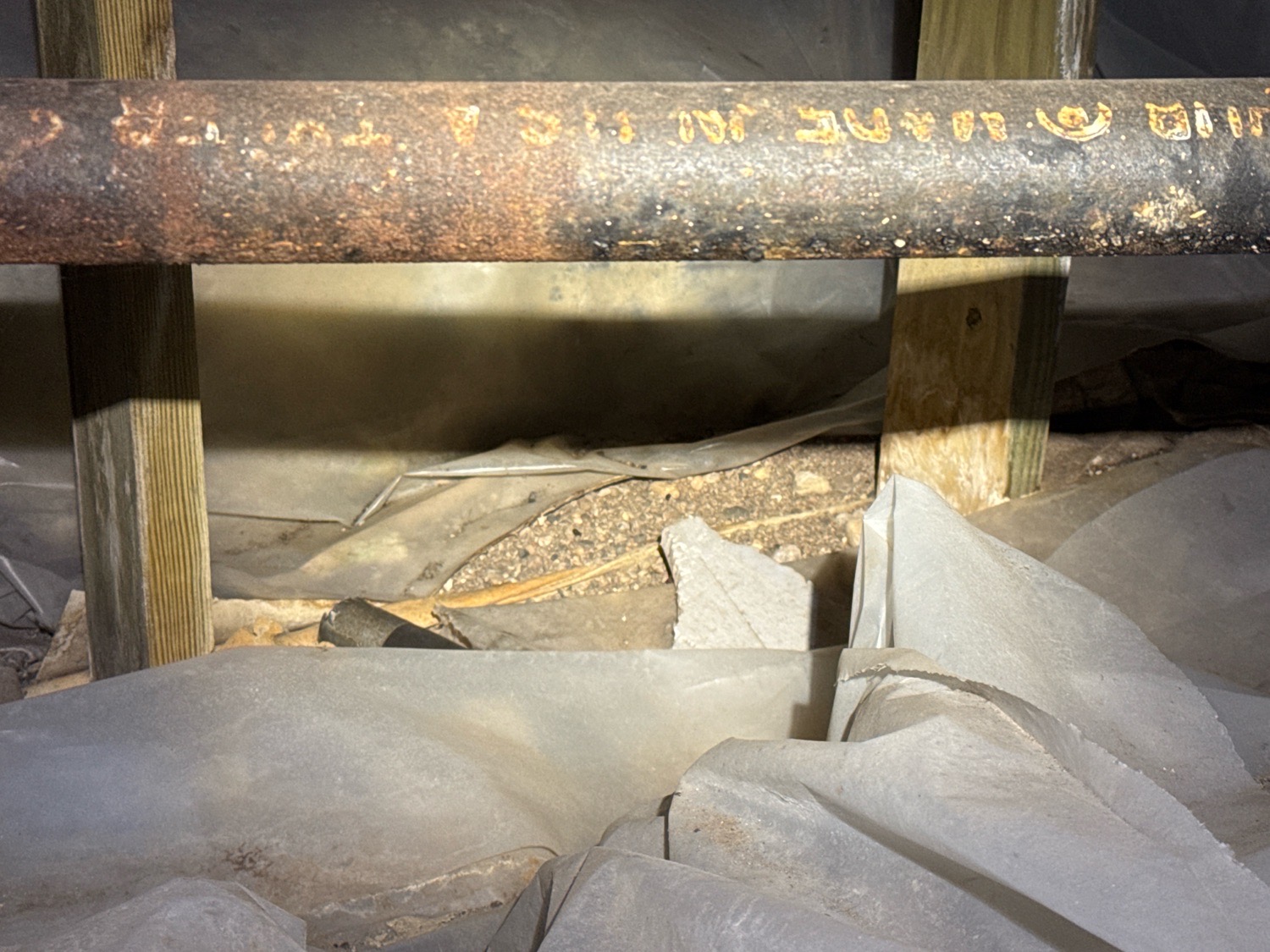
- Full coverage. The barrier should cover all exposed soil, with no gaps around piers, posts and pipes.
- Overlapped, sealed seams. The International Residential Code requires joints in the barrier of an unvented crawl space to overlap at least 6 inches and be sealed or taped. The Building America Solution Center recommends a 12-inch overlap.
- Up the walls. The edges should run at least 6 inches up the foundation wall and be fastened and sealed there.
Tears from plumbers, cable installers and pest control visits are common. Patch them with compatible tape so the barrier stays continuous.
Vented or sealed: which approach is right?
There are two ways to build a crawl space, and the vapor barrier matters in both.
A vented crawl space relies on openings in the foundation walls to bring in outside air. Under the 2024 International Residential Code, it needs at least 1 square foot of vent area for every 150 square feet of floor, with a vent within 3 feet of each corner. When the soil is covered with an approved vapor barrier, the required vent area drops to 1 square foot per 1,500 square feet. In our climate, vents have a downside: they bring humid air in during summer and frigid air in during winter, which chills the floors above and puts pipes at risk.
A sealed (unvented) crawl space closes the vents and treats the crawl space as part of the house. According to the Building America Solution Center, that typically means a vapor barrier over the floor and up the walls, rigid foam insulation on the foundation walls, air-sealed rim joists, and an insulated, weatherstripped access hatch. The code also requires a way to dry the space, such as a continuously running exhaust fan or a supply of conditioned air, generally at 1 cubic foot per minute for every 50 square feet of floor. The Solution Center notes that insulated crawl spaces keep floors warmer and help protect plumbing in cold climates.
Local codes in North Dakota and Minnesota are based on the International Residential Code, but cities adopt different editions and amendments. Check with your local building department, and have a qualified contractor design the right approach for your home.
Don’t forget radon. A crawl space is open to the soil, and radon is common in our area. The Building America Solution Center recommends installing a radon venting system under the vapor barrier when a crawl space is sealed. In a radon system for a crawl space, a pipe and fan draw soil gas from beneath the plastic and vent it outdoors. Learn more in our post on radon in Fargo homes, or see our radon testing and mitigation services. Test again after any crawl space work.
What these findings mean in an inspection report
When the crawl space is accessible and safe to enter, we look at the ground cover, the ventilation or conditioning, the insulation, the framing and any signs of moisture. When we find no vapor barrier, we recommend installing one. When the crawl space does not appear to be adequately ventilated or conditioned, we recommend evaluation by a qualified contractor to help control moisture. If access is limited, the report says so, along with what could not be seen.
If there are signs of hidden moisture, our moisture scanning can help find where it is coming from. You can also read about what a home buyer’s inspection covers.
How to keep a crawl space dry
- Control water outside first. Slope soil away from the house and make sure downspouts discharge well away from the foundation. Our post on clogged and leaking gutters covers the details.
- Look in once a year, and after spring snowmelt or heavy rain. Check for standing water, tears in the barrier, damp insulation and musty smells.
- Keep the barrier intact after any work under the house.
- Don’t half-convert. Closing vents without a sealed ground cover, insulation and a way to dry the space can trap moisture. Make it one complete system.
- Protect pipes. Insulate water lines in the crawl space, especially near vents and outside walls.
Crawl space vapor barriers: common questions
Do I need a vapor barrier in my crawl space?
If the floor is exposed soil or gravel, yes. A vapor barrier is the most effective way to keep ground moisture out of the crawl space, and it is required for a sealed crawl space under the building code.
How thick should a crawl space vapor barrier be?
At least 6 mil polyethylene. Thicker, reinforced material lasts longer if anyone will be crawling over it for repairs or maintenance.
Should I close my crawl space vents in winter?
Closing vents can help protect pipes from freezing, but closing vents alone does not create a sealed crawl space. Without a complete ground cover, insulation and a way to dry the space, closed vents can trap moisture. Ask a qualified contractor what is right for your home.
Can a crawl space raise radon levels in a home?
Yes. A crawl space with exposed soil lets radon move from the ground into the house. A sealed vapor barrier with a radon venting system underneath is a common fix. The only way to know your level is to test.
Sources
- U.S. Department of Energy, Building America Solution Center (PNNL). Unvented, Insulated Crawlspaces.
- InterNACHI. Under-Floor Space (Crawl Space): 2024 IRC Section R408.
- Advanced Energy. Crawl Spaces.