

Ungrounded outlets are one of the most common electrical findings in older homes, and the two-prong outlets that go with them raise a lot of questions from buyers. An ungrounded outlet has no equipment ground wire behind it, so a fault has no safe path back to the panel. The short answer: two-prong outlets on old wiring aren’t an emergency, but don’t use cheater adapters or fake three-prong outlets. Have a licensed electrician add a ground wire or install GFCI protection with the right labels.
This guide explains why older homes have ungrounded outlets, why a three-prong outlet can still have no ground, what the finding means in an inspection report, and the safe ways to fix it.
Why older homes have ungrounded outlets
Early 120-volt wiring had two wires, a hot and a neutral, and no ground. Fine Homebuilding notes that the three-wire, three-prong system became regular practice in the 1960s, and InterNACHI says grounding has been required in new construction since 1962. Homes wired before then, and older wiring methods such as knob and tube wiring, often still have two-slot outlets in at least some rooms.
The ground wire matters because it gives stray current a safe path home if a wire comes loose inside a metal appliance or tool. InterNACHI explains that grounding lowers the risk of electric shock and helps protect electrical equipment from damage. Without it, the metal case of a faulty appliance can become energized, and the person who touches it becomes the path.
Are two-prong outlets safe?
A two-prong outlet on two-wire wiring that’s in good condition is the way those homes were built, and it isn’t dangerous by itself for lamps, phone chargers and other two-prong devices. The risk comes from what people do to plug in three-prong cords:
- Cheater adapters. The Electrical Safety Foundation (ESFI) warns that 3-prong adapters “are not safe” because they aren’t properly grounded.
- Cutting off the ground pin. InterNACHI lists removing the ground pin from an appliance plug as dangerous.
- Swapping in a three-prong outlet with no ground. InterNACHI calls this potentially more dangerous than using an adapter, because the outlet looks grounded when it isn’t.
- Grounding to a water pipe or ground rod. InterNACHI warns that these homemade fixes can be dangerous. Leave grounding to an electrician.
Appliances that come with a three-prong plug, such as refrigerators, washers, microwaves, power tools and computers, are meant to be grounded.
Three-prong outlets with no ground (open ground)
You can’t tell an ungrounded outlet by looking. Many older homes have three-prong outlets that were swapped in on two-wire circuits, so the outlet looks modern but has nothing connected to the ground slot. During an inspection we plug a tester into accessible outlets, and an “open ground” reading means the outlet has three slots but no working ground.
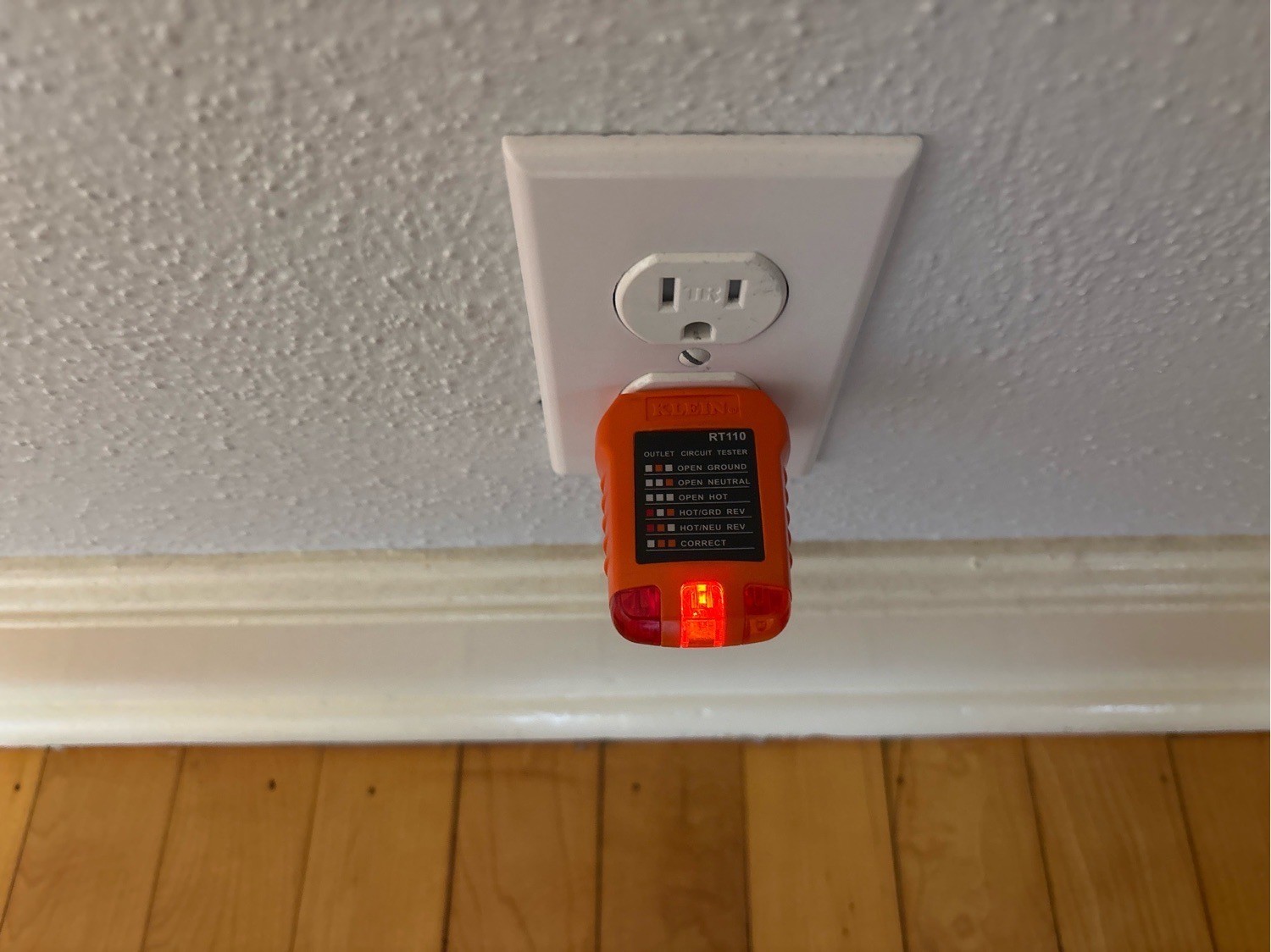
Ungrounded outlets in an inspection report
How we write it up depends on the age of the house.
Ungrounded outlets (typical for older homes)
Two-prong outlets or ungrounded three-prong outlets in a house built before grounding was common. It’s an upgrade to plan, not an emergency, and it often comes up alongside other older-home electrical findings such as aluminum wiring. Our guide to buying a home built before 1970 covers the rest.
Ungrounded outlets (not typical for age of home)
A newer house should have grounded wiring throughout, so an open ground there usually points to a loose or missing ground connection, a miswired outlet or an add-on circuit done without a ground. That deserves a closer look by an electrician sooner rather than later.
How to fix ungrounded outlets
The National Electrical Code (NEC) section 406.4(D)(2) gives three ways to replace a two-prong outlet where no ground wire exists, as summarized by Electrical Construction and Maintenance (EC&M). A licensed electrician can tell you which fits each room.
- Add a ground wire. The best fix for kitchens, laundry rooms, home offices and anywhere you plug in grounded appliances or electronics. NEC 250.130(C) lets an electrician run a new equipment ground from the outlet back to the panel or another approved grounding point, then install a grounded three-prong outlet.
- Install a GFCI outlet labeled “No Equipment Ground.” A GFCI can replace a two-prong outlet without a ground and still protects people from shock, and it can protect the outlets downstream of it. Those downstream three-prong outlets must be labeled “GFCI Protected” and “No Equipment Ground,” and no ground wire may be run between them. Our post on GFCI and AFCI protection explains how GFCIs work and how to test them.
- Replace it with another two-prong outlet. Allowed where the room only needs two-prong devices and the outlet is worn or damaged.
A GFCI doesn’t create a ground. InterNACHI notes that GFCI-protected ungrounded outlets may not work effectively with surge protectors, so computers and home theater gear are better served by a true ground wire. If you’re replacing outlets anyway, ask the electrician whether AFCI protection is also required for that circuit.
Want to understand how an outlet is wired before you call an electrician? Our homeowner’s guide on how to wire an outlet shows the hot, neutral and ground connections.
Ungrounded outlets: common questions
Are two-prong outlets safe?
They’re safe for two-prong devices when the wiring is in good condition. They aren’t safe with cheater adapters, cut-off ground pins or appliances that need a ground.
Is it safe to use a three-prong adapter on a two-prong outlet?
ESFI says no: 3-prong adapters aren’t properly grounded. Have an electrician add a grounded outlet or GFCI protection where you need a three-prong plug.
Can I just replace a two-prong outlet with a three-prong outlet?
Not without a ground wire or GFCI protection. A plain three-prong outlet with no ground looks grounded but isn’t, which InterNACHI calls potentially more dangerous than an adapter.
What does an open ground mean on an outlet tester?
It means the outlet has a ground slot but no working ground connection behind it. In an older home it’s usually original two-wire wiring; in a newer home it can be a loose or missing ground.
Do I have to replace ungrounded outlets when buying an older home?
Generally not. Older homes are allowed to keep the wiring they were built with. We recommend grounding or GFCI protection for the rooms where you use grounded appliances, and an electrician’s evaluation if you’re planning a remodel.
Why would a newer home have ungrounded outlets?
It isn’t typical. An open ground in a newer home usually means a loose or missing ground connection, a miswired outlet or a circuit added without a ground, and an electrician should check it.
Does a GFCI protect my electronics?
A GFCI protects people from shock. It doesn’t ground the outlet, so it won’t give a surge protector a ground to work with.
Have questions about the outlets in your home? Schedule a homeowner inspection, or learn about our home buyer’s inspection if you’re shopping for an older home.
Sources
- InterNACHI. Ungrounded Electrical Receptacles
- Electrical Safety Foundation International. Know the Dangers of Using Unsafe Adapters on Electrical Outlets
- Electrical Construction and Maintenance. Code Quiz: Replacement Options for Two-Wire Non-Grounding Receptacles
- Fine Homebuilding. Should I Upgrade Ungrounded Outlets?