

Smoke and carbon monoxide alarms: the cheapest safety upgrade in your home
Smoke and carbon monoxide alarms cost little and protect against two of the most serious dangers in a home: fire and carbon monoxide (CO) poisoning. Yet missing and expired alarms are among the most common things we find. In a review of nearly 500 of our recent home inspection reports, about a third noted a missing CO alarm, and about a third noted smoke alarms that were past their replacement age.
This guide covers where alarms belong, how long they last, the rules in Minnesota and North Dakota, and what to do if a CO alarm goes off.
Why alarms matter so much in our climate
Fargo-Moorhead homes are closed up for months each winter, with furnaces, boilers, water heaters, fireplaces and attached garages all running or in use. Every fuel-burning appliance can produce carbon monoxide if it isn’t working or venting properly, and CO has no color or smell. An alarm is the only way most people will know it is there.
The U.S. Consumer Product Safety Commission (CPSC) lists the early symptoms of CO poisoning as headache, dizziness, weakness, nausea, vomiting, sleepiness and confusion. They are easy to mistake for the flu, which is why a working alarm matters.
Where smoke alarms and CO alarms belong
Smoke alarms. The American Red Cross recommends, at a minimum, a smoke alarm on every level of the home, including the basement, and outside each sleeping area. Newer homes built under the International Residential Code also have one inside every bedroom, and those alarms are usually hard-wired and interconnected so that when one sounds, they all do.
CO alarms. The CPSC and the National Fire Protection Association (NFPA) recommend CO alarms on every level of the home and outside sleeping areas. The CPSC adds:
- Interconnected CO alarms are best.
- Don’t put CO alarms in kitchens, near heating vents, or where furniture or drapes can cover them.
- Follow the manufacturer’s instructions for mounting height.
Combination smoke and CO alarms are available and can make it easier to cover every level.
Minnesota and North Dakota rules
Minnesota. State law (Minnesota Statutes section 299F.51) requires every single-family home and every apartment unit to have a working CO alarm within 10 feet of each room used for sleeping. Minnesota law also requires smoke alarms in every dwelling unit.
Fargo and North Dakota. The City of Fargo requires both smoke alarms and carbon monoxide alarms, and Moorhead homes fall under the Minnesota law above. North Dakota has no statewide CO alarm law for existing homes like Minnesota’s, so outside Fargo the rules depend on the building code your city enforces and when the home was built or remodeled, and many older homes have no CO alarms at all. Whatever the local code requires, the safety recommendations above apply to every home.
How long alarms last
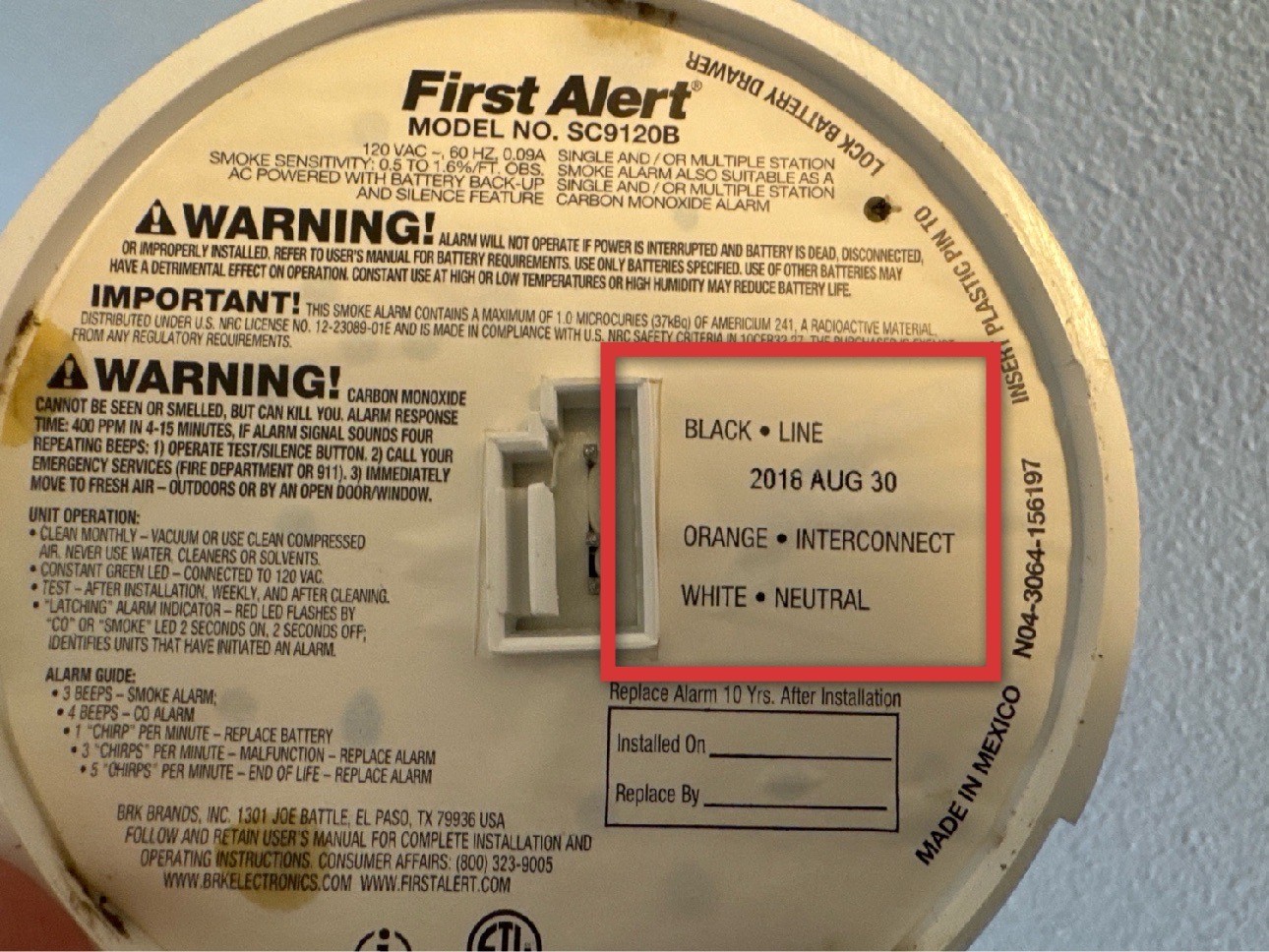
Smoke alarms: replace them every 10 years. The Red Cross, following NFPA and CPSC guidance, says to replace smoke alarms every 10 years, test them monthly, and replace batteries at least once a year unless the alarm has a sealed 10-year battery. The manufacture date is printed on the back of the alarm.
CO alarms: follow the date on the alarm. CO sensors wear out. Kidde, a major alarm maker, says its CO alarms have a life of 7 to 10 years depending on the model. Many newer alarms give an end-of-life warning, such as a chirp every 30 seconds or a display that reads “END,” and a new battery won’t stop it. Kidde notes that an alarm in end-of-life mode no longer detects CO, so replace it right away, or better, before it reaches that point.
A quick check: twist the alarm off its base and look for the date on the back. If you can’t find a date, or it is older than the manufacturer’s stated life, replace it.
What this finding means in an inspection report
During an inspection we look for smoke and CO alarms in the expected locations and, where we can see it, check the manufacture date. When alarms are missing, past their replacement age, or missing batteries, we note it and recommend replacing or adding alarms. It is a low-cost fix, and one we recommend handling right after moving in.
We also look at the fuel-burning equipment that alarms protect against. Our articles on the furnace disconnect switch, Lennox Pulse furnaces, chimney repair and gas fireplace vent clearances cover some of what we check.
What to do when a carbon monoxide alarm goes off
The CPSC and NFPA give the same basic steps:
- Never ignore it. Treat every CO alarm as real.
- Get everyone outside to fresh air right away, including pets. Don’t stop to look for the source.
- Call 911 from outside or from a neighbor’s home.
- Stay out until emergency responders say it is safe to go back in.
- Have the source found and fixed by a qualified heating contractor or the gas utility before using the appliance again.
If anyone has symptoms such as headache, dizziness or nausea, tell the 911 dispatcher.
Keeping your alarms working
- Test every alarm once a month with the test button.
- Replace batteries at least once a year unless the alarm has a sealed 10-year battery.
- Write the install date on new alarms and plan their replacement.
- Replace any alarm that chirps with an end-of-life warning.
- Have fuel-burning appliances serviced regularly, so the alarm is a backup, not the first warning.
Smoke and carbon monoxide alarms: common questions
How often should smoke alarms be replaced?
Every 10 years, according to the Red Cross, NFPA and CPSC guidance, or sooner if the alarm fails its monthly test.
How long do carbon monoxide alarms last?
It depends on the model. Kidde says 7 to 10 years for its alarms. Check the date and replacement instructions printed on yours.
Do I need a CO alarm if my home is all-electric?
If there are no fuel-burning appliances, fireplace or attached garage, the risk is much lower. Many homes in our area have at least one of those, and Minnesota law requires CO alarms in every home regardless.
Where should a CO alarm not go?
The CPSC advises against kitchens, spots near heating vents, and places where furniture or drapes can block the alarm.
My alarm keeps chirping. What does that mean?
Usually a low battery or an end-of-life warning. If a new battery doesn’t stop it, the alarm has likely reached the end of its life and needs to be replaced.
Want a full look at the safety systems in your home? Schedule a homeowner inspection, or learn more about our home buyer’s inspection.
Sources
- U.S. Consumer Product Safety Commission. Carbon Monoxide Fact Sheet.
- U.S. Consumer Product Safety Commission. Carbon Monoxide Information Center.
- National Fire Protection Association. Carbon Monoxide Safety.
- American Red Cross. Fire Safety Equipment.
- Minnesota Statutes. Section 299F.51, Carbon monoxide alarms.
- Minnesota Statutes. Section 299F.362, Smoke alarms.
- Kidde. When Should I Replace My Carbon Monoxide Alarm?