

Wavy, rippled or sagging panels on one side of a house can be a puzzle, especially when the rest of the siding looks fine. In many cases it is melted vinyl siding, caused by sunlight reflecting off a nearby window. It can happen on new homes and old ones, and it tends to show up in the colder months, when the sun sits low in the sky.
This guide explains how window reflections melt vinyl siding, how to tell it apart from other siding problems, what the finding means in an inspection report, and the practical ways to stop it from happening again.
How a window can melt vinyl siding
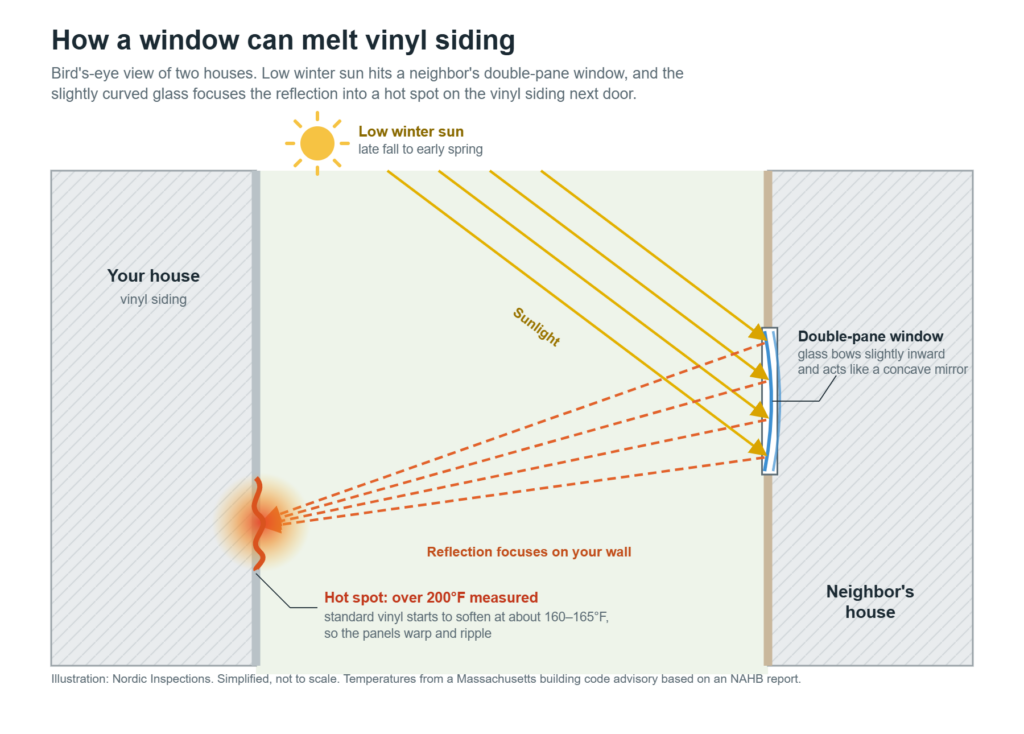
Vinyl siding is durable, but it is a plastic, and it softens with heat. According to an advisory from the Massachusetts Board of Building Regulations and Standards, based on a National Association of Home Builders (NAHB) report, normal-grade vinyl siding can begin to soften at about 160 to 165°F. Darker colors soften first because they absorb more heat.
Reflected sunlight from a double-pane window can get far hotter than that. The same advisory notes that heat from reflected sunlight off double-pane low-e windows “has been measured in excess of 200 degrees Fahrenheit.”
The cause is the shape of the glass, not a defective window. The sealed space between the two panes of an insulated window changes pressure with temperature, and the glass can bow slightly inward. That makes the outer pane act like a shallow concave mirror, which focuses sunlight into a hot spot, much like a magnifying glass. Low-e coatings reflect more light and can make the effect stronger, but any double-pane window can do it.
When and where it happens
A few conditions have to line up:
- Low sun. The advisory points to late fall, winter and early spring, when the sun is low enough to bounce off a window and onto a nearby wall.
- Distance. The window has to be the right distance from the siding for the reflection to focus on it. That is often a neighbor’s window across a side yard, or a window on your own house at an inside corner.
- Exposure. Wind, air temperature and trees all play a part, which is why the damage can appear one year and not the next.
Our long, low-sun winters in the Red River Valley give reflections plenty of hours to do their work, and homes built close together give a reflection only a short distance to travel.
How to recognize sun damage on vinyl siding
Heat damage from a reflection has a pattern that sets it apart from other siding problems:
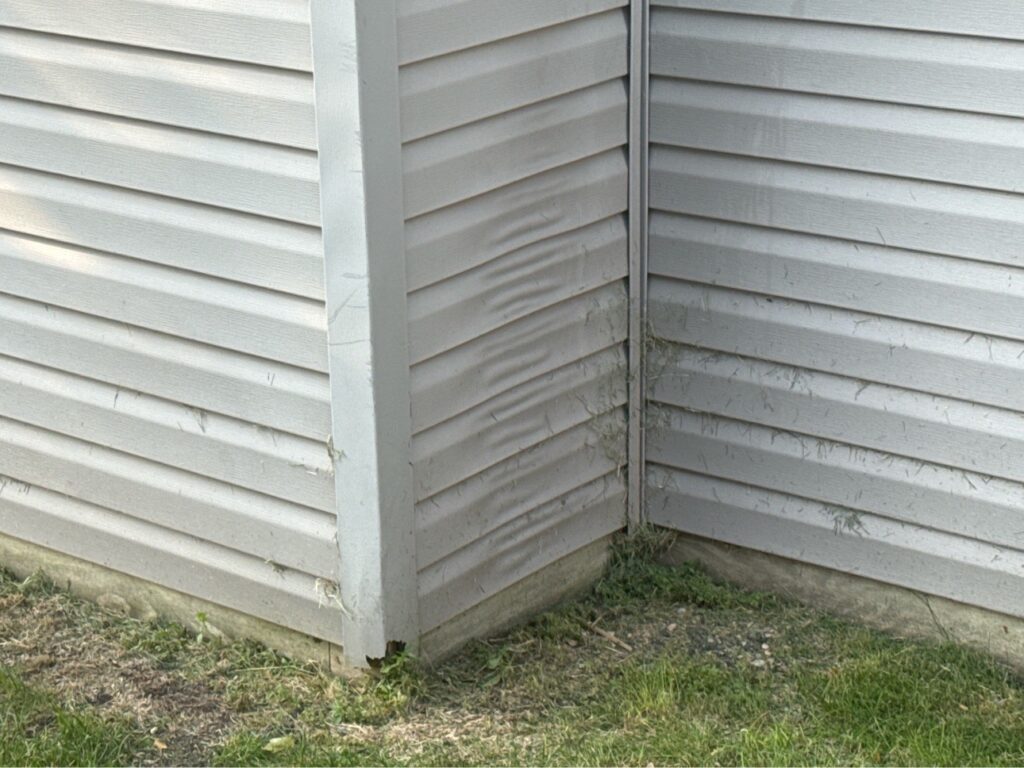
- Wavy, rippled or sagging panels in one area, often in a vertical or diagonal streak.
- Damage limited to one wall, usually facing a neighbor’s windows or an inside corner.
- Siding nearby, in the shade, that looks normal.
- Damage that can get worse after sunny winter days.
Other causes of melted siding are worth ruling out. A grill set too close to the house, an exhaust vent, or a fire pit can all distort vinyl, usually close to the heat source. Siding that buckles in long, even waves across a whole wall is more often an installation issue, such as panels nailed too tight to expand and contract.
What it means in an inspection report
When we find heat damage on vinyl siding during an inspection, we note where it is and the likely cause, and we recommend replacing the damaged panels as needed. Melted siding is usually a cosmetic issue, but distorted panels can pull loose or open gaps that let wind-driven rain reach the wall behind them. Keeping the wall’s water barrier protected is what matters most. Our post on kick-out flashing and garage door flashing explains why water behind siding causes problems.
If you are buying a home, it also helps to know the cause. Replacing the panels without stopping the reflection usually means the new siding melts too.
How to fix and prevent it
Replace the damaged panels. A siding contractor can usually remove and replace the affected panels. Matching an older color can be the hardest part, so it helps to know the brand and color if it is on record.
Block or diffuse the reflection. The advisory lists several ways to stop the hot spot at its source:
- Install a full screen on the outside of the reflecting window. A screen diffuses the light, and it is often the simplest fix.
- Add an awning over the window, or plant trees or tall shrubs to block the reflection.
- Use more heat-resistant siding in the affected area, or switch that wall to another cladding. The advisory notes this does not fix the cause and can be costly.
If the window is on a neighbor’s house, the fix needs their cooperation. A friendly conversation and an offer to help with a screen often goes a long way.
Think about future windows. The advisory notes that double-strength glass stays flatter, so it focuses less heat. That is worth asking about when windows facing a close neighbor are replaced.
Melted vinyl siding: common questions
Can a neighbor’s window really melt my siding?
Yes. A double-pane window can focus sunlight onto a nearby wall. Standard vinyl starts to soften at about 160 to 165°F, and reflected hot spots have been measured above 200°F.
Is melted vinyl siding covered by the siding warranty?
Often not. Reflected sunlight is commonly excluded from vinyl siding warranties, so check the manufacturer’s warranty terms.
Will new siding melt again?
It can, if the reflection isn’t blocked. Fix the cause with a screen, awning or planting before or when the siding is replaced.
Is it only low-e windows?
No. Low-e coatings can make it worse, but any double-pane window can focus sunlight when its glass bows inward.
Sources
- Massachusetts Board of Building Regulations and Standards. Advisory: Vinyl Siding Distortion from Reflected Sunlight (based on a National Association of Home Builders report).
- Green Building Advisor. Window Reflections Can Melt Vinyl Siding.