

A basement window well has a hard job in Fargo-Moorhead. It holds back wet soil, catches snowmelt and rain, and sits in the ground for decades. Most window wells are galvanized steel, and some rust over time. But heavy window well rust, especially rust that shows up early or eats holes in the metal, usually has a cause worth finding. When we see it during a home inspection, we look at drainage, debris and how the well is attached to the house.
This guide explains why window wells rust, what anodic corrosion is, the signs to look for, what the finding means in an inspection report and how it is fixed.
Why window wells rust
Galvanized steel is steel with a zinc coating. The zinc corrodes slowly and protects the steel underneath. Once the zinc is used up in a spot, the steel starts to rust. Several things wear the zinc away faster:
- Water that stays in the well. The American Galvanizers Association (AGA) notes that wetter soils are more corrosive to galvanized steel than drier ones. A well that does not drain keeps the metal wet for days at a time.
- Salt. Chlorides are the most corrosive ions found in soil, and de-icing salt is one source, according to the AGA. Salt used on nearby walks and driveways can wash into the well.
- Leaves and dirt. Debris at the bottom of the well holds moisture against the metal. Fertilizer that washes in can also be hard on zinc.
- Anodic corrosion. This is the less obvious cause, and it can be the most aggressive.
Clay soils, common across the Red River Valley, hold water and drain slowly. That makes drainage in and around the well even more important here.
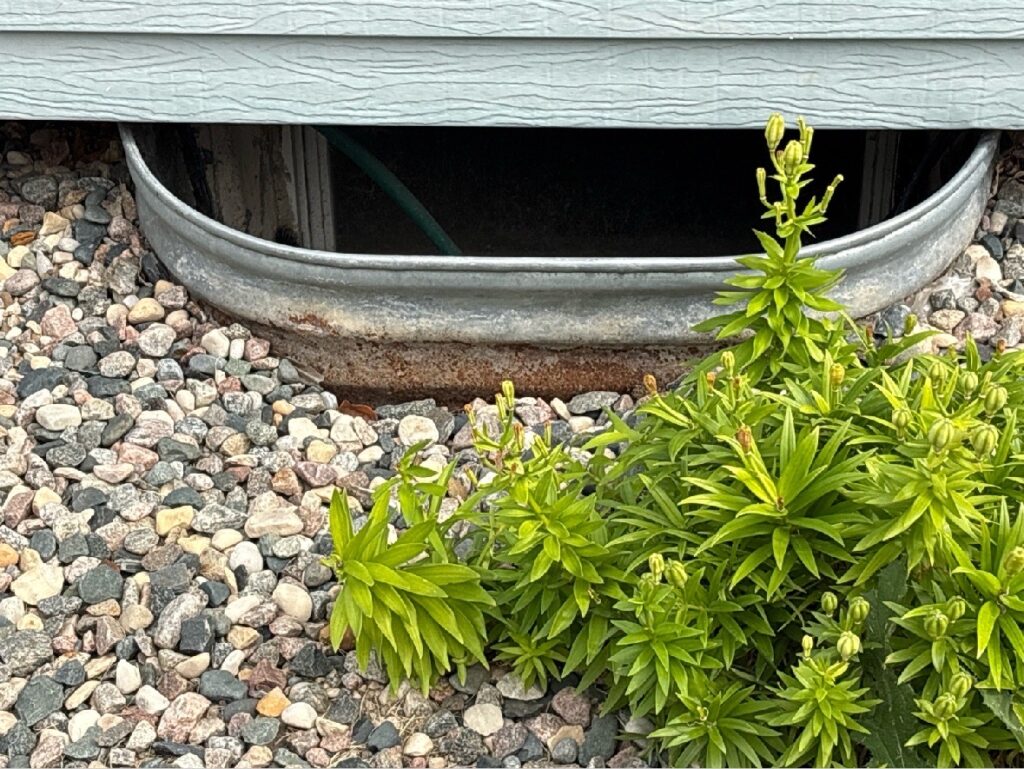
What is anodic corrosion on a window well?
Anodic corrosion happens when the metal window well becomes part of an electrical circuit with the house and the soil. Window well makers Monarch Materials Group and St. Paul Corrugating describe how it works:
- The well is bolted to the foundation or to the window buck.
- A bolt or the well’s flange touches the steel rebar inside the concrete foundation.
- In many homes, that rebar is part of the electrical grounding system. This is called a concrete-encased electrode or “Ufer” ground.
- With wet soil around it, the well acts as a “sacrificial anode.” It gives up metal to protect the rest of the circuit, and it corrodes much faster than a normal well.
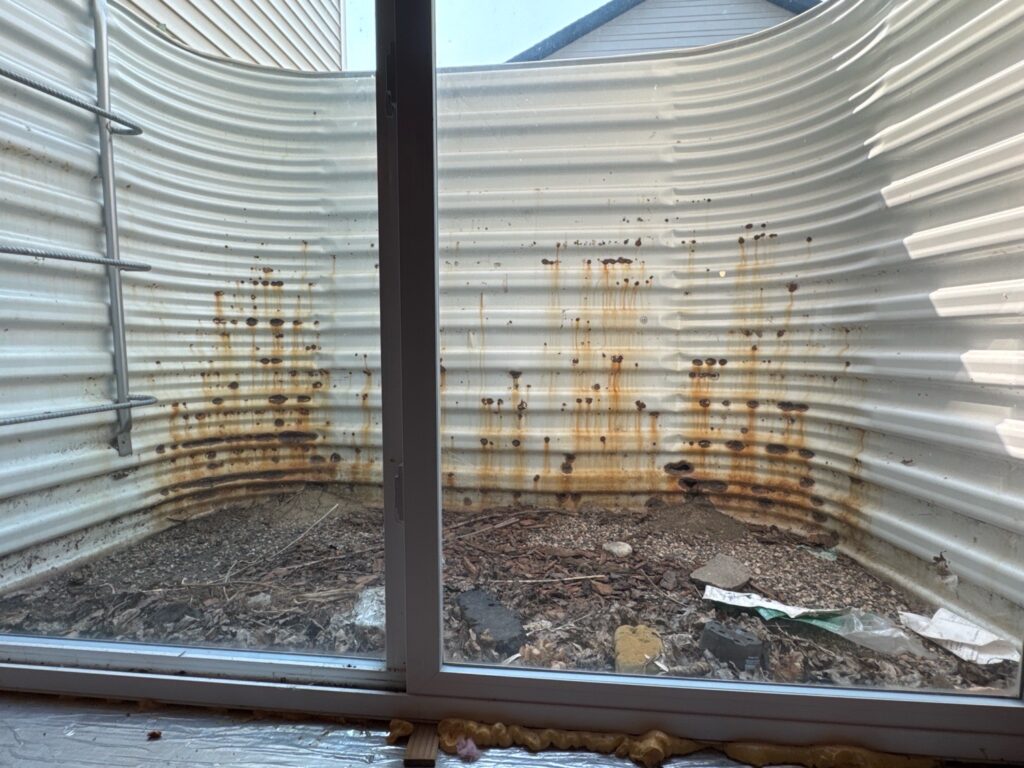
InterNACHI describes the same process. The result is often rust that appears in spots or rows, with blisters, pitting and eventually holes, even on a fairly new well. Soil type, moisture and the way the well was installed all play a part.
Signs of a rusting window well
Check each window well a few times a year, and especially in spring after snowmelt. Look for:
- Orange or brown streaks running down the metal
- Rust spots, blisters or flaking, often in rows along the corrugations
- Pitting or small holes in the steel
- Rust around the mounting bolts or the flange against the foundation
- Standing water, wet gravel or mud at the bottom of the well
- Leaves, dirt or trash built up in the well
- A well that is bowed, broken or pulling away from the house
Heavy rust in a newer well is a strong hint that something other than age is at work.
What this finding means in an inspection report
When we find excessive rust on a window well, we note it in the inspection report. If the pattern suggests anodic corrosion, we say so and recommend further evaluation. Because the cause can involve the home’s grounding system, we may recommend a licensed electrician. A window well contractor handles isolating, remounting or replacing the well. On a newer home, we may recommend reporting it to the builder.
Testing for anodic corrosion takes a meter and a reference electrode, so it is beyond the scope of a home inspection. We look for the visible signs and point you to the right professional.
Rust also matters for safety. A window well that serves an egress window, such as in a basement bedroom, is part of the escape route in a fire. If the metal is failing, the well may need to be replaced.
How window well rust is fixed
The fix depends on the cause.
- Improve drainage. Clean out debris and make sure the bottom of the well drains. Building codes call for area wells to drain, usually by connecting to the foundation drainage system, unless the soil drains well on its own. Grade around the well should slope away from the house.
- Break the electrical circuit. For anodic corrosion, Monarch’s instructions call for testing the well, cutting the mounting bolts, and separating the well from the foundation with non-conducting plastic shims or isolator washers. The well is then reattached with exterior construction adhesive and tested again. Changing how the house is grounded is not the fix. Electrical codes require the steel in new concrete footings to be used as part of the home’s grounding system, so the well is separated from the rebar instead. A licensed electrician can confirm the grounding and bonding are correct.
- Touch up light rust. Once the cause is fixed, small rust spots can be cleaned and coated. The AGA recommends zinc-rich paint for touching up galvanized steel. InterNACHI notes that paint alone will not stop anodic corrosion.
- Replace a failing well. If the steel has holes or is badly pitted, replacement is the better fix. A new well should be installed so it does not touch the foundation rebar. A well that serves an egress window must still meet size rules: at least 9 square feet in area, at least 36 inches wide and 36 inches out from the wall, and a permanent ladder or steps if it is deeper than 44 inches.
How to prevent window well rust
- Keep wells clean. Clear leaves and debris each spring and fall.
- Use a cover. A clear cover keeps out snow, leaves and rain while letting in light. Choose one that can be opened from the inside if the window is used for egress.
- Watch the salt. Keep de-icing salt away from window wells.
- Fix drainage early. Standing water after a rain is a sign the well is not draining.
- Check new construction. Ask your builder how the wells are attached and whether they are isolated from the foundation. Our guide to foundation wall problems covers other things to watch for around the foundation.
A Nordic Fall Home Checkup is a good time to catch window well problems before winter. Grading matters too; good grade around your home helps keep water out of the wells and away from the foundation.
Window well rust: common questions
Is a rusty window well dangerous?
Light surface rust is usually cosmetic. Heavy rust, holes or a bowed well can let soil and water reach the window, and a failing well around an egress window can be a safety issue.
Can I just paint a rusty window well?
Paint can help after the cause is fixed. If the rust comes from anodic corrosion, paint will not stop it. The well has to be electrically separated from the foundation first.
How do I know if it is anodic corrosion?
Rust that appears quickly, in spots or rows, or mainly near the bolts on a fairly new well is a common sign. A professional can confirm it with a meter test.
Should I replace a steel window well with a plastic one?
Plastic and composite wells do not rust, and they are an option for many homes. Any replacement for an egress window must still meet the size and ladder rules.
Sources
- Monarch Materials Group, Window well anodic corrosion
- St. Paul Corrugating Co., Window wells and Ufer grounding
- InterNACHI, Window well corrosion
- American Galvanizers Association, Galvanized steel performance in soil
- American Galvanizers Association, Touch-up methods
- American Galvanizers Association, Dissimilar metals in contact with galvanized steel
- ASHI Reporter, Window wells
- Rockwell, Window wells in springtime
- International Code Council, IRC emergency escape and rescue opening requirements
- North Dakota Department of Commerce, State building code
- City of Santa Clara, Grounding electrode systems guide (concrete-encased electrodes)