

Asphalt driveways and parking lots take a beating in Fargo-Moorhead. Long freezes, quick thaws, spring rain and summer heat all work on the surface year after year. Asphalt driveway cracks are the first sign of that wear. Sealed early, most cracks are a small maintenance job. Left open, they let water reach the base, and that is when cracks turn into potholes and broken pavement.
This guide explains why asphalt cracks, which cracks can be sealed, what to know about asphalt laid over an old concrete driveway, what the finding means in an inspection report and how to keep pavement in good shape.
Why asphalt cracks in our climate
Several things crack asphalt, and our winters make most of them worse:
- Freeze and thaw. The City of Minneapolis notes that the winter freeze-thaw cycle is the most common cause of potholes in Minnesota. Water gets into cracks, freezes and expands, and the pavement moves.
- Temperature swings. Pavement expands and contracts with the seasons. A Minnesota Department of Transportation (MnDOT) study describes cracks that open in winter and close in summer. Cold-weather shrinkage causes the straight cracks across a driveway, called transverse or thermal cracks.
- Aging. As asphalt ages, it oxidizes and becomes more brittle. It can no longer bend with traffic and temperature changes, so it cracks.
- Water in the base. PennDOT’s road maintenance program calls water “the most destructive element to pavement.” Water that gets through cracks weakens the gravel base underneath.
- A weak base. If the base or soil underneath was poorly built or has softened, the surface breaks up under weight.
Types of cracks and what they tell you
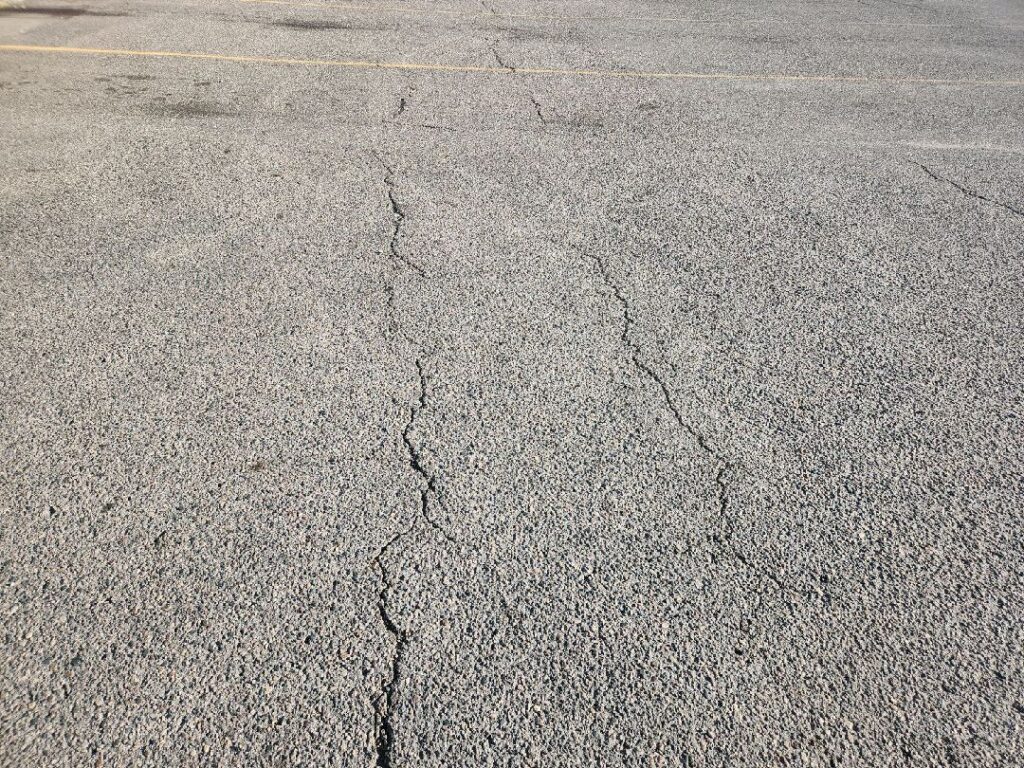
- Single cracks across or along the pavement are usually caused by temperature and aging. These are the cracks that sealing is made for.
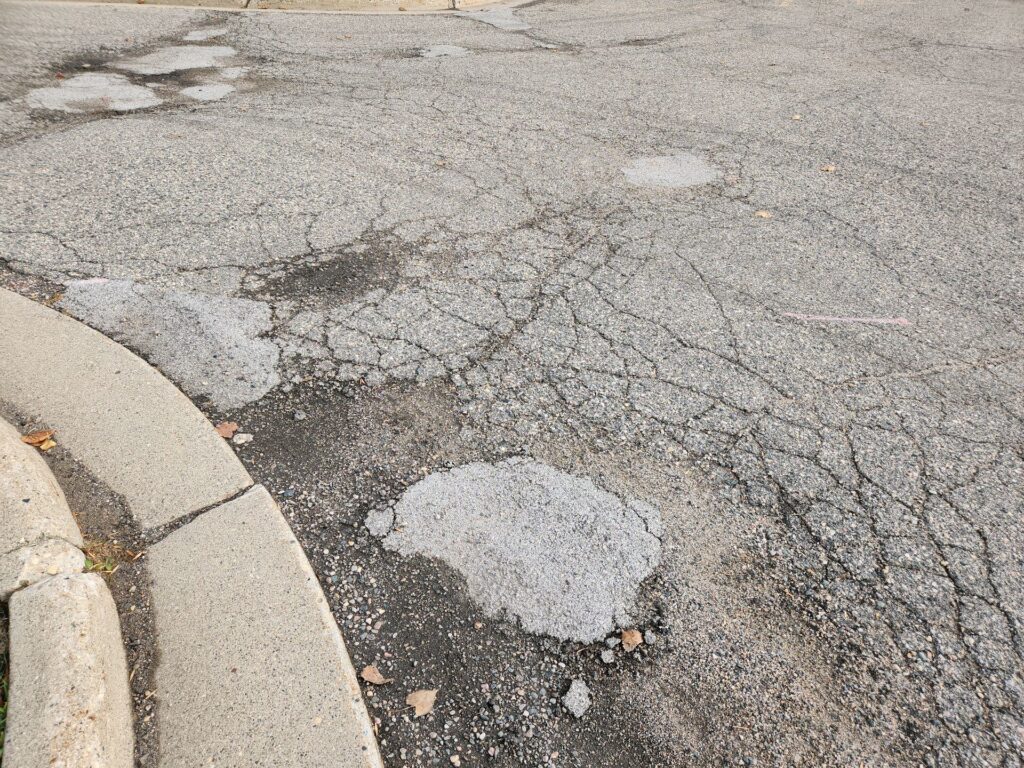
- Block cracking forms a pattern of large rectangles. It comes from aged asphalt that can no longer expand and contract.
- Alligator cracking is a tight web of cracks that looks like alligator skin. It means the base underneath has failed. Sealing does not fix it; the damaged area needs to be removed, the base repaired and the area patched.
- Cracks over old joints are common where asphalt was laid over concrete (see below).
Crack sealing, crack filling and sealcoating
These terms get mixed up, but they are different jobs:
- Crack sealing places a flexible material into cracks that still move with the seasons. The Federal Highway Administration (FHWA) describes its purpose as keeping water and debris out of the crack.
- Crack filling places material into cracks that move very little, mainly to keep water out.
- Sealcoating is a thin coating spread over the whole surface. It protects and refreshes the look of the asphalt, but it does not repair cracks. Cracks should be sealed first.
In Minnesota, coal tar-based sealcoats have been banned since January 1, 2014. Asphalt-based sealers are the common choice.
When and how cracks are sealed
Timing and preparation make a big difference in how long a repair lasts.
- Pick the right season. MnDOT recommends spring or fall during dry weather. The FHWA notes that sealing works best in moderately cool temperatures. Follow the temperature range on the product label.
- Measure the crack. PennDOT’s guidance is to seal cracks between 1/4 inch and 1 1/2 inches wide. Smaller cracks hold too little sealer to flex in the cold, and wider cracks need a heavier mastic-type product or patching.
- Clean and dry the crack. Remove weeds, dirt and loose material. The sealer needs a clean, dry surface to bond.
- Apply the sealer as the product directs, without overfilling.
- Repair the base where needed. Alligator cracking, potholes and sunken areas need patching or replacement, not sealer.
For larger driveways and parking lots, a paving contractor can rout and seal cracks with hot-applied materials.
Asphalt laid over a concrete driveway
Sometimes a new asphalt layer is placed on top of an old concrete driveway. It can look good at first. The problem is reflective cracking. The concrete slabs underneath still move with temperature and moisture, and the joints and cracks in the concrete show up as cracks in the asphalt directly above them. Pavement engineering sources note that concrete joints will eventually reflect through an asphalt overlay without proper preparation.
When we find asphalt laid over concrete during an inspection, we note that it can lead to cracking and deterioration of the surface. Many paving contractors recommend removing the old concrete and building the asphalt driveway from a proper base. If an overlay is used, the contractor should explain how the concrete joints will be handled.
What this finding means in an inspection report
When we find open cracks in an asphalt driveway or parking lot, we note them in the inspection report and recommend sealing them. Unsealed cracks are common, and on their own they are usually a maintenance item. We also look for signs of bigger problems: alligator cracking, potholes, sunken areas, poor drainage and water pooling against the building. Those point to base damage that needs repair, not just sealing.
On commercial properties, pavement is often one of the larger maintenance costs. Our commercial property condition assessments look at parking lots, drives and drainage as part of the overall property.
How to make asphalt last longer
- Check for new cracks every fall and seal them before winter, while they are still small.
- Sealcoat on a schedule. A Colorado Asphalt Pavement Association guide hosted by the Asphalt Institute says a good asphalt sealer applied every two to five years can extend service life. It also advises waiting several months before sealing a new driveway.
- Keep water moving. Make sure downspouts and grading send water away from the pavement edges.
- Keep heavy equipment and fuel spills off residential driveways where you can.
- Watch the edges. Unsupported edges crack and crumble first.
InterNACHI lists a typical life of 15 to 20 years for an asphalt driveway, depending on use, weather, installation and maintenance. Concrete has its own crack patterns and fixes; see our guide to concrete driveway cracks in Fargo-Moorhead.
Asphalt driveway cracks: common questions
Should I fill small cracks in my asphalt driveway?
Yes, cracks around 1/4 inch and wider are worth sealing before winter. Very fine hairline cracks hold little sealer and can usually wait until they widen.
When is the best time to seal asphalt cracks?
Spring or fall during dry weather is best. Check the product label for its temperature range.
Does sealcoating fix cracks?
No. Sealcoat protects the surface, but cracks should be cleaned and sealed first.
Is it okay to put asphalt over a concrete driveway?
It is done, but the concrete joints tend to crack through the asphalt over time. Many contractors recommend removing the concrete first.
Sources
- Federal Highway Administration, Materials and procedures for sealing and filling cracks in asphalt-surfaced pavements (FHWA-RD-99-147)
- MnDOT and Minnesota Local Road Research Board, Recommended practices for crack sealing HMA pavement
- PennDOT LTAP, Crack sealing tech sheet
- City of Minneapolis, Potholes
- Minnesota Local Road Research Board, Seal coat handbook
- Pavement Interactive, Transverse cracking
- Pavement Interactive, Fatigue (alligator) cracking
- Pavement Interactive, Reflection cracking
- Minnesota Asphalt Pavement Association, Causes and corrections of reflective cracking
- Minnesota Pollution Control Agency, Coal tar-based sealants
- Colorado Asphalt Pavement Association, Asphalt driveways (via Asphalt Institute)
- InterNACHI, Estimated life expectancy chart