

A sewer backup is one of the worst things that can happen to a basement. Dirty water comes up through the floor drain, the shower or the toilet, and it can ruin flooring, drywall and everything stored nearby. A backwater valve is the device that stops it. When we look for a backwater valve during a home inspection in Fargo-Moorhead, many buyers and homeowners ask the same questions: what is it, do I have one, and does it need care?
This guide explains how a backwater valve works, why sewers back up here, how to find yours, what the finding means in an inspection report and how to keep the valve working.
What is a backwater valve?
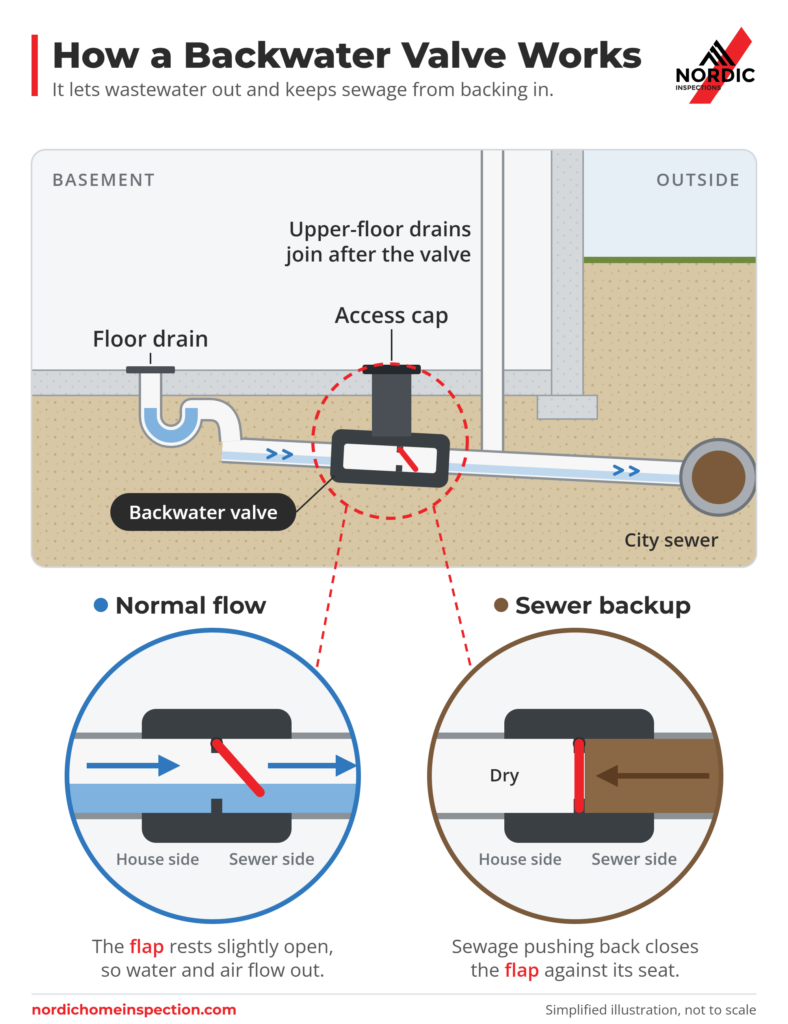
A backwater valve, also called a backflow valve or sewer check valve, is installed in the main sewer drain under the basement floor. It lets wastewater leave the house but blocks sewage from flowing back in when the city sewer or your own sewer line backs up.
Most homes have a normally open flap valve. The flap rests slightly open so water and air move freely through the pipe. When sewage starts to flow the wrong way, the flap swings shut and seals the line. When the backup clears, it opens again on its own.
FEMA describes a few types:
- Flap (check) valves close automatically, with no one home. Their weak point is debris: something caught in the flap can hold it open.
- Gate valves are closed by hand. They seal tighter and are less likely to jam, but someone has to close them.
- Dual valves combine both and are mainly used where backups happen again and again.
In most homes you will only see a round cap, often black, set in the concrete floor. The valve sits under that cap.
Why sewers back up in Fargo-Moorhead
The City of Fargo says sewer backups often happen when storm water gets into the sanitary sewer. Heavy spring and summer rains, fast snowmelt and high groundwater all add water to a system built to carry only wastewater.
Sump pumps are a big part of the story. After heavy rains in 2000, Fargo found that sump pumps illegally connected to the sanitary sewer were a major cause of basement backups, and it started its sump pump program in 2001. Fargo and Moorhead both require sump pumps and foundation drains to discharge outside, with only limited seasonal exceptions. Our post on sump pump discharge in winter explains how that works.
Backups can also start on your own property. Tree roots in pipe joints, grease, wipes and other items flushed down drains, and sagging or broken pipe can all block the sewer line between the house and the street. In Moorhead, the city notes that homeowners own the sewer service from the building to the city main.
Is a backwater valve required?
North Dakota and Minnesota both base their plumbing codes on the 2018 Uniform Plumbing Code. It requires a backwater valve on drains serving fixtures on a floor lower than the next upstream manhole cover of the sewer. In practice, that covers many basements.
The code also says fixtures on floors above that level should not drain through the valve, and the valve must stay accessible for inspection and repair. Older homes were often built before these rules, so many have no valve at all. A plumber can tell you whether your home needs one.
How to find your backwater valve
Start in the basement near where the main sewer line leaves the house, usually toward the street. Look for:
- A round cover or cap set flush in the concrete floor
- A cap near the floor drain, water heater or furnace, often black or clear plastic
- A cleanout labeled “backwater valve downstream” on newer installations
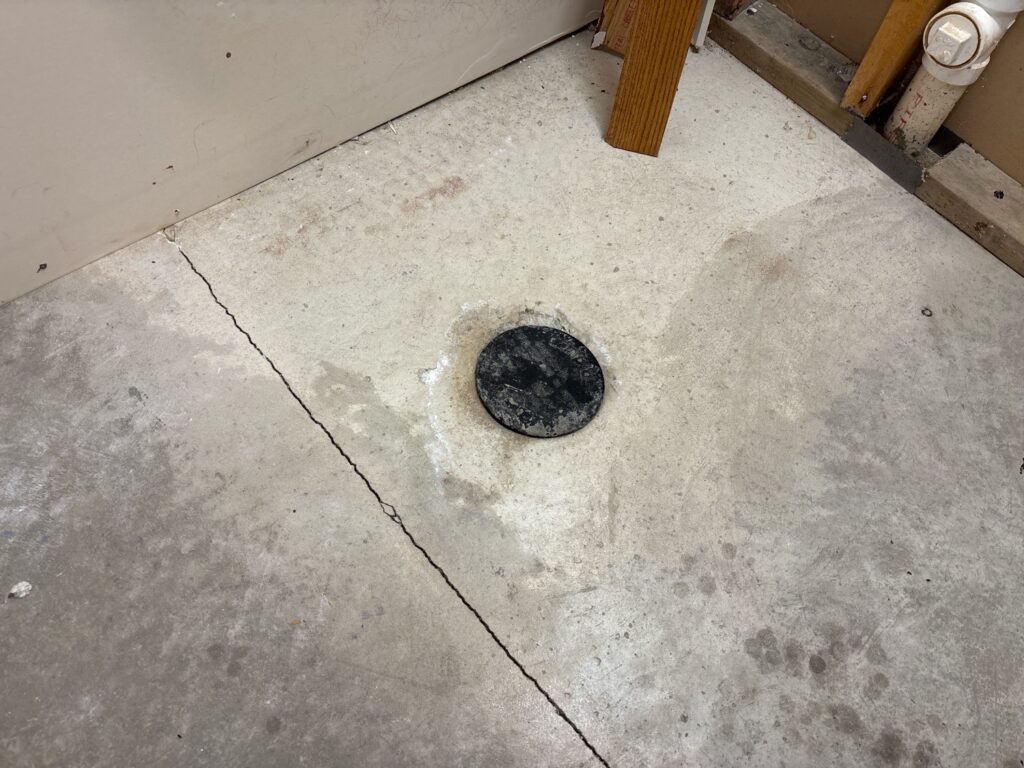
In finished basements, the cap is often hidden under carpet, a rug, flooring or storage. If you can’t find it, a plumber or a sewer line camera inspection can help locate it.
What this finding means in an inspection report
Backwater valves are not tested during a home inspection. We look for the cap and note what we can see. When we find a valve, we let you know where it is so you can maintain it. When we can’t find one, it may still be there, hidden under flooring or belongings.
Sometimes we find conditions that need attention, such as water standing on or around the valve cap, a missing or damaged cover, or a cap buried under flooring with no access. Water on the cap can mean the sewer line backed up at some point or the valve is not sealing as it should. In those cases we recommend evaluation by a licensed plumber. A sewer camera inspection is the best way to see the condition of the line itself.
How to maintain a backwater valve
A backwater valve only protects you if the flap can close. Manufacturers recommend checking it regularly. Some recommend every three months; at minimum, check it once a year and before spring thaw.
- Keep it reachable. Don’t cover the cap with flooring, carpet or storage. If you finish a basement, add an access panel.
- Inspect the flap. Remove the cap and look for debris, buildup or a flap that is stuck or damaged. Wear gloves and eye protection, because sewage carries bacteria.
- Clean or replace parts as needed. If you are not comfortable doing it, a plumber can service the valve.
- Watch what goes down the drain. Grease, wipes and paper towels can catch in the flap and hold it open.
- Know the warning signs. Slow drains, gurgling or water around the floor drain can mean trouble in the sewer line.
Installing a backwater valve
Adding a valve to an existing home means cutting the basement floor, opening the sewer line and setting the valve with an access cover. FEMA recommends having a licensed plumber do the work in compliance with local codes. In Fargo, the city inspector determines permit requirements for plumbing work, so ask before work starts.
Check your insurance, too
A standard homeowners policy usually does not cover sewer backup damage. The Insurance Information Institute says the coverage must be bought separately or added as an endorsement. Our post on what home insurance may not cover has more. A backup sump pump and water sensors add more protection.
Backwater valve: common questions
How do I know if my house has a backwater valve?
Look for a round cap in the basement floor near where the sewer line leaves the house. If you can’t find one, ask a plumber or schedule a sewer camera inspection.
How often should a backwater valve be cleaned?
Follow the manufacturer’s instructions. Some recommend checking every three months; at minimum, inspect and clean it once a year.
Can I still use water during a sewer backup?
Use as little as possible. When the valve is closed, water you run in the house has nowhere to go and can back up inside.
Does a backwater valve stop all basement flooding?
No. It stops sewage from coming back through the drains. It does not stop groundwater, overland flooding or water from a failed sump pump.
Sources
- FEMA P-312, Homeowner’s Guide to Retrofitting, Chapter 9
- City of Fargo, Preventing Sewer Backup
- City of Fargo, Sump Pump Program history and regulations
- City of Moorhead, Wastewater
- North Dakota Administrative Code 62-03.1-01 (2018 Uniform Plumbing Code)
- Minnesota Department of Labor and Industry, 2020 Minnesota Plumbing Code
- IAPMO Code Spotlight, UPC Section 710.1 Backwater Valves
- Insurance Information Institute, Protect your house from sewer backups
- Insurance Information Institute, Which disasters are covered by homeowners insurance?
- RectorSeal backwater valve installation guide