

Most people never think about a railing until they lean on one. Loose, low or wide-open railings are some of the most common safety findings in our inspections, on decks, porches, front steps, basement stairs and lofts. The good news: deck railing safety problems are usually easy to spot and fairly simple to fix.
This guide covers the difference between guardrails and handrails, the numbers inspectors and builders use, why railings work loose, and what the railing notes in your Nordic report mean.
Guardrails and handrails are not the same thing
A guardrail (or guard) is the barrier along an open edge, such as the side of a deck, porch, landing or loft. Its job is to keep people from falling over the edge.
A handrail is the rail you hold on to while using stairs. Its job is to help you keep your balance and catch yourself if you slip.
One railing can do both jobs, for example along the open side of a staircase. When it does, it needs to meet both sets of requirements.
The numbers behind deck railing safety
Fargo enforces the 2024 International Residential Code (IRC), in effect since July 2, 2025, and North Dakota and Minnesota base their residential codes on the IRC. The key railing numbers have been the same for years:
| What | Typical requirement |
|---|---|
| When a guard is needed | Open sides of decks, porches, landings and balconies more than 30 inches above the floor or grade below |
| Guard height | At least 36 inches; at least 34 inches along stairs, measured from the tread nosings |
| Openings in a guard | A 4-inch sphere should not pass through (4 3/8 inches on stair guards; 6 inches at the triangle under the bottom rail of a stair) |
| Guard strength | The top of the guard must resist a 200-pound load |
| When a handrail is needed | On at least one side of stairs with four or more risers |
| Handrail height | 34 to 38 inches above the tread nosings |
| Handrail grip | Round handrails between 1 1/4 and 2 inches across |
The 4-inch rule exists because a small child’s head or body can slip through a larger gap. If you can pass a 4-inch ball between the balusters, the opening is too wide.
Older homes were built under older rules, and a railing that met code decades ago may not meet today’s numbers. A home inspection is not a code inspection. We point out railings that are unsafe today, and your local building official has the final word on permits and code questions.
Why railings get loose
Post connections. A railing post works like a lever. A push at the top puts a large force on the bolts or screws at the bottom. When Virginia Tech researchers tested common deck post connections, most of them could not meet the 200-pound requirement with the required safety factor, according to the Journal of Light Construction. Fasteners driven into the end grain of framing can pull out, which is why the 2021 IRC does not allow connections that rely only on end-grain fasteners.
Weather. Our wet springs, hot summers and long freeze-thaw seasons make wood swell, shrink and check. Fasteners corrode, and a connection that felt solid when the deck was new can wobble a few years later.
Rot and missing pieces. Water collects at post bases and where balusters meet the rails. Rotted wood does not hold fasteners, and a missing or loose baluster leaves a gap a child can fit through.
Indoors, handrail brackets that are not anchored into solid framing, and newel posts that have worked loose over decades of use, are common findings.
Climbable railings and young children
Horizontal rails, cable rails and some decorative patterns can act like a ladder. The model building code does not ban climbable guards. It regulates the size of the openings, and a 2005 analysis by the International Code Council’s Code Technology Committee found that national injury data could not show whether child falls involved guards. Still, if young children live in or visit the home, a ladder-style railing on a high deck or loft is worth taking seriously.
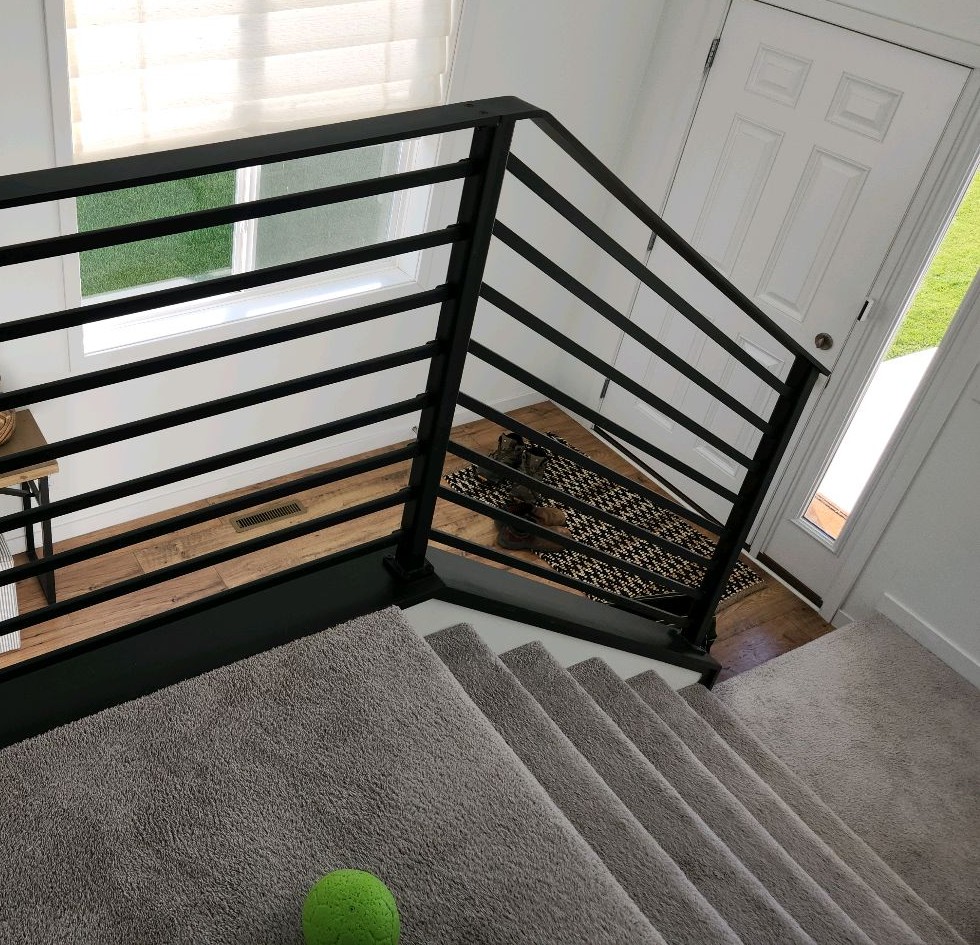
Options include adding vertical balusters, adding solid or clear panels on the inside of the railing, and keeping furniture, planters and coolers away from the railing so they cannot be used as a step.
What it means in your Nordic report
We check railings on decks, porches, stairs, landings and lofts, inside and out. Railing findings are marked Orange in your report, which means we recommend having them addressed:
| Report finding | Report color | What it means |
|---|---|---|
| Handrail or guardrail loose | Orange | A potential fall hazard. Have it secured. |
| Guardrail weak | Orange | The guard may not hold if someone falls against it. Have it reinforced. |
| Guardrail or handrail too low | Orange | A potential fall hazard. Have it raised or replaced. |
| Unsafe openings or spindles too far apart | Orange | Openings should typically not exceed 4 inches. |
| Spindles missing | Orange | Have the missing spindles installed. |
| Guardrail climbable | Orange | A potential hazard for children. Consider it if young children will use the area. |
How railings are fixed
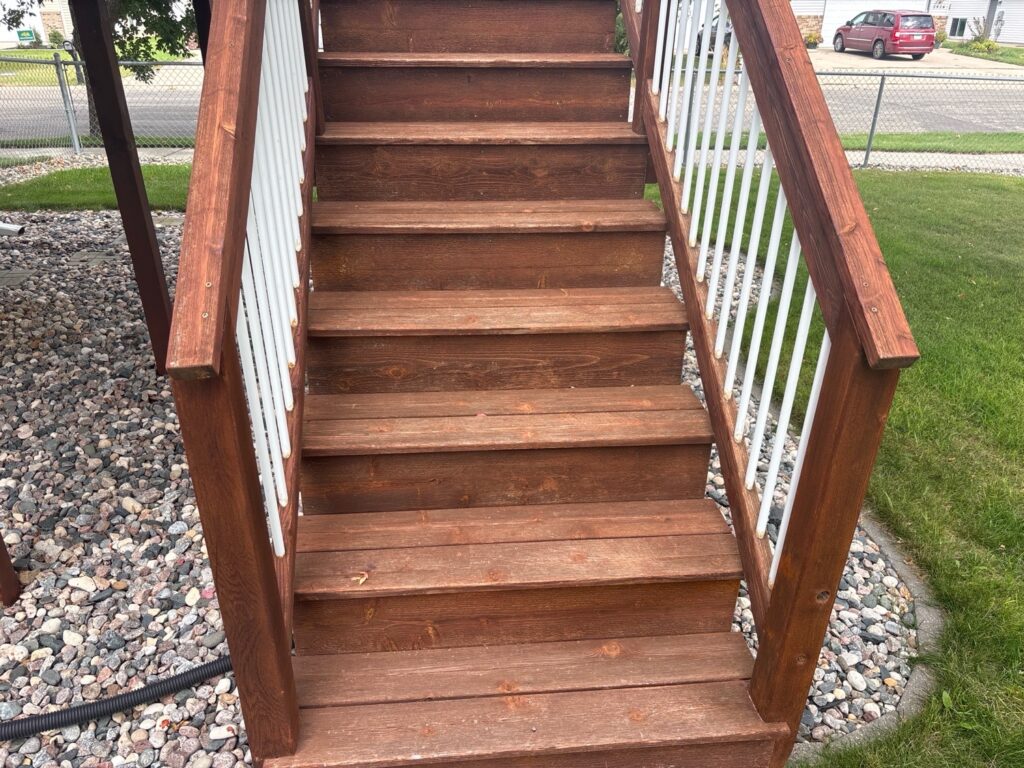
- Loose or weak guard posts: A carpenter or deck builder can add blocking and a through-bolted connection with tension hardware or structural screws, using a tested detail. The American Wood Council’s Prescriptive Wood Deck Construction Guide (DCA 6) includes one; connector makers publish others.
- Rotted posts or rails: Replace them. Shimming or adding screws to rotted wood does not restore its strength.
- Openings that are too wide: Add balusters, or replace the infill so openings are under 4 inches.
- Low guards: Raising a guard usually means new or extended posts and a new top rail. Ask your city whether the work needs a permit.
- Loose handrails: Re-anchor the brackets into solid framing, and replace any that are bent or cracked.
- Manufactured railing kits: Aluminum, vinyl and composite systems are tested as a system. Install them exactly as the manufacturer specifies.
A quick railing check you can do
Once a year, ideally in spring, walk your decks and stairs:
- Push firmly on the top rail at each post. It should feel solid, with no wobble.
- Look for rot, cracks and splits at post bases and rail ends.
- Look for rusted or loose bolts, screws and brackets.
- Check that no balusters are missing or loose.
- Measure the height and the gaps with a tape measure.
Our Spring Thaw Home Checklist and Fall Home Maintenance Checklist cover this and other seasonal checks.
Deck railing safety: common questions
My deck railing is only 32 inches tall. Was it legal when it was built? Possibly. Requirements have changed over time. Even if it met the rules back then, a low railing is still a fall risk, and raising it is worth considering.
Does a low deck need a railing? A guard is required where the walking surface is more than 30 inches above the ground. Lower decks do not need one by code, but steps with four or more risers still need a handrail.
Are cable railings safe? They can be, when they are installed and tensioned so a 4-inch sphere cannot pass through. Cables loosen over time and need periodic retensioning, and horizontal cables can be climbable.
Who should fix a loose deck railing? A carpenter or deck contractor. Railing work on a deck may need a building permit, so check with your city before work begins.
Is a loose railing a reason to walk away from a house? Rarely. It is usually a straightforward repair. Because it is a safety issue, have it fixed before you move in.
Sources
- City of Fargo Inspections Department. Current Codes.
- City of Delano, Minnesota. Residential Deck handout.
- International Code Council, Code Technology Committee. Guards: Preliminary Analysis, July 2005.
- Journal of Light Construction. Connecting Guard Posts to Deck Frames.
- Simpson Strong-Tie Structural Engineering Blog. Deck safety posts.