
Mold remediation is a big job and often a big bill, so the question at the end is a fair one: did it work? Post mold remediation testing, done by someone independent of the company that did the cleanup, is how you find out. This article walks through what good mold remediation looks like step by step, what an independent post-remediation check should include, what test results can and can’t prove, and what to do if the job doesn’t pass.
Nordic Inspections · Fargo-Moorhead
Worried about mold in your home?
Tell us what you’re seeing, smelling or worried about and we’ll recommend the right next step. A preliminary mold inspection finds the moisture and the growth first, then adds air, surface or mycotoxin sampling only where it answers a real question.
Questions first? Call (701) 566-1446
Start here
Just had mold remediation done?
- Ask for the paperwork: the written remediation plan, photos of what was removed, and moisture readings at the end.
- Make sure the water problem was fixed, not just the mold.
- Have the work checked by someone independent, ideally before the containment comes down and the walls are closed.
- Hold off on paint and new drywall until the area has passed.
The short answer: mold remediation worked when the moisture source is fixed, no visible mold, mold-damaged material or musty odor remains, the area stays dry when it is checked again, and any samples taken look like normal background rather than a mold problem. The U.S. EPA calls the final decision “a judgment call,” which is exactly why an independent set of eyes matters.
What mold remediation is, and what it isn’t
Mold remediation means removing mold growth and the materials it has damaged, cleaning what stays, and keeping spores and debris from spreading to the rest of the house while the work is done. It is not the same as killing mold. The EPA is clear that it is necessary to clean up mold contamination, not just to kill it, because dead mold is still allergenic and some dead molds are potentially toxic. For the same reason, the EPA does not recommend a biocide such as bleach as a routine part of remediation (our post on bleach and vinegar for mold explains why).
Remediation also doesn’t mean a sterile house. The EPA notes that it is impossible to get rid of all mold spores indoors; a background level will always remain in the air and house dust. Those spores won’t grow as long as the moisture problem is solved. That is why every good remediation starts and ends with water.
Who should do the work depends mostly on size. The EPA says that if the moldy area is less than about 10 square feet (roughly a 3 by 3 foot patch), most homeowners can handle it themselves. Larger areas, heavy water damage, contaminated HVAC systems and sewage-related damage call for an experienced professional who follows EPA, ACGIH or other recognized guidelines.
The industry’s procedural standard is ANSI/IICRC S520, the Standard for Professional Mold Remediation, now in its fourth edition (2024). It describes three conditions: Condition 1 is normal fungal ecology, Condition 2 is contamination from mold spores and fragments that have settled on surfaces or are in the air, usually spread from a moldy area nearby, and Condition 3 is actual mold growth. The aim of remediation under S520 is to return affected areas to Condition 1.
The mold remediation process, step by step
Every project is different, but a sound remediation follows the same basic steps. These come from the EPA’s guidance on mold remediation in schools and commercial buildings, which the EPA says applies to other building types too, and from the S520 standard.
- Find and fix the moisture source. The S520 standard assumes that finding and correcting the underlying cause is the property owner’s responsibility, not the remediator’s, unless the owner hires someone to do it. Make sure someone is clearly assigned to fix the leak, drainage, condensation or humidity problem. If the water comes back, so will the mold. Basements are a common example; our post on why mold grows in basements in Fargo homes covers the usual causes.
- Plan the job. The size of the affected area and the type of material decide how much protection is needed. Hidden growth often turns up once walls are opened, and the EPA says the plan should be revised when it does.
- Contain the work area. For roughly 10 to 100 square feet of mold, the EPA recommends limited containment: a single layer of 6-mil fire-retardant plastic sheeting around the area, with vents and doors sealed. Above 100 square feet, it recommends full containment with a double layer of plastic and an airlock for workers. Either way, the work area should be kept under negative pressure, usually with a HEPA-filtered fan exhausted outdoors, so the plastic billows inward. The HVAC system shouldn’t run if it may be contaminated.
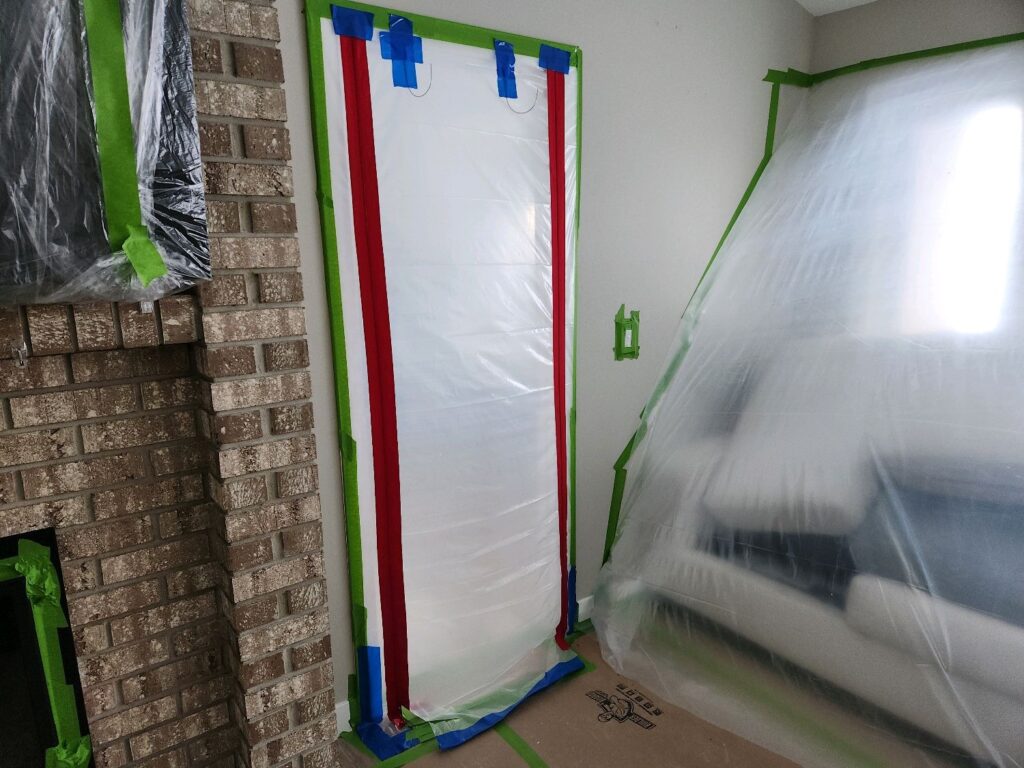
- Remove what can’t be cleaned. Porous materials such as drywall, insulation, ceiling tiles and carpet that are wet and moldy may have to be thrown away, because mold grows into the material and is difficult or impossible to remove completely. The EPA recommends bagging them in 6-mil plastic before they leave the containment.
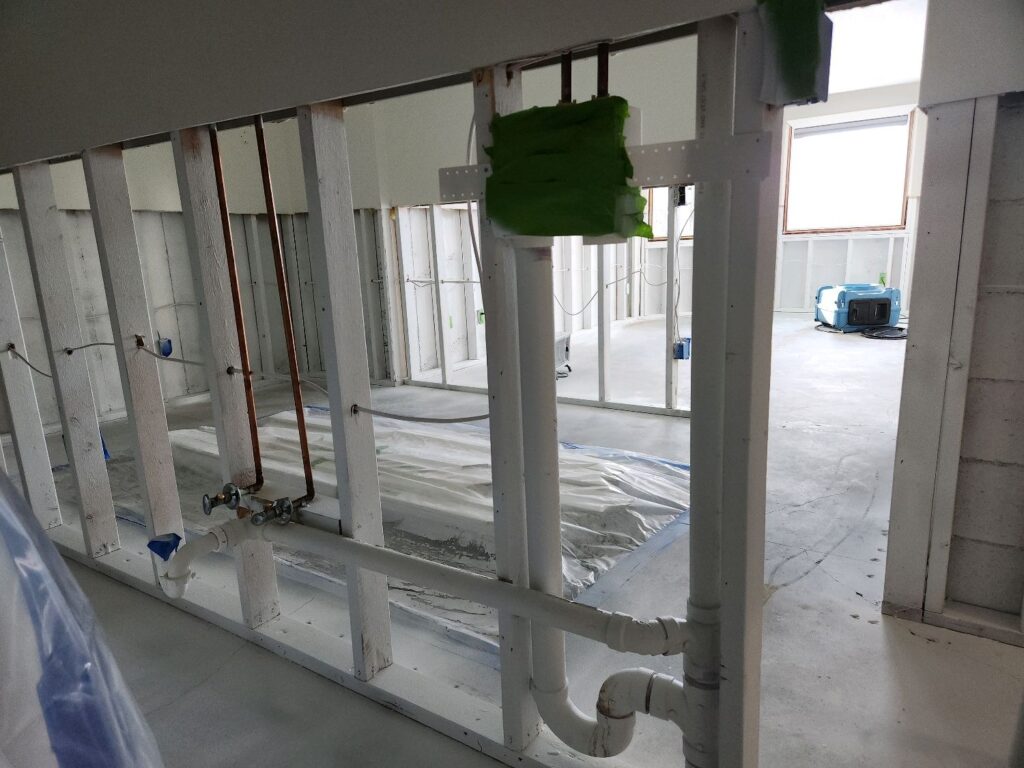
- Clean what stays. Hard surfaces can be damp-wiped or scrubbed with water and detergent and dried quickly. HEPA vacuums are recommended for final cleanup once materials are dry and contaminated materials are gone, including dust that settled outside the work area.
- Dry everything. Wet materials that are dried within 24 to 48 hours usually won’t grow mold. Moisture meters can confirm that framing, subfloors and concrete are actually dry, not just dry to the touch.
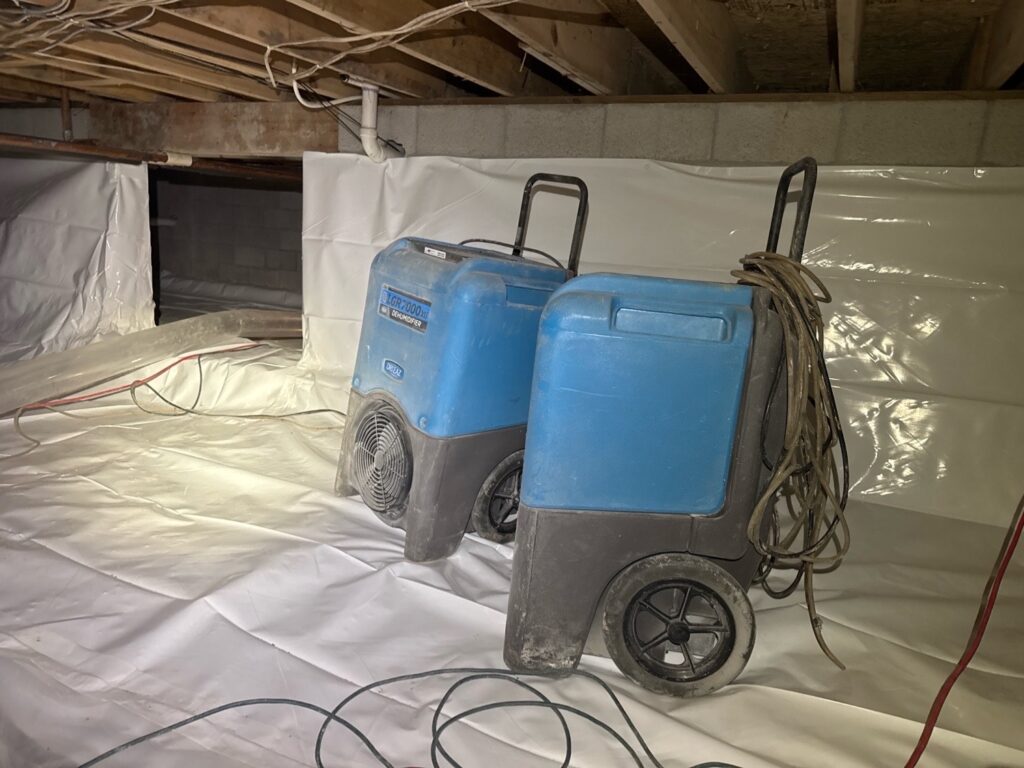
- Verify before rebuilding. Before new drywall goes up, someone should confirm the area is clean and dry. The next sections explain what that check looks like.
Shortcuts that should raise a flag
Most remediation contractors do careful work. Still, a few shortcuts show up often enough that homeowners should know them:
- Spraying or fogging instead of removing. The 2024 edition of S520 puts more emphasis on discouraging remediators from spraying products on mold without first physically removing the mold and cleaning the surfaces. Stain removers are cosmetic and belong only after the growth is gone.
- Ozone as the fix. The EPA reports that ozone would have to be 5 to 10 times higher than public health standards allow to keep biological contaminants from regrowing once it is removed, and that even high concentrations may have no effect on contaminants embedded in porous materials.
- Painting or sealing over mold. The EPA’s advice is simple: don’t paint or caulk moldy surfaces. Clean and dry them first. Paint applied over mold is likely to peel.
- No containment on a large job. Tearing out moldy drywall without plastic and negative air can spread spores and debris into rooms that were clean.
- Ignoring the water problem. If the mold is cleaned up but the water problem isn’t fixed, the EPA says the mold will most likely come back.
- The same company grading its own work. More on that below.
Had mold remediation done, or about to have it? An independent check confirms the moisture is fixed and the mold is really gone before the walls go back up. Schedule a preliminary mold inspection.
What is post mold remediation testing?
Post mold remediation testing is a check, after the work is done, that the remediation met its goals. You will also hear it called post-remediation verification (PRV), a clearance inspection or mold clearance testing. In practice it is an inspection first and a test second: a careful look, moisture readings and, where it helps, air or surface samples.
The 2024 S520 standard separates two kinds of checks. Remediators should run their own internal quality control at the end of a job, which the standard calls a Post Remediation Evaluation (PRE), with firm clearance criteria. Post Remediation Verification (PRV) is different: an inspection and assessment done by an independent third-party indoor environmental professional (IEP) after the remediation project. The standard also treats an IEP’s conflict of interest as a deviation that has to be explained in writing to the people with a stake in the job.
Why does independence matter so much? Because the company that did the work has a natural interest in passing it. New York is one state that wrote this into law. Its mold statute says no licensee may perform both the mold assessment and the mold remediation on the same property, and no one may own an interest in both companies on the same property. The same law spells out what clearance means there: the work area must be free from all visible mold, the work must meet the remediation plan’s clearance criteria, and the assessor must, as far as feasible, confirm the underlying cause was fixed so the mold is reasonably certain not to return. That is New York’s law, not North Dakota’s or Minnesota’s, but it is a useful model for any homeowner hiring a remediator anywhere.
What a post-remediation verification should include
A thorough post-remediation check usually covers six things:
- The plan. What was supposed to be removed, cleaned and fixed, and was it done?
- A visual inspection. Ideally while containment is still up and before walls are closed. The EPA says the remediated area should show no evidence of present or past mold growth, and visible mold and mold-damaged materials should not be present. Dust and debris left behind count too.
- A moisture check. Moisture meters and thermal imaging confirm that the source of water was fixed and that framing, subfloor and concrete are dry.
- An odor check. The EPA says there should be no moldy or musty odors, because those suggest mold is still growing.
- Sampling where it answers a question. Air samples compare indoor spore types and levels with an outdoor sample taken at the same time; the EPA says that after remediation, indoor types and concentrations should be similar to what is found outdoors. The EPA also notes that surface sampling may be useful to determine whether an area has been adequately cleaned. Our guide to how to read mold test results explains how those comparisons work.
- A written result. Either the area passed, or it didn’t and the report says why and what should happen next.
For a household with someone who has asthma, a weakened immune system or other sensitivities, the EPA recommends a more cautious approach to remediation, and a stricter look at the end makes sense too. Our post on who is most at risk from mold covers those situations.
What the test results can and can’t prove
Sampling is useful, but it has limits that every homeowner should understand before trusting a single number.
- A clean air sample doesn’t replace a visual check. The EPA’s mold course says air sampling usually isn’t necessary to judge remediation and may be less effective than a careful visual and sensory survey. It warns that a negative sampling report must not be used in place of a visual survey.
- An air sample is a snapshot. It shows what was in the air at that moment. Barometric pressure, indoor and outdoor temperatures, activity and humidity can all push spore levels up or down.
- There is no federal pass number. No EPA or other federal limits exist for mold or mold spores, so results are read by comparing indoor and outdoor samples and by looking at which molds are present, not by checking a legal threshold. Our article on mold testing options explains which tests fit which questions.
- New smells and symptoms aren’t always mold. The EPA notes that remodeling, cleaning and construction can bring in new building materials or chemicals that irritate the upper airways and can mimic mold symptoms in some people. If a chemical smell lingers, ventilate and ask the contractor which products were used; a musty smell is a different story.
In the end, the EPA’s own words are worth repeating: whether remediation is finished is ultimately a judgment call, with no easy answer. Good verification combines the plan, the eyes, the moisture meter and the lab rather than leaning on any one of them.
Can mold come back after remediation?
Yes, if the water comes back. The EPA puts it plainly: if you clean up the mold but don’t fix the water problem, the mold problem will most likely come back. That is why the EPA also recommends revisiting the area shortly after cleanup to confirm it shows no signs of water damage or new growth.
To keep a remediated area from going moldy again:
- Dry any new leak or spill within 24 to 48 hours.
- Keep indoor humidity below 60 percent, ideally between 30 and 50 percent, as the EPA recommends.
- Watch for condensation on windows, cold walls and pipes, especially in winter. Our post on mold and condensation after insulation and energy upgrades explains why tighter homes need attention.
- Keep gutters, downspouts and grading moving water away from the foundation.
What to do after mold remediation
Once the work has passed, a few simple habits protect the investment:
- Keep the paperwork. Save the remediation plan, photos, moisture readings, lab results and the written verification. They help with insurance questions, future repairs and a future sale.
- Don’t close it up too soon. New drywall, paint and flooring should wait until the area has passed and the materials are dry.
- Change the furnace filter. The EPA recommends changing HVAC filters after remediation activities.
- Check the area again. Look and sniff at the remediated area in the weeks after the job and after the next heavy rain or snowmelt.
- Call someone if something seems off. A musty odor, new staining or a damp feel is worth a professional look before it turns into another project.
Experience you can check
Nordic Inspections has served Fargo-Moorhead, North Dakota and Minnesota since 2010. Our mold work is led by Lars Knobloch, a Council-certified Indoor Environmentalist (ACAC CIE) and ASHI Certified Inspector who is also a certified radon measurement professional and radon mitigation specialist. Lars has provided litigation support on building defects and environmental problems, and our mold samples are analyzed by EMSL Analytical.
Nordic doesn’t remove mold, and that’s on purpose. Because we don’t sell the cleanup, we can check the work before and after remediation with no stake in the outcome. Our mold testing and clearance services page explains how that works, and the Mold Resource Center brings all of our mold articles together.
Frequently asked questions
How do I know if mold remediation worked?
The moisture source is fixed, no visible mold, mold-damaged material or musty odor remains, the area stays dry when checked again, and any samples look like normal background. An independent post-remediation verification checks all of these and puts the result in writing.
What is post remediation verification (PRV)?
Under the IICRC S520 standard, post remediation verification is an inspection and assessment by an independent third-party indoor environmental professional after a remediation project. It is separate from the remediator’s own end-of-job quality check.
Should the remediation company do its own clearance testing?
Remediators should check their own work, and S520 expects them to. The final verification is more trustworthy when it comes from someone with no financial stake in the result. New York law, for example, bars the same licensee from doing both the assessment and the remediation on the same property.
Is air testing enough to pass a mold remediation?
No. The EPA warns that a negative sampling report must not be used in place of a visual survey. Air samples are a snapshot and can swing with weather and activity, so they work best alongside a visual inspection, moisture readings and, where useful, surface samples.
Can mold come back after remediation?
Yes, if the moisture problem isn’t solved. The EPA says mold will most likely come back if the water problem isn’t fixed, so the leak, drainage or humidity issue has to be part of the job.
Why is there a chemical smell after mold remediation?
Cleaning products, coatings and new building materials can leave odors, and the EPA notes they can irritate the upper airways in some people. If a chemical smell lingers, ventilate and ask the contractor which products were used. A musty smell after remediation is different and is a reason to have the area checked.
Do I need post-remediation testing after a small DIY cleanup?
For a patch under about 10 square feet that you cleaned yourself, the EPA says most homeowners can handle the job, and a careful look, a moisture check and a sniff test are usually enough. If the mold returns, the area was larger than it looked, or someone in the home is especially sensitive, a professional check is worth it.
Sources
- U.S. EPA, Mold Remediation in Schools and Commercial Buildings Guide, Chapter 3
- U.S. EPA, A Brief Guide to Mold, Moisture and Your Home
- U.S. EPA, Mold Course Chapter 7: Evaluating the Remediation (archived January 2025)
- U.S. EPA, Ozone Generators that are Sold as Air Cleaners
- IICRC, ANSI/IICRC S520 Standard for Professional Mold Remediation
- ANSI Blog, ANSI/IICRC S520-2024: Professional Mold Remediation (November 8, 2024)
- New York State Labor Law, Section 936: Licensee duties; prohibited activities
- New York State Labor Law, Section 947: Post-remediation assessment and clearance