

Not every line, patch or coating on a basement wall is a sign of trouble. Many foundation wall problems turn out to be normal construction details or surface wear. A few deserve a closer look because they let water in or hide a repair that was never done right.
This guide explains the foundation wall findings we see most often in Fargo-Moorhead homes: cold joints, control joints, parging, damp proofing, mortar wear, spray-foamed cracks and lowered basements. For cracks caused by soil movement, bowing walls and settlement, see our companion post on why foundations move in Fargo-Moorhead.
Why foundation walls take a beating here
Basement walls in the Red River Valley hold back clay soil that swells when wet, shrinks when dry and freezes deep in winter. Spring melt and heavy rain push water against the walls. Over decades, that wears down coatings, opens joints and finds every weak spot.
Cold joints
A cold joint is a line where one pour of concrete met another after the first had started to set. It happens when there is a delay between loads of concrete during the pour. It usually shows up as a horizontal or angled line across a poured wall, sometimes with a slight change in color or texture.
A cold joint is not considered a structural concern by itself. Because the two pours did not fully bond, the joint can let water seep through. Watch for dampness, white mineral deposits (efflorescence) or staining along the line after heavy rain or spring melt.
Control joints
Concrete shrinks as it cures, and a long wall will crack somewhere. Control joints are vertical grooves formed into the wall on purpose, so the crack happens in a straight line at a planned spot. A crack inside a control joint is doing exactly what it was designed to do.
If a control joint leaks, it can be sealed from the inside by crack injection, the same way a leaking crack is repaired.
Parging
Parging is a thin coat of cement-based mortar applied over the outside of a foundation wall. On block walls it smooths and protects the surface; the model International Residential Code calls for masonry basement walls to get a portland cement parge coat at least 3/8 inch thick before dampproofing. It is also used to cover and protect rigid foam insulation on the exposed part of a foundation above the soil.
Parging is a protective skin, not a structural part of the wall. Over time it cracks and falls off, especially where water and frost get behind it. Damaged parging should be repaired so water, frost and sunlight do not damage the wall or insulation behind it. A mason removes the loose material and applies new parging to sound surfaces.
Damp proofing
The outside of a basement wall is coated before the soil is backfilled. Building codes call for below-grade walls that enclose living space to be dampproofed at a minimum, and in some soil conditions waterproofed. Minnesota’s residential code goes further and requires waterproofing from the top of the footing to the finished grade.
Damp proofing, often a black asphalt-based coating, slows moisture moving through the concrete but is not designed to stop water under pressure. Waterproofing is a heavier membrane or coating made to keep liquid water out. Failing damp proofing may show as peeling coating where the wall is exposed, or as dampness, efflorescence or a musty smell inside. Most of the coating is underground, so dampness inside is often the better clue.
Mortar deterioration in block, brick and stone walls
In brick, stone and block foundations, mortar softens and crumbles as it ages and takes on water. The fix is repointing: raking out loose mortar and packing in new mortar.
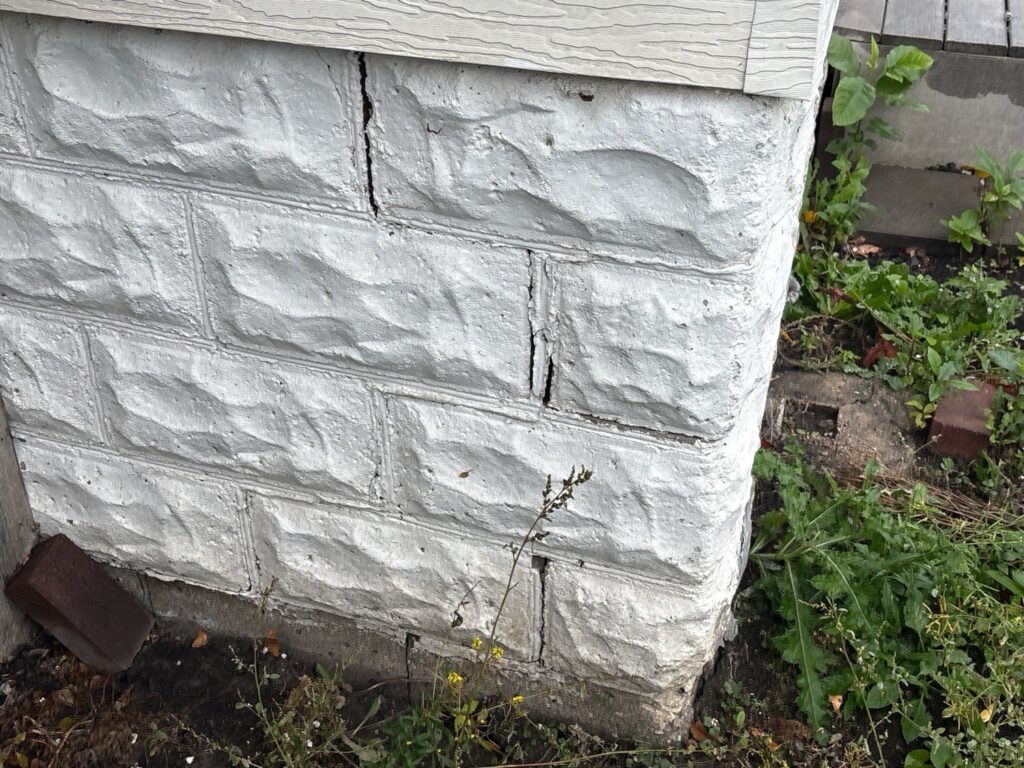
The National Park Service’s guide to repointing gives sound advice for any older masonry. New mortar should be “softer or more permeable than the masonry units,” so it does not trap moisture and damage the brick or stone. Joints should be raked out to “2 to 2-½ times the width of the joint,” and the cause of the deterioration, such as a leaking gutter or poor grading, should be fixed first or the mortar will keep breaking down.
Cracks filled with spray foam
We sometimes find foundation cracks filled with canned spray foam. It is an understandable quick fix, but not a durable repair. Canned foam is made to fill gaps around windows and pipes. It does not bond to concrete the way crack repair products do, and it usually fills only the surface of the crack, so water can still travel through the wall behind it. It also hides the crack, which makes it hard to tell whether the crack is growing.
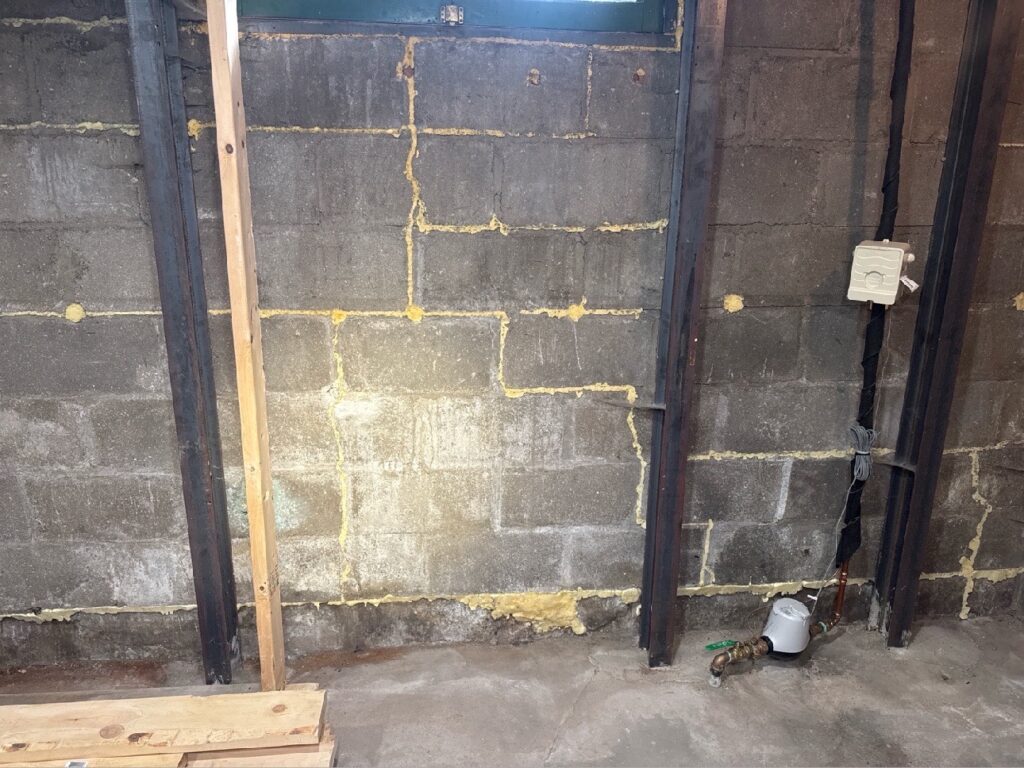
Professional crack repair uses products injected through the full depth of the crack. Concrete Network explains that polyurethane injection is usually the best choice when a crack only needs to be sealed against water, while epoxy is the choice for cracks that need structural repair, because it can be as strong as the concrete around it. A qualified foundation contractor can remove the foam, evaluate the crack and recommend the right repair.
Lowered basements
Some older homes have had the basement floor dug down to gain ceiling height. There are two common ways to do it. Underpinning extends the foundation walls and footings deeper, usually in short sections. Benching leaves a concrete ledge, or bench, along the inside of the walls so the soil under the original footings is not disturbed.
Both are structural work that should be designed by an engineer and done with permits. When we see a lowered basement, we recommend getting the permits and documentation from the seller.
What these findings mean in an inspection report
When we find these conditions during an inspection, we describe what we saw and where. Cold joints and control joints are noted as normal details to watch for leaks. Damaged parging and worn mortar are recommended for repair. Failing damp proofing is recommended for further evaluation, and spray-foamed cracks for evaluation and proper repair by a qualified foundation contractor.
If you want to know whether a foundation has moved over time, a foundation elevation survey measures floor levels so changes can be compared later.
How to keep foundation walls dry and sound
- Keep soil sloping away from the house for at least several feet. See Lars Knows: Good Grade and our post on adding dirt around a house that is pulling away.
- Keep gutters clean and downspout extensions in place. Our post on clogged and leaking gutters has tips.
- Walk the basement after heavy rain and in spring, and take dated photos of cracks and damp spots.
- Repair damaged parging and loose mortar before winter, so frost cannot pry it further.
- Have leaking cracks injected rather than foamed or caulked from the surface.
- Make sure the sump pump works, and consider a backup. See backup sump pump options.
Foundation wall problems: common questions
Is a cold joint in my basement wall a problem?
Usually not structurally. It can let water seep through, so watch it after heavy rain. A leaking cold joint can be sealed by crack injection.
What is the difference between a control joint and a crack?
A control joint is a planned groove that makes the wall crack in a straight line at that spot. A crack inside it is expected. Random cracks elsewhere are worth tracking.
Can I repair parging myself?
Small areas can be patched with a parging mix after removing all loose material. Large areas, or parging over insulation, are best left to a mason.
Why shouldn’t I use spray foam on foundation cracks?
Canned foam does not seal the full depth of the crack and does not bond like an injected repair. Water can still get through, and the foam hides whether the crack is growing.
Sources
- National Park Service. Preservation Brief 2: Repointing Mortar Joints in Historic Masonry Buildings.
- Concrete Network. Concrete Crack Injection.
- Minnesota Rules, part 1309.0406. Foundation Waterproofing.
- International Code Council. 2021 International Residential Code, Chapter 4 Foundations (Section R406).