

Basement floor heaving is one of the most common things we find in Fargo-Moorhead homes. It happens when the soil under a concrete floor swells or freezes and pushes part of the slab up, leaving a hump, a ridge or a crack. The short answer: most basement floor heaving is typical for our clay soils and isn’t a structural emergency. Keep water away from the house, fix any plumbing leaks, and watch the floor for change. Call a structural engineer if the heaving grows or starts moving walls, doors or ceilings.
This guide explains why concrete slabs heave here, what garage floor heaving or settlement means, the signs that point to a bigger problem, and what you can do about it.
Why basement floor heaving happens in Fargo-Moorhead
Fargo, West Fargo and Moorhead sit on the old lakebed of Glacial Lake Agassiz. The North Dakota Geological Survey describes the Brenna clay under much of the area as “soft and expansive,” and notes it is commonly around 70 feet thick. Expansive clay swells when it takes on water and shrinks when it dries.
A basement floor is a lightly loaded slab sitting right on that clay. The foundation walls carry the weight of the house, but the middle of the floor carries almost nothing. A National Research Council of Canada building digest on swelling prairie clays explains that lightly loaded central floor areas heave faster than the heavily loaded wall footings. That is why heaving usually shows up as a raised area or ridge in the middle of the basement, while the edges stay put.
The same digest notes that heaving can go on for several years after a house is built, and that basement floor slabs may heave by several inches. It also lists the water sources that make it worse: roof runoff, heavy lawn watering and plumbing leaks under the floor.
Frost heave
Frost is the other cause. NDSU Extension explains that ice layers can form in the ground when the frost line is near the water table, lifting the soil. Frost heaving is more likely with clay or silt soil and a high water table, and it can lift a basement floor. A heated basement rarely freezes underneath, so frost heave is more often a garage, porch, patio or sidewalk problem.
Concrete slab heaving: signs to look for
You may notice:
- A hump or ridge in the floor that you can feel underfoot or see when you shine a light across it
- Cracks in the concrete, often running through the raised area
- Floor coverings that bulge, separate or click, like laminate or vinyl plank lifting at the seams
- Interior doors that start to stick or rub at the top
- New cracks in drywall or ceilings above interior basement walls
- Gaps at the bottom of the baseboards in some spots and tight fits in others
Many of these are small and change slowly. What matters most is whether they keep changing.
Basement floor heaving in an inspection report: monitoring and elevation surveys
When we see heaving during an inspection, we note it in the inspection report as a common condition for the area. In most homes it doesn’t lead to substantial structural problems. In some cases, though, a rising floor can push up interior walls or posts that support the floor framing above. That can shift floors and ceilings on the main level and crack drywall.
We recommend fixing any exterior water control issues, such as grading or gutters, and monitoring the heaving for future movement. If you want measured numbers, our Foundation Elevation Survey uses a high-precision digital altimeter to map floor heights across the home, so you can see where the floor has risen or settled and compare it later.
Garage floor heaving or settlement
A garage floor is unheated, so it can freeze and frost heave in winter. It can also settle where the soil under it washed out or wasn’t compacted well. Either way, the floor no longer slopes the way it was built to. Water from snow and rain on your vehicles may pool in low spots or run toward the house instead of out the door.
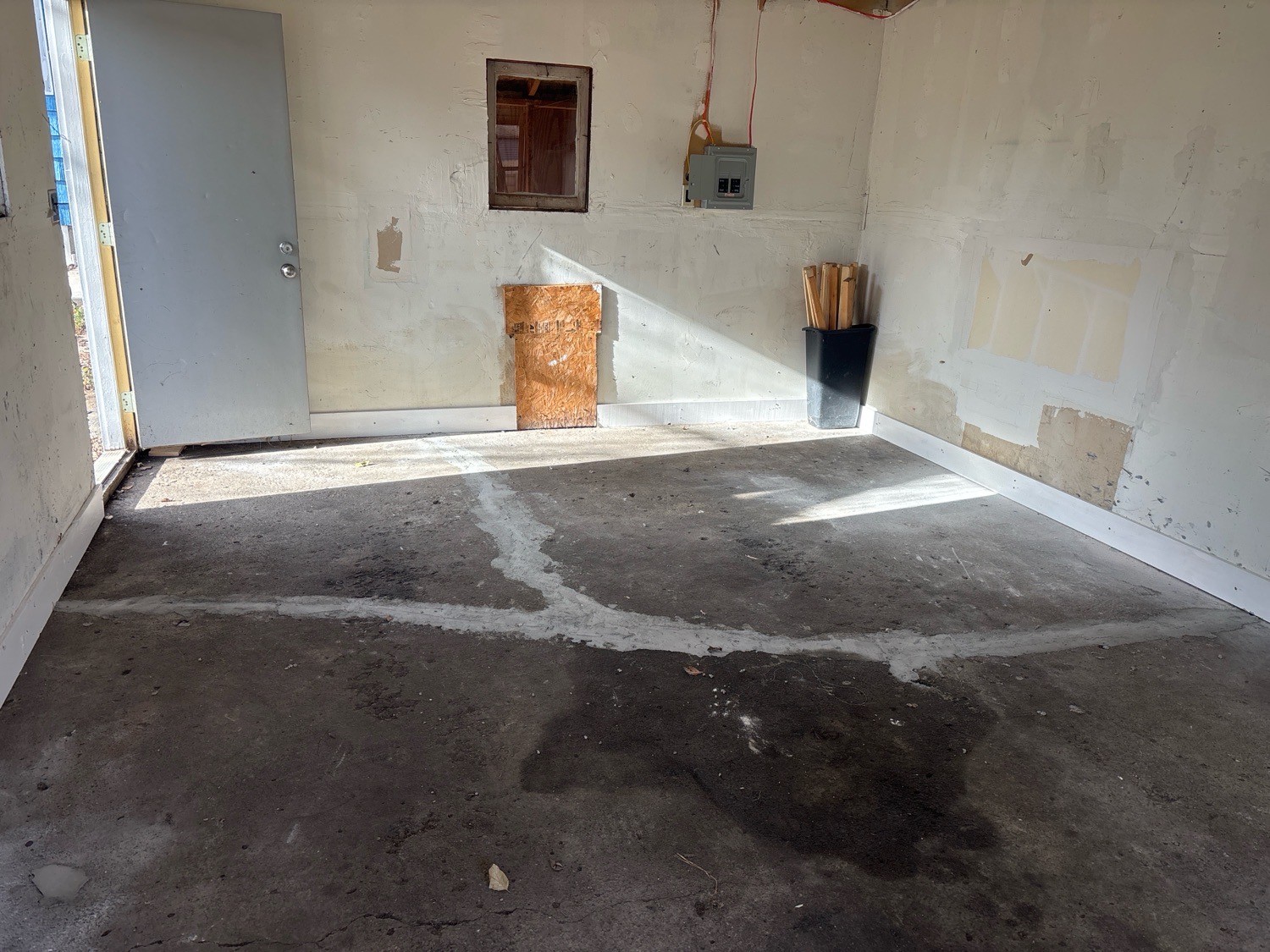
A National Research Council of Canada digest on frost heaving notes that garage slabs heave when there is a ready water supply and the garage is cold enough for the soil to freeze near the entrance. Clean gravel or crushed rock under the slab and drain tile help prevent it.
Small heaves and settled sections are common and are mostly a drainage and trip-hazard issue. Our post on garage floor pitting and oil stains covers other garage floor wear.
Driveway, patio and sidewalk heaving
Outside slabs heave and settle the same way. Frost can lift a sidewalk section in winter and drop it back in spring, sometimes unevenly. When a patio or walk settles, contractors can often lift it by pumping foam, mud or sand under it (“slab jacking”). Our post on concrete driveway cracks explains the options.
How to fix basement floor heaving
There is no quick fix for clay that swells, so the steps focus on keeping the soil’s moisture steady and watching for change.
- Move water away from the house. Slope the soil away from the foundation, keep gutters clean and extend downspouts well away from the walls. See Lars Knows: Good Grade and our post on clogged and leaking gutters.
- Fix plumbing leaks. A leaking drain or supply line under a slab can soak the clay. The NRC digest reports leaks causing heave of 3 inches or more per month.
- Keep the sump pump working and discharging away from the house, including in winter. See how to discharge your sump pump in winter.
- Track the movement. Mark the ends of cracks with a pencil and the date, take photos, and note doors that start to stick. An elevation survey gives you a baseline to compare against.
- Leave room for movement when finishing a basement. Where interior walls stand on a slab that heaves, the NRC digest notes the rising floor can push hard enough to damage the walls above it. Ask your contractor how the framing will allow for floor movement.
- Call a structural engineer if it keeps moving. An engineer can tell you whether the movement is typical heave, settlement or something else, and what repair, if any, makes sense.
For a heaved or settled garage floor, a concrete contractor can grind a high edge, fill a gap or replace a section, and fix the drainage that caused it.
When heaving points to a bigger problem
Most heaving is gradual and cosmetic. Have it evaluated by a structural engineer if you see:
- Cracks in the floor that are getting wider or lifting on one side
- Interior walls, posts or beams that have been pushed up, or doors that won’t close
- New cracks in ceilings or upper-floor drywall that keep growing
- A garage slab heaving against a door or wall
- Water coming up through cracks in the floor
Our posts on why foundations move in Fargo-Moorhead, how clay soils affect foundations and drywall cracks and nail pops explain the related signs.
Basement floor heaving: common questions
Is basement floor heaving normal?
In the Red River Valley, yes, it’s common. Expansive clay under the slab swells with moisture. Most heaving is gradual and doesn’t cause structural problems, but it’s worth watching.
What is the difference between heaving and settlement?
Heaving is part of a slab rising, usually from swelling clay or frost. Settlement is part of a slab sinking, usually from soft, washed-out or poorly compacted soil. Both leave the floor out of level, and both are made worse by water.
Can a heaved basement floor be fixed?
The cause can be managed with water control and leak repair, and high spots or damaged sections can be repaired. Severe or ongoing movement needs a structural engineer’s plan.
Is garage floor heaving a problem?
Usually it’s a drainage and trip-hazard problem rather than a structural one. Watch for heaving that pushes against walls or doors, or water that runs toward the house.
Do I need an elevation survey for a heaving floor?
Not always. For mild heaving, watching for change is often enough. An elevation survey is worth it when you’re buying, when the heaving seems to be growing, or when you want a measured baseline to compare against in a year or two.
Should I buy a house with basement floor heaving?
Many buyers do. Ask the seller how long it’s been there and whether it has changed, and consider a Foundation Elevation Survey or a structural engineer’s evaluation before your inspection deadline.
Want a closer look at your floors? Schedule a homeowner inspection or a Foundation Elevation Survey, or learn more about our home buyer’s inspection.
Sources
- North Dakota Geological Survey (Fred J. Anderson). Homes on Stilts: Fargo Area Citizens Face Continued Residential Foundation Stability Issues (July 2023)
- National Research Council of Canada. Canadian Building Digest 84: Swelling and Shrinking Subsoils
- National Research Council of Canada. Canadian Building Digest 128: Adfreezing and Frost Heaving of Foundations
- NDSU Extension. Preparing Flood-damaged Homes for Winter (AE1594)