

A garage floor takes a beating in Fargo-Moorhead. Every winter, cars roll in carrying snow, slush and road salt, and that salty water sits on the concrete while it freezes and thaws. Over time the surface can start to flake, pit or crumble. Garage floor pitting is one of the most common things we see in garages during a home inspection, along with oil stains from years of parked vehicles. Neither one is usually a structural problem, but both are worth understanding before you seal, coat or resurface the floor.
This guide explains why garage floors pit and scale, what the finding means in an inspection report, how to fix it and how to clean oil stains the right way.
Why garage floor pitting happens here
Concrete is full of tiny pores that hold water, and water expands when it freezes. Concrete made for cold climates contains billions of microscopic air bubbles per cubic foot (called air entrainment) that give the freezing water room to expand. When the concrete has too little entrained air, or when the surface is weak, repeated freezing and thawing breaks the top layer apart.
The industry guide on scaling concrete surfaces (CIP 2) lists the main causes:
- Deicing salts. Calcium chloride and sodium chloride on concrete with inadequate strength, air entrainment or curing. Iowa State University’s National Concrete Pavement Technology Center notes that calcium chloride and magnesium chloride are more aggressive, and that salt does the most harm on young, porous concrete.
- Finishing while bleed water is on the surface. Troweling water back into the top of a fresh slab, or over-finishing it, leaves a weak surface layer that can peel even without freezing.
- Poor curing. Concrete that dries out too fast in its first days never reaches its full surface strength.
- Fertilizer chemicals. Ammonium sulfate and ammonium nitrate can cause scaling and severe chemical attack, so store fertilizer off the floor.
- Standing water. Poor drainage that lets salty water sit on the slab greatly increases the damage.
In a garage, the salt drips off your vehicle all winter and collects under the wheels and near the overhead door.
Scaling, spalling, pitting and popouts: what you are seeing
These words are often used loosely:
- Scaling is flaking or peeling of the finished surface. Light scaling does not expose the coarse stone in the concrete. Moderate scaling removes about 1/8 to 3/8 inch of surface mortar. In severe scaling, the stone is clearly exposed and stands out.
- Pitting and spalling describe small holes, rough patches or larger pieces breaking away.
- Popouts are cone-shaped holes with a broken piece of stone at the bottom. They happen when a porous stone near the surface absorbs water, freezes and expands. There is no way to stop popouts, although sealers can slow the water getting in.
Garage floor pitting is mostly cosmetic. It is different from cracks where one side sits higher than the other, slabs that have settled toward the house, or gaps that let water reach the foundation. Those are covered in our guide to concrete driveway cracks.
What this finding means in an inspection report
When we find pitting or spalling on a garage floor during an inspection, we note it in the inspection report and describe where it is. On an older home, it is common with age and exposure to deicing salts, and we usually recommend monitoring it and resurfacing as desired. On a newer home, the damage may come from deicing salts or from how the slab was finished, so we recommend reporting it to the builder for evaluation, before closing or under the warranty.
We also note oil stains. They do not hurt the structure, but they matter if you plan to coat or resurface the floor. Areas under stored items, vehicles or mats cannot be seen on inspection day.
How garage floor pitting is fixed
The right fix depends on how deep and widespread the damage is.
- Monitor light scaling. If the stone is not exposed, keep the floor clean, limit salt and watch it.
- Seal the floor. A breathable silane or siloxane penetrating sealer reduces how much water and salt get into the concrete. Penetrating sealers have to be reapplied periodically, so follow the product label.
- Resurface damaged areas. For moderate damage, a contractor removes all loose and unsound material, cleans the slab of dirt, oil and paint, and applies a thin resurfacing layer, such as a polymer-modified cementitious repair mortar. A resurfaced floor is only as strong as the concrete it is bonded to, so preparation matters more than the product.
- Replace severely damaged sections. When the stone is widely exposed, the surface keeps flaking off when tapped with a hammer, or the slab is also cracked and settled, replacing the section is often the better long-term fix.
Epoxy and other coatings will not stick to a weak, flaking or oily surface. Fix the concrete first.
How to remove oil stains from a concrete garage floor
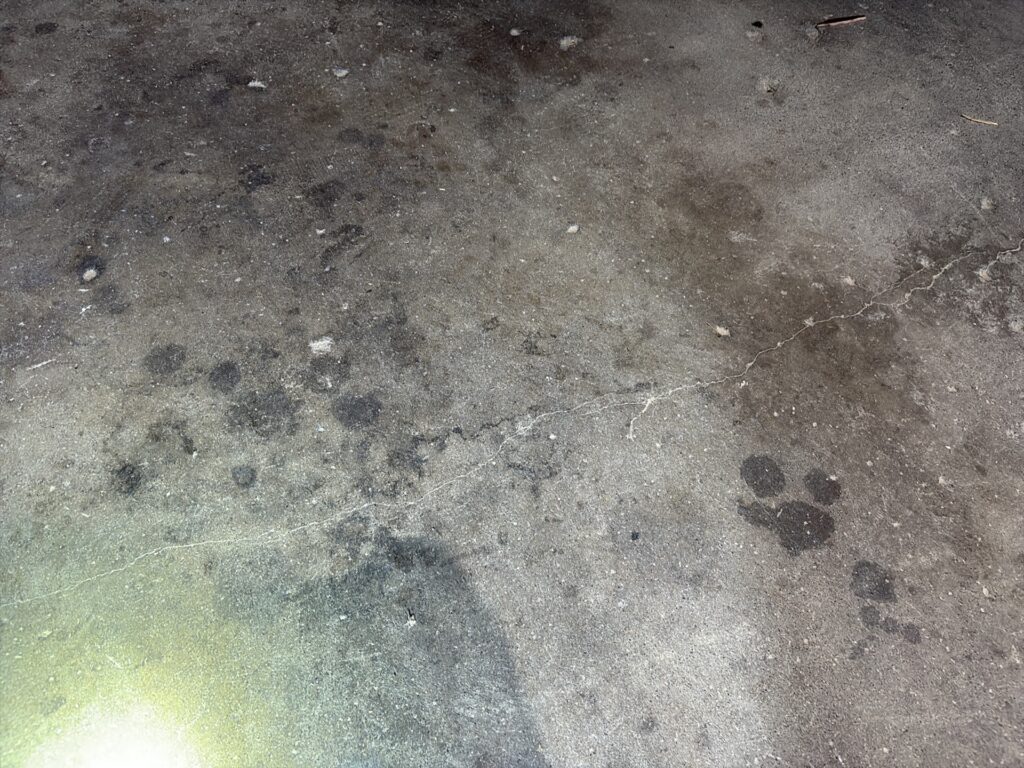
Fresh oil is the easiest to clean, so act quickly:
- Cover a fresh spill with an absorbent such as kitty litter, sawdust or a commercial oil absorbent, and grind it in with your shoe.
- Let it sit, then sweep it up. Do not hose the floor down. Sweeping keeps oil out of storm drains.
- Scrub what is left with a concrete degreaser or a strong detergent and a stiff brush, following the product directions, then pick up the residue with more absorbent.
- Older, set-in stains may need several rounds, or a poultice-style cleaner that draws oil out of the pores as it dries.
Dispose of oily absorbent and rags the way your city or county household hazardous waste program directs. Never pour used oil, or oily wash water, onto the ground, into a ditch or down a storm drain. The City of Moorhead calls dumping motor oil into a storm drain a prohibited discharge under its stormwater ordinance and notes that one quart of motor oil can contaminate 250,000 gallons of water. Take used oil to a recycling location instead.
Put a drip pan under any vehicle that leaks, and get the leak repaired.
How to prevent garage floor damage
- Keep new concrete salt-free. Do not use deicing salts on concrete during its first year. Use clean sand for traction.
- Never use ammonium-based products as a deicer. Ammonium sulfate and ammonium nitrate are chemically aggressive and destroy concrete surfaces.
- Clear the slush. Squeegee or sweep melted snow out of the garage instead of letting it sit, especially near the door and under the wheels.
- Seal the floor with a breathable penetrating sealer and reapply it on the schedule the manufacturer recommends.
- Fix drainage. Water should run toward the door, not pond in low spots or toward the house.
A yearly look at the garage during a fall home checkup catches these problems while they are still small.
Garage floor pitting: common questions
Is a pitted garage floor a structural problem?
Usually not. Pitting and scaling damage the top surface. Cracks with height differences, settlement or water running toward the foundation are different and should be evaluated.
Why is my new garage floor already flaking?
Common causes are deicing salt in the first winter, low entrained air, finishing while bleed water was on the surface, and poor curing. On a newer home, report it to the builder.
Does road salt really damage concrete?
Yes, especially on concrete that is young, weak or poorly air-entrained. Calcium chloride and magnesium chloride are among the more aggressive salts, so limit how much salty slush sits on the floor.
Buying a home or wondering about your own garage? Our home inspections and homeowner inspections include the garage floor, and we will explain what we find.
Sources
- Scaling Concrete Surfaces (CIP 2), Concrete in Practice series
- Revisiting Concrete Scaling, National Concrete Pavement Technology Center, Iowa State University, 2023
- Working with Concrete, American Cement Association
- Motor Oil Best Management Practices, City of Moorhead
- Automotive Maintenance and Stormwater, Regional Stormwater Education Program, hosted by the U.S. EPA