

Why your attic hatch matters
Most homes have a small panel in a closet or hallway ceiling, or a pull-down stair in the garage, that leads into the attic. It is easy to forget about, but an attic hatch that isn’t air sealed or insulated is one of the most common air leaks in a house. It is also one of the most common things we find: in a review of nearly 500 of our recent home inspection reports, an attic access that wasn’t air sealed showed up in close to two out of three.
The cost isn’t only a higher heating bill. Every winter, warm, moist air from the living space pushes through that gap, and when it hits the cold attic, the moisture in it turns to condensation and frost. Over time that moisture can lead to mold on the hatch cover and the wood dam around the opening. This guide explains what happens, what we look for during an inspection, and how to seal and insulate an attic hatch the right way.
What an unsealed attic hatch does in a Fargo-Moorhead winter
Heat loss and air leakage
Warm air rises. In winter, the air in your home presses up against the ceiling and slips through any gap it can find. A loose hatch panel resting on trim, with no weatherstripping, is an open path straight into the attic. The U.S. Department of Energy’s Building America program lists attic hatches and stairs among the common air leaks into the attic and compares the attic access to an exterior door, which is why it needs to be sealed and insulated like one.
A hatch is often a weak spot for insulation too. If the panel has nothing on top of it, or the insulation around the opening has been pushed aside by people going in and out, that part of the ceiling has little or no insulation at all.
Condensation and frost
Indoor air carries moisture from cooking, showers and breathing. Building America explains that when warm, moist air leaks into a cold attic, the water vapor condenses on cold surfaces such as the framing and the underside of the roof sheathing, and in cold weather it often forms as frost. The frost itself does little harm. The damage comes when it melts and the wood and insulation get wet, again and again, through the winter.
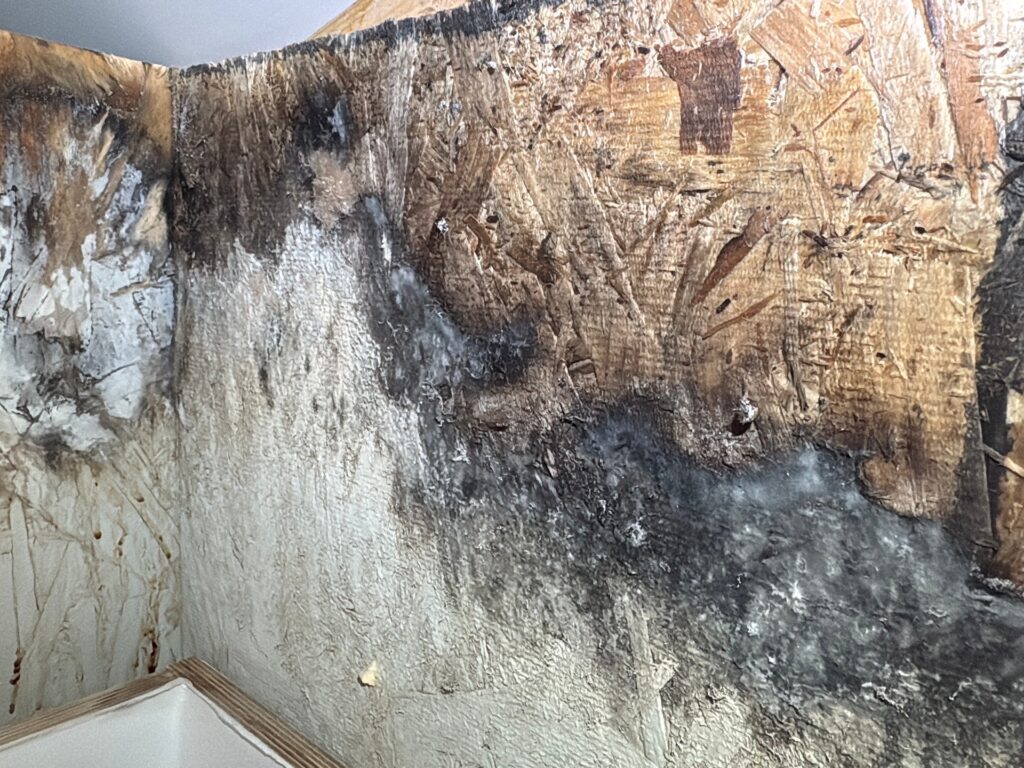
Around an unsealed hatch, the first cold surfaces that leaking air reaches are the back of the hatch cover and the wood dam that holds the insulation back from the opening. That is why frost often shows up right around the hatch first.
Mold on the hatch and insulation dam
Building America notes that repeated condensation leads to mold growth and, over time, to rot and swelling of wood products like OSB and plywood. In our inspections, the attic access is one of the places we most often find suspected mold growth: dark staining and spotting on the inside of the insulation dam, on the back of the hatch cover, and on the framing right around the opening, exactly where warm, moist air has been leaking past for years.
What about ice dams?
An unsealed hatch adds a little to the heat that reaches the roof, but on its own it rarely causes ice dams. Building America describes ice dams as the result of snow on the roof, freezing temperatures, and an attic that is poorly air sealed or insulated overall. A leaky hatch is one small part of that bigger picture. Our article on attic ventilation in Fargo-Moorhead covers how sealing, insulation and ventilation work together.
Signs your attic hatch needs attention
- The panel sits loosely on the trim and moves when doors close or the furnace starts.
- There is no foam or rubber weatherstripping where the panel meets the trim, and no insulation on the back of the panel.
- Insulation around the opening is pushed away, matted or damp.
- Dark lines or dust on the trim around the hatch, a sign of air moving through the gap.
- Frost on the hatch cover, the insulation dam or the nearby roof sheathing in very cold weather.
- Dark staining, spotting or fuzzy growth on the back of the hatch cover or on the wood dam, or a musty smell when the hatch is opened.
What this finding means in an inspection report
When we find an attic access that isn’t air sealed or insulated, we note it and recommend weatherstripping and insulating it. When we also see suspected mold growth on the hatch cover, the insulation dam or the framing around the opening, we note that separately and recommend correcting the moisture source and having the affected material cleaned or replaced. Cleaning the mold without stopping the air leak only means it comes back.
A home inspection looks at the visible condition of the attic access and the attic. If you want to know what kind of growth it is and whether it has spread, a mold inspection answers that question.
How to air seal and insulate an attic hatch
Start with the moisture damage
If the hatch cover or the insulation dam has mold growth, replace or clean that material first. The U.S. Environmental Protection Agency says a homeowner can usually handle a moldy area smaller than about 10 square feet, and that larger areas are a job for a professional. Wear gloves, eye protection and a respirator, and let the area dry before sealing.
A ceiling hatch panel
- Weatherstrip the opening. ENERGY STAR recommends self-sticking weatherstripping where the panel rests. Building America notes the adhesive often doesn’t stick well to wood or drywall, so clean the surface first and use contact cement if needed.
- Make it close tight. Latches or hook-and-eye fasteners that pull the panel down against the weatherstripping keep it sealed. ENERGY STAR suggests setting them so the weatherstripping is slightly compressed.
- Insulate the back of the panel. Glue rigid foam board or fasten batt insulation to the attic side of the panel. Building America recommends rigid foam and says the access should be insulated to the same, or nearly the same, R-value as the rest of the attic.
- Build or repair the dam around the opening. A frame of lumber or rigid foam keeps loose-fill insulation from spilling into the opening. Building America calls for a dam at least 16 inches tall, sealed at the corners.
- Seal the trim. Caulk the joint between the trim and the ceiling drywall from the room side.
A pull-down attic stair
ENERGY STAR says to treat a pull-down stair or attic door like a door to the outside: weatherstrip the edges and add rigid foam to the back. Many homeowners also use a ready-made insulated cover that sits over the opening in the attic. Check that the stair still closes fully and latches tight after you add anything.
How much insulation
For existing homes in the coldest climate zones, which include our area, ENERGY STAR recommends attic insulation of R49 to R60. The hatch should come close to matching what the rest of the attic has. Hatches in attached garages need the same care, and for access doors in finished attic rooms, see our article on knee wall attics.
How to keep moisture out of the attic
- After anyone goes into the attic, check that the panel is seated and latched and that the insulation around the opening is back in place.
- Replace weatherstripping that is crushed, torn or no longer sticking.
- Keep indoor humidity in check in winter: run bath fans during and after showers and use the kitchen fan when cooking. If your home has an air exchanger, our article on HRV and ERV maintenance explains how to keep it working.
- Look at the hatch in the coldest part of winter. Frost or a draft around it means air is still getting through.
Attic hatch: common questions
Should an attic hatch be insulated?
Yes. Building America recommends insulating the attic access to the same or nearly the same R-value as the rest of the attic, and ENERGY STAR recommends weatherstripping it as well.
Why is there mold on my attic hatch?
Usually because warm, moist air from the house has been leaking past the hatch into the cold attic. The moisture condenses or frosts on the cover and the wood dam, and repeated wetting lets mold grow. Sealing the leak is the long-term fix.
Is frost around the attic hatch normal?
No. Frost on the hatch cover or the dam means moist indoor air is getting into the attic there. Seal and insulate the hatch, and keep an eye on indoor humidity.
Can a leaky attic hatch cause ice dams?
It can add to the problem, but it is rarely the main cause. Ice dams come from heat reaching the roof through the whole ceiling, so the hatch is one part of a bigger air sealing and insulation picture.
Is this a do-it-yourself project?
Sealing and insulating a hatch usually is. If there is mold covering more than a small area, vermiculite insulation, or wiring problems near the opening, have a professional look at it first.
Want to know where your home is losing heat and moisture? Schedule a homeowner inspection, or learn more about our home buyer’s inspection.
Sources
- U.S. Department of Energy, Building America Solution Center. Condensation Control in Attics and Roofs in Cold Weather.
- U.S. Department of Energy, Building America Solution Center. Attic Air Sealing, Insulating, and Ventilating for Ice Dam Prevention.
- U.S. Department of Energy, Building America Solution Center. Air Seal and Insulate Attic Access.
- ENERGY STAR. Sealing the Attic Hatch or Door.
- ENERGY STAR. Recommended Home Insulation R-Values.
- U.S. Environmental Protection Agency. A Brief Guide to Mold, Moisture and Your Home.