

If you have read about mold online, you have probably run into the word mycotoxins, often next to frightening claims about “toxic black mold,” brain fog and illness that never goes away. Mycotoxins in homes are a real subject of scientific research, and the worry behind those searches is real too. But the facts are more nuanced than either the scary headlines or the quick dismissals. This guide explains what mycotoxins are, how people are actually exposed, what the leading health organizations and the clinicians who treat mold-sensitive patients each say, and what urine and dust mycotoxin tests can and can’t tell you.
Nordic Inspections · Fargo-Moorhead
Worried about mold or mycotoxins in your home?
Tell us what you’re seeing, smelling or worried about and we’ll recommend the right next step. A preliminary mold inspection finds the moisture and the growth first, then adds air, surface or mycotoxin sampling only where it answers a real question.
Questions first? Call (701) 566-1446
Health note: This article is educational information from indoor environmental professionals, not medical advice. We don't diagnose or treat health conditions. If you have symptoms or health concerns, talk with your physician.
Worried about mycotoxins at home? Start here
- Find and fix the water first. Mycotoxins come from mold, and mold needs moisture. Stopping the leak or the dampness is the one step that helps no matter which side of the mycotoxin debate you are on.
- Don’t judge by color. A dark mold is not automatically “toxic mold.” The CDC says all molds should be treated the same when it comes to health risks and removal.
- Talk with your physician before buying a test. Urine mycotoxin tests are not FDA approved and their results are hard to interpret. Bring health questions to a doctor, and questions about the house to an indoor environmental professional.
- Remove, don’t just kill. Moldy material that is properly removed takes whatever the mold produced with it. Spraying it leaves the material, and its residue, in place.
What are mycotoxins?
Mycotoxins are natural chemicals made by certain molds. The World Health Organization says several hundred different mycotoxins have been identified, and about a dozen get most of the attention. The best known include aflatoxins, which WHO calls “amongst the most poisonous mycotoxins,” ochratoxin A, and the trichothecenes, a family that includes toxins from Fusarium molds on grain and the satratoxins made by Stachybotrys.
Mycotoxins are not gases. The musty smell of a moldy basement comes from volatile compounds, but mycotoxins are large molecules that don’t evaporate. The American College of Medical Toxicology (ACMT) describes them as large, non-volatile molecules, and an IAQ Radio episode summary with Dr. J. David Miller of Carleton University, one of the leading researchers on fungal toxins and chief editor of the AIHA’s guide to assessing indoor mold, puts it simply: “Mycotoxins are never volatile.” That tells you how mycotoxins could reach a person indoors. They ride on spores, fragments of mold and dust; they don’t drift through the air on their own.
The EPA puts the health question carefully: molds produce allergens, irritants and, “in some cases, potentially toxic substances (mycotoxins).” Not every mold makes them, and the ACMT notes that finding a mold species that can make mycotoxins doesn’t prove they are present.
How people are exposed: food first, then the home
Most mycotoxin exposure comes from food. WHO describes mycotoxins as toxins that “can be found in food,” and the ACMT states that “the diet is the most important source of human exposure to mycotoxins,” pointing to examples such as aflatoxins in corn and peanuts and ochratoxins in coffee, wine and dried fruit. Aflatoxin is the classic case: WHO notes evidence that it can cause liver cancer in humans, which is why international food standards set maximum aflatoxin levels for foods like nuts, grains, dried figs and milk.
In a home, the question is different. When mold grows on wet drywall, wood or ceiling tile, it can produce mycotoxins on that material. A Swedish survey of water-damaged buildings (Bloom and colleagues, 2009) found mycotoxins in 66% of the building-material samples and 11% of the settled-dust samples it analyzed, and concluded that molds growing on building materials indoors generally produce mycotoxins. A large European study of schools (Peitzsch and colleagues, 2012) found more kinds of mycotoxins in dust from moisture-damaged schools, but also found microbial toxins in buildings without damage, as part of the normal indoor background. Samples taken right from visible moldy spots had much higher levels than settled dust.
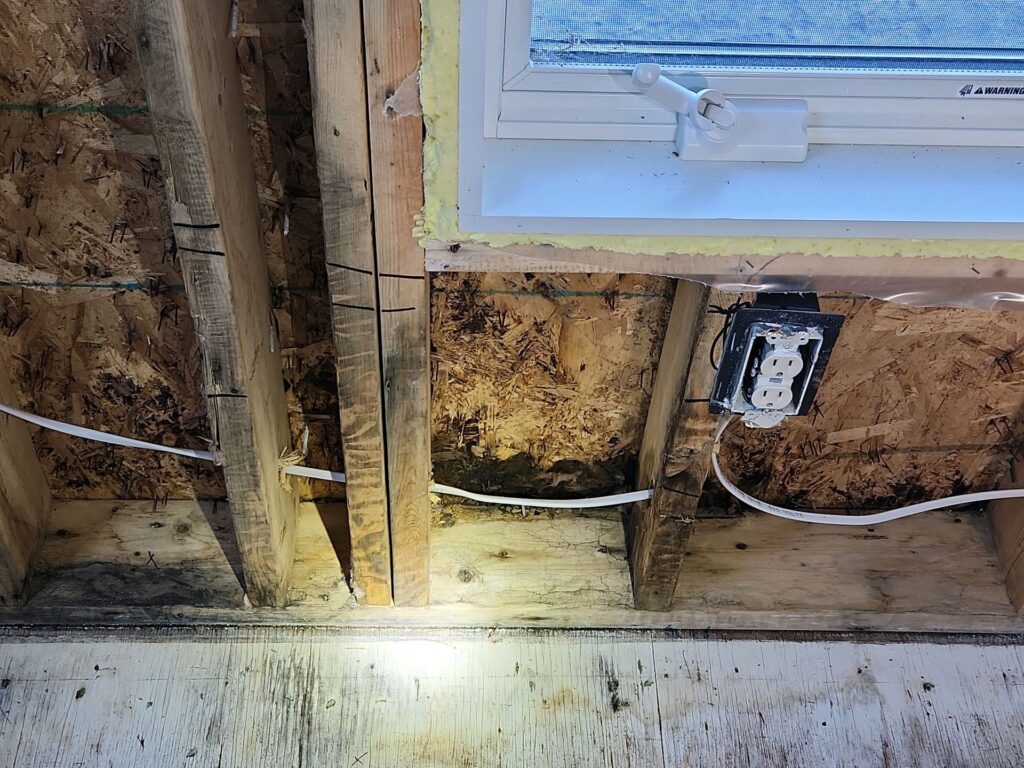
So mycotoxins can be present in a damp home. The open questions are how much reaches the people who live there, and whether that amount is enough to make them sick. That is where experts part ways.
What mainstream medicine says about mycotoxins in homes
The major medical and public health bodies are skeptical that breathing mycotoxins at home causes illness:
- American College of Medical Toxicology (2025). In its position statement, the ACMT says inhaled doses in moldy environments are generally “orders of magnitude lower than demonstrated thresholds for adverse health effects,” that there is no documented evidence that breathing fungi or mycotoxins indoors causes chronic toxic encephalopathy, and that unapproved diagnostic tests and “detoxify” therapies are medically inappropriate.
- Navy and Marine Corps Force Health Protection Command (2024). Its fact sheet on urine mycotoxin testing says mycotoxins “are not cumulative toxins,” with half-lives of hours to days, that significant airborne exposure happens mainly in agricultural and industrial settings such as grain silos and waste processing, and that “the mere presence of mold should not be taken as evidence that the mold was producing mycotoxin.”
- American Academy of Allergy, Asthma and Immunology. Its 2006 position paper on the medical effects of mold notes that many newer mold-related illnesses “remain largely or completely unproved.” The Navy fact sheet summarizes the AAAAI and the Institute of Medicine as concluding that the evidence doesn’t support mycotoxin illness through inhalation in non-occupational settings.
- CDC on “black mold.” The CDC’s Stachybotrys page says that “no test exists that proves an association between Stachybotrys chartarum and particular health symptoms,” and that all molds should be treated the same with respect to health risks and removal.
None of this means a damp home is harmless. The WHO dampness and mould guidelines found that people in damp or moldy buildings are at increased risk of respiratory symptoms, respiratory infections and worse asthma. WHO lists mycotoxins among the things mold growth can release, along with spores, cell fragments, allergens and endotoxins, but says the agents actually causing the health effects “have not been identified conclusively.” Our post on mold exposure symptoms and your health covers that evidence in detail.
What clinicians who treat mold-sensitive patients say
A group of physicians and naturopathic doctors, many in integrative and functional medicine, see mycotoxins very differently. Their views come from years of treating patients, often people with fatigue, brain fog, pain and chemical sensitivities who haven’t found answers elsewhere. Their patients’ symptoms are real, and their views deserve a fair hearing, even where mainstream medicine disagrees.
- Dr. Neil Nathan, MD, author of Toxic, said in a podcast with Dr. Mark Hyman that for most of his patients, mold toxicity triggers what he calls “limbic, vagal and mast cell dysfunction.” He considers urine mycotoxin testing “the standard,” doesn’t accept that diet explains the results he sees, and stresses that people can’t recover while they are still living with the mold.
- Dr. Jill Crista, ND, author of Break the Mold, is described in a 2022 podcast summary as teaching that mycotoxins can affect any organ system, with the brain particularly susceptible.
- Dr. Ritchie Shoemaker, MD, whose model of Chronic Inflammatory Response Syndrome (CIRS) we covered in our post on mold sensitivity, focuses less on mycotoxins than on a broader mix of what he calls “inflammagens” in water-damaged buildings, such as endotoxins, beta glucans and volatile compounds, and on a genetic susceptibility he says about 25% of people carry. He relies on blood tests rather than urine mycotoxin tests. CIRS is not an established diagnosis in mainstream medicine.
The study most often cited on the patient side is Brewer and colleagues (2013) in the journal Toxins. It tested the urine of 112 patients with chronic fatigue syndrome from one private practice; 104 of them (93%) had at least one mycotoxin, most often ochratoxin A (83%). A separate, earlier group of 55 people with no known water-damaged building exposure, tested by the same lab, had no positives at the lab’s detection limits. The study has real limits: the patients came from a single practice, the comparison group was tested separately at another time, home testing was done in only 10 situations with the data not shown, and the authors note that urine chemistry can affect the antibody-based test. It hasn’t settled the debate.
Where both sides agree: the most important step for a sensitive person is to stop ongoing exposure, which means finding the moisture and fixing the building.
Urine mycotoxin tests: what they can and can’t show
Urine mycotoxin tests are sold directly to consumers and through some practitioners. Here is what the federal and military health agencies say about them:
- The CDC (2015) warned that urine mycotoxin tests “are not approved by FDA for accuracy or for clinical use,” that low levels of mycotoxins in food mean they “are found in the urine of healthy persons,” and that “mycotoxin levels that predict disease have not been established.”
- In the case the CDC described, a patient’s “positive” urine results led to destructive testing of their office building that cost more than $25,000 and found no water damage or significant mold growth.
- The Navy and Marine Corps Force Health Protection Command (2024) says that, except in acute poisonings, “mycotoxin tests reflect ingestion (food contamination) rather than inhalation,” that non-validated results can lead to fear and unnecessary medical interventions, and that the tests are not covered by TRICARE.
- The ACMT (2025) says it is inappropriate to attribute mycotoxins found in urine to remote inhalation exposure, and that antibody testing for mycotoxins is not an accepted way to assess exposure.
Our take. A urine test is a medical test, and whether to order one is between you and your physician. What it can’t do is tell you where the mycotoxins came from, or find the leak, the damp crawlspace or the hidden growth in a wall. For that you need someone to look at the house.
Testing your home for mycotoxins
Some laboratories test settled dust, swabs or pieces of building material for mycotoxins, and a newer approach tests the air itself. Like the ERMI and HERTSMI-2 dust tests, they answer a narrow question, and it helps to know their limits before you pay for one.
- Pro: They can show whether specific mycotoxins are present in the air, dust or a building material from the home.
- Con: There are no exposure standards or accepted “safe” levels for mycotoxins in homes, so there is nothing reliable to compare a result to.
- Con: Finding mycotoxins in dust doesn’t show how much anyone actually breathes or swallows. An air sample gets closer to what people breathe, but it is a snapshot of the time it ran. Low levels are also found in homes and buildings without water damage.
- Con: The test doesn’t find the moisture source, and that is what has to be fixed regardless of the result. The ACMT says public health responses should not rest solely on the presence of fungi or mycotoxins.
Nordic Inspections offers airborne mycotoxin testing: we collect air samples in the home, and they are analyzed by Respirare Labs. We don’t test urine. We recommend it as part of a full mold inspection, not on its own: we find the moisture and the growth first, because that is what must be corrected no matter what a mycotoxin test shows, and we explain the results plainly, including what they can’t tell you. It can add useful information when a physician asks for it, or when a mold-sensitive person needs to know more about the home. Our guide to mold testing options compares every common test, and how to read mold test results explains what spore counts can and can’t tell you.
How our mycotoxin air test works
When a mycotoxin air test makes sense, it is one part of a full mold inspection, not a stand-alone kit. Here is what happens:
- We find the moisture first. Moisture meters and thermal imaging show where water is getting in and where mold is likely growing. That decides which rooms are worth sampling.
- We prepare the room. Doors and windows are closed, and the air is briefly stirred with a blower for 15 to 30 seconds, as the lab’s method calls for.
- We collect the sample. A calibrated pump draws air through an inhalable-particle sampler for 60 minutes at 2 liters per minute, set at about 5 feet, close to breathing height. Because mycotoxins don’t evaporate, the sampler collects the dust and mold particles that carry them.
- The lab analyzes it. Respirare Labs tests the sample using ELISA, an antibody-based laboratory method.
What the test looks for. The standard panel covers aflatoxins, ochratoxin A and the trichothecene group. Deoxynivalenol (DON), zearalenone and fumonisins can be added on request; Respirare says it has not found them above trace levels indoors.
What the results mean. Each mycotoxin is reported as detected or not detected, with a concentration when it is detected, and Respirare compares results with levels it has found in homes without water damage. As the lab itself notes, there are no regulatory limits for airborne mycotoxins in the United States, the test is not diagnostic, and a detected result doesn’t mean the whole home is contaminated. We explain the results in a written report alongside the moisture and mold findings, which you can share with your physician.
Wondering whether mycotoxin testing makes sense for your home? A preliminary mold inspection traces the moisture and growth first, then adds mycotoxin testing only where it answers a real question. Schedule a preliminary mold inspection.
How to reduce mycotoxin exposure at home
You don’t need to settle the scientific debate to protect your household. The steps that lower mycotoxin exposure are the same ones that lower every other mold-related exposure:
- Stop the water. Fix leaks, grade soil away from the foundation and extend downspouts. The EPA says to dry water-damaged areas and items within 24 to 48 hours to prevent mold growth.
- Keep humidity down. The EPA recommends keeping indoor humidity below 60%, ideally between 30% and 50%. Many basements need a dehumidifier in summer; see why mold grows in basements in Fargo homes.
- Remove moldy material properly. WHO notes that most mycotoxins are chemically stable, so killing mold doesn’t make its toxins disappear. Porous materials like drywall and carpet pad usually need to be removed, and larger jobs belong with a remediation contractor using containment. Read why bleach and vinegar aren’t the answer and our mold remediation page.
- Keep dust down. Because mycotoxins travel on spores, fragments and dust, regular cleaning with a HEPA-filtered vacuum and damp wiping helps, especially after a water problem has been fixed.
- Protect the most sensitive person. If someone in the home has asthma, a weakened immune system or a chronic illness they link to mold, a careful inspection and a stricter cleanup target make sense. See who is most at risk from mold.
At Nordic Inspections, mold inspections are led by Lars Knobloch, a Council-certified Indoor Environmentalist (CIE) through the American Council for Accredited Certification and an ASHI Certified Inspector. Lars is also a certified radon measurement professional and radon mitigation specialist, and has provided litigation support on building defects and environmental problems. Nordic Inspections has served Fargo-Moorhead and the surrounding areas of North Dakota and Minnesota since 2010. We trace moisture with moisture meters and thermal imaging, and our mold samples are analyzed by EMSL Analytical, an independent laboratory, and our mycotoxin air samples by Respirare Labs. Learn more about our mold inspection and testing services.
Frequently asked questions about mycotoxins in homes
Is black mold the same as toxic mold?
No. “Black mold” usually refers to Stachybotrys chartarum, but many molds are dark, and color doesn’t tell you which species it is or whether it is producing mycotoxins. The CDC says all molds should be treated the same with respect to health risks and removal.
Can mycotoxins be in my home if I don’t see mold?
Low levels can be found in dust even in buildings without water damage, and hidden growth inside walls, under flooring or in a crawlspace can go unseen. A musty odor, past leaks or flooding, or symptoms that ease away from home are reasons to have the house looked at, starting with the moisture.
Does killing mold destroy mycotoxins?
Not reliably. WHO notes that most mycotoxins are chemically stable; they even survive food processing. That is why professional remediation focuses on removing moldy material under containment rather than spraying it.
Should I get a urine mycotoxin test?
That is a question for your physician. The CDC and the Navy and Marine Corps Force Health Protection Command both point out that there is no FDA-approved urine mycotoxin test and that healthy people also have mycotoxins in their urine from food. Whatever the result, it won’t tell you where the problem in the house is.
Does Nordic Inspections test for mycotoxins?
Yes. We offer airborne mycotoxin testing as part of a mold inspection: we collect air samples in the home, and Respirare Labs analyzes them. We don’t offer urine testing; that is a medical test for you and your physician to decide on. Our inspections find moisture and mold growth first, take air, tape, swab or mycotoxin samples only where they answer a real question, and explain the lab results in a written report with clear next steps.
Can an air purifier remove mycotoxins?
A purifier with a true HEPA filter can capture some of the airborne particles that carry mycotoxins, which may help while a problem is being fixed. It can’t remove mold growing on a damp wall, so it is never a substitute for finding and fixing the moisture.
Sources
- ACMT Position Statement: Medical Toxicology Considerations in the Diagnosis and Treatment of Patients with Concerns About Mold-Related Inhalation Exposures, American College of Medical Toxicology, 2025.
- Notes from the Field: Use of Unvalidated Urine Mycotoxin Tests for the Clinical Diagnosis of Illness, CDC, Morbidity and Mortality Weekly Report, 2015.
- Urine Mycotoxin Testing, Navy and Marine Corps Force Health Protection Command, 2024.
- Mycotoxins fact sheet, World Health Organization.
- WHO Guidelines for Indoor Air Quality: Dampness and Mould, World Health Organization, 2009.
- A Brief Guide to Mold, Moisture, and Your Home, U.S. EPA.
- Facts About Stachybotrys chartarum, CDC, 2024.
- About Mold, CDC.
- The medical effects of mold exposure, American Academy of Allergy, Asthma and Immunology position paper, Journal of Allergy and Clinical Immunology, 2006.
- Molds and mycotoxins in indoor environments: a survey in water-damaged buildings, Bloom et al., Journal of Occupational and Environmental Hygiene, 2009.
- Microbial secondary metabolites in school buildings inspected for moisture damage in Finland, The Netherlands and Spain, Peitzsch et al., Journal of Environmental Monitoring, 2012.
- Detection of Mycotoxins in Patients with Chronic Fatigue Syndrome, Brewer et al., Toxins, 2013.
- J. David Miller PhD: The New Green Book and the Facts on Mycotoxins, IAQ Radio, 2020.
- The Hidden Cause of Your Chronic Illness, with Dr. Neil Nathan, The Doctor’s Farmacy podcast transcript.
- Dr. Jill Crista, Part 1, Intelligent Medicine podcast, 2022.
- Diagnosis, Surviving Mold (Dr. Ritchie Shoemaker).